The Joseon Dynasty in 10 minutes
A friendly 10-minute guide to the Joseon dynasty, from King Sejong and Hangul to the Imjin War, plus where to see it in Seoul today.
By Jae Park · Updated Jul 14, 2026
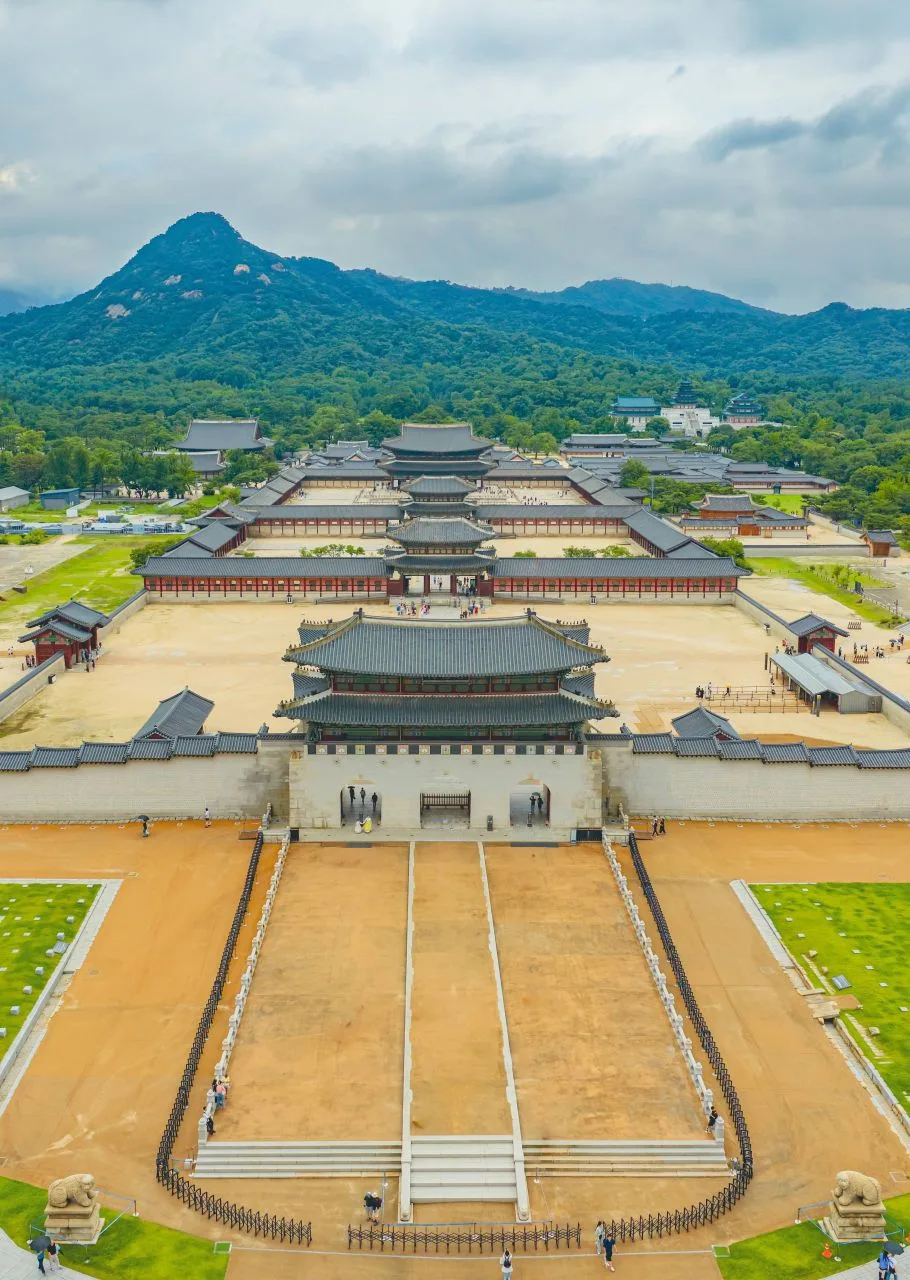
The first time a friend watched Netflix's *Kingdom*, she messaged me halfway through episode one: "Wait, is this real history or made up?" Fair question. The zombies are invented. Everything around them — the topknots, the throne room, the crown prince who can't so much as leave a room without a court official's blessing — is Joseon, and it's as real as the palace I can walk to from a subway exit.
If Korea reached you through a drama, a comeback stage or a plate of food, you have already spent hours inside the Joseon dynasty without a map. *The Red Sleeve*, *Mr. Sunshine*, *Under the Queen's Umbrella*, and most of the sageuk (historical drama) on your list all live here. This is the map. Ten minutes, the handful of things that actually matter, and the exact places you can go stand inside the story this weekend.
Joseon lasted more than 500 years, from 1392 to 1910. That is longer than the United States has existed, roughly twice over, run by a single family — the House of Yi — the whole way through. Let me give you the shape of it.
How one general started a 500-year dynasty
Joseon began with a soldier who refused an order. In 1388 the Goryeo court sent general Yi Seong-gye north to attack the rising Ming dynasty in China. He thought the campaign was suicidal, so at a river island called Wihwa he turned his army around, marched back on the capital, and took power instead. Four years later, in 1392, he was proclaimed king. History knows him as Taejo, the founder.
Taejo did three things that set the next five centuries. He moved the capital to Hanyang — today's Seoul — partly for its rivers and mountains, partly for the feng shui. He broke ground on Gyeongbokgung Palace in 1395. And, guided by the scholar-strategist Jeong Do-jeon, he swapped the state religion from Buddhism to Neo-Confucianism, a philosophy obsessed with hierarchy, education, ancestors and moral duty. That last decision is the one you still feel today, from the way Koreans bow to the way job titles work.
Jeong Do-jeon matters more than most foreigners realize. He was the architect behind the throne, the man who argued a country should be run by trained scholar-officials rather than by the whims of a hereditary king — a startling idea for the 1390s. He even named the palace buildings. He also lost. Taejo's fifth son, the future King Taejong, had him killed in a power struggle over the succession, then took the throne himself. If you've seen the drama *Six Flying Dragons*, that bloody founding decade is what it dramatizes, and the tension between strong kings and strong scholars runs through the entire dynasty afterward.
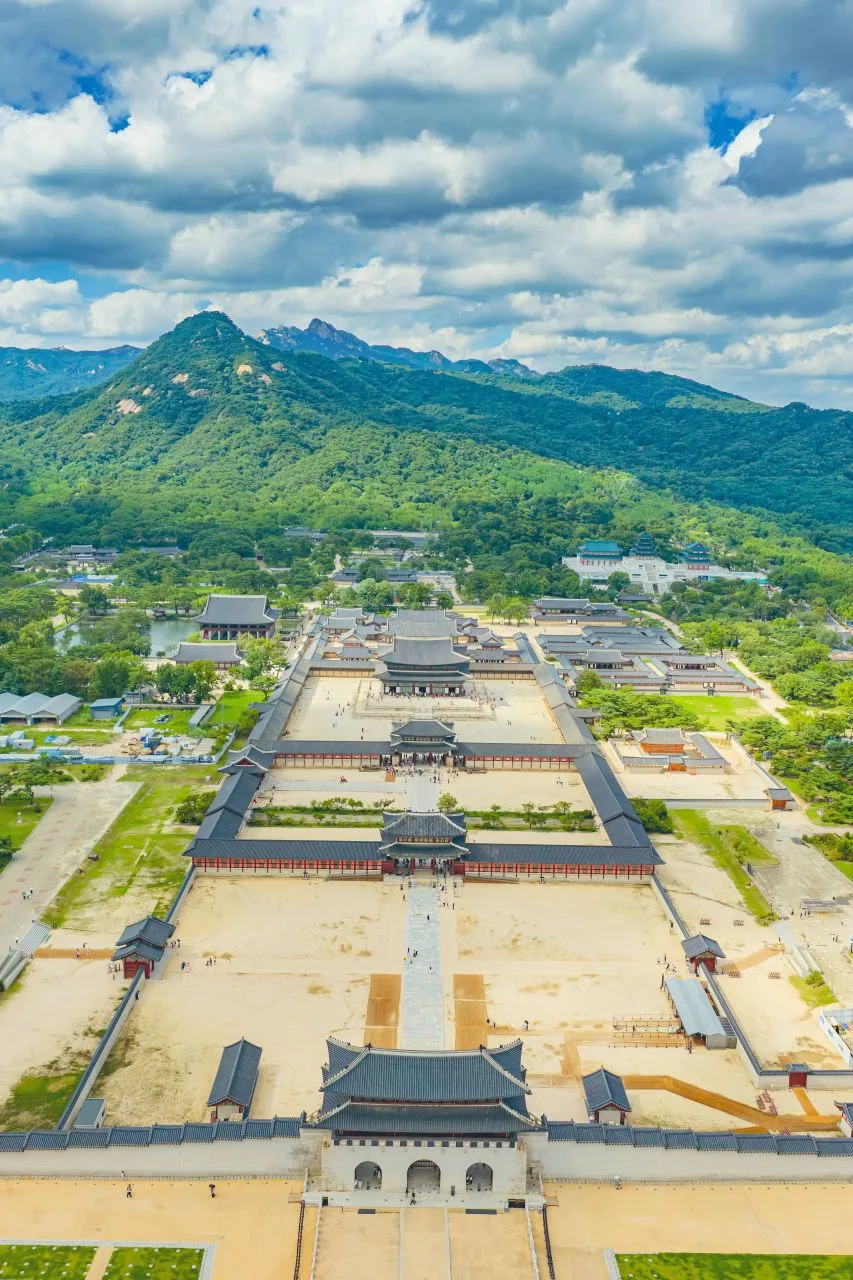
You can see the logic of the whole dynasty in Gyeongbokgung's layout, and I've walked visiting friends through it more times than I can count. If you want the full set, the five grand palaces of Seoul each played a different role in this system.
The king who gave Korea its alphabet
Skip forward one generation to the face on the 10,000-won note. Sejong the Great ruled from 1418 to 1450 and is the reason you can read a Korean sign at all.
Before him, Koreans wrote with Chinese characters, which fit the spoken language badly and took years to master. That meant reading and writing belonged to the elite. Sejong decided ordinary farmers and merchants deserved a script of their own, and around 1443 his court introduced one. In 1446 it was formally published as *Hunminjeongeum* — "the correct sounds for the instruction of the people." We call it Hangul now, and its consonant shapes are modeled on the mouth and tongue that make the sound. It is one of the few writing systems on earth with a known inventor and a stated humanitarian purpose.
Not everyone was grateful. Some of Sejong's own yangban scholars objected that giving commoners an easy alphabet would erode the elite's monopoly on knowledge, and a few called it beneath a civilized court. For a long stretch Hangul was dismissed as writing for women and children while officials kept using Chinese. It only became the national script in the 20th century. Reading that history back, the fact that 80 million people now text in Hangul feels less inevitable and more like a slow-motion victory for one stubborn king.
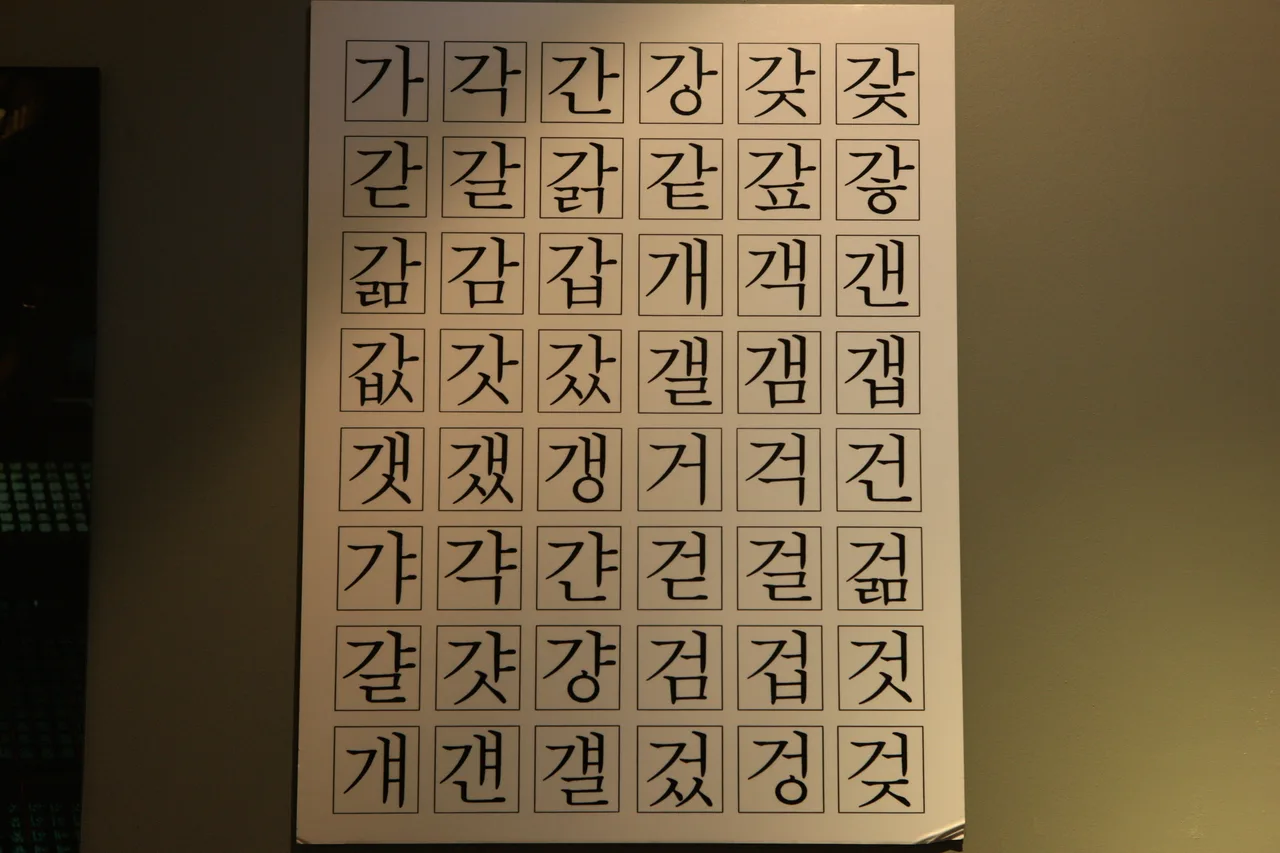
Sejong's court also produced rain gauges, a self-striking water clock and advances in astronomy and medicine. If the alphabet grabs you the way it grabbed me, it is genuinely learnable fast — our read Hangeul in a weekend walk-through exists because Sejong designed it to be easy.
The war that nearly ended everything
Joseon's calmest century ended in 1592. Japan's warlord Toyotomi Hideyoshi, having unified his own country, decided to conquer Ming China and demanded Joseon let his armies march through. Joseon refused. What followed, the Imjin War, ran on and off until 1598 and remains one of the most devastating conflicts in Korean history.
The hero every Korean schoolchild knows is Admiral Yi Sun-sin. While the land war went badly, Yi won at sea again and again, most famously off Hansan Island, where his fleet shattered the Japanese navy and cut its supply lines. His weapon was the geobukseon, the "turtle ship" — a warship with an armored, spiked deck to stop boarders, often called the world's first ironclad. He is the statue standing in the middle of Gwanghwamun Square, sword down, facing the water he never lost. Hideyoshi died in 1598, his armies withdrew, and Joseon survived, battered but intact. If you've watched the film *The Admiral: Roaring Currents*, that is this exact story.
How Confucianism became Korea's operating system
Here is the part the timeline dramas assume you already understand. For 500 years Joseon ran on Neo-Confucianism, and that shaped daily life far more than any single king did.
Society split into ranks. The yangban scholar-officials sat on top, below them a middle class of technical specialists and clerks, then the commoners who farmed and traded, and at the bottom the nobi, an underclass bound to service. The way into the yangban class was the gwageo, a punishing civil-service exam based on the Confucian classics — pass it and your family rose, fail and you studied another decade for the next sitting. Families performed jesa, memorial rites for dead ancestors, which is why holidays like Seollal and Chuseok still center on food carefully set out for grandparents who have passed. Elders outranked juniors, husbands outranked wives, and language itself was built to show it.
I find this the single most useful thing to hold onto, because it explains the present better than any guidebook. When a Korean colleague asks your age within five minutes of meeting you, that isn't nosiness — it's the Confucian instinct to figure out the correct speech level to use with you. The dynasty is gone, but its grammar of respect never left.
A lot of what a first-time visitor reads as "Korean etiquette" is Joseon's Confucian logic still running in the background — two hands to pour a senior's drink, the deep New Year bow, the honorific verb endings. If that side of Korea interests you, our guide to Korean etiquette dos and don'ts is basically Joseon in modern clothes.
The long, slow goodbye
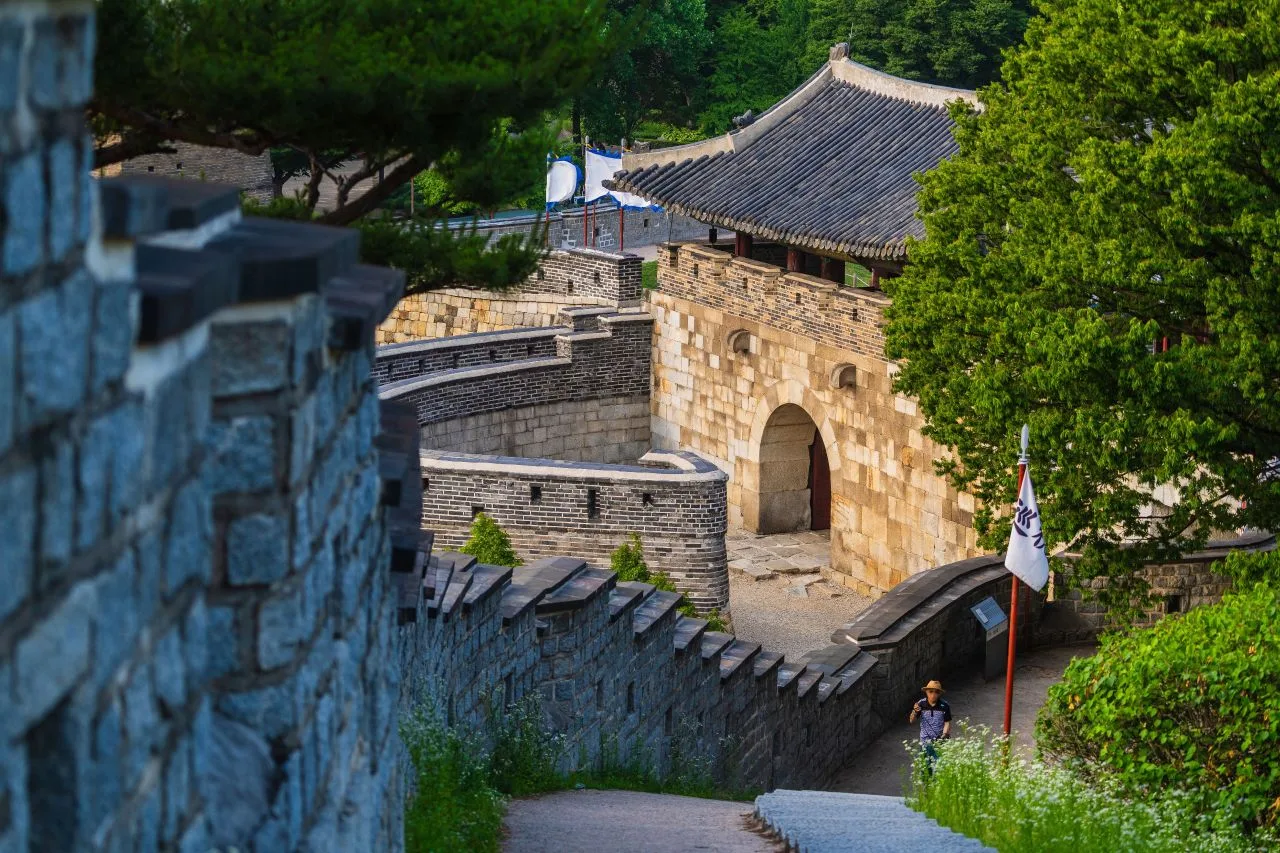
Joseon had one last golden moment. King Jeongjo, who ruled from 1776 to 1800, revived scholarship and built a spectacular new fortress city at Suwon called Hwaseong, finished in 1796, that mixed Korean, Chinese and even Western engineering ideas. He's the king at the center of *The Red Sleeve*, if you needed a drama anchor. Suwon Hwaseong is now a UNESCO World Heritage Site, and you can walk its full brick wall.
Then the 19th century arrived, and the dynasty aged badly — child kings, in-law families running the state, and foreign powers circling as the world industrialized. In 1897 King Gojong tried to save his sovereignty by upgrading the country's status, declaring the Korean Empire and himself emperor at a new altar in Seoul. It bought thirteen years. Japan forced Gojong to abdicate in 1907 in favor of his son Sunjong, and on 29 August 1910 the Japan-Korea Annexation Treaty formally ended the dynasty after 518 years. Sunjong was the last monarch Korea would ever have. That final, wrenching stretch is the world of *Mr. Sunshine*.
Where to stand inside Joseon this weekend
The best thing about Joseon is that you don't have to imagine it. Most of the story is still standing in central Seoul, and it's cheap.
- Gyeongbokgung Palace is the anchor. Take Seoul Subway Line 3 to Gyeongbokgung Station and leave by Exit 5, which surfaces you almost inside the grounds. Adult admission runs about 3,000 won, roughly the price of a coffee, and the palace is closed on Tuesdays. Hours shift with the season — generally 9:00 to 17:00 in deep winter, later into the evening in summer — with last entry an hour before closing, so check the official site before you go.
- The changing-of-the-guard ceremony happens at the main Gwanghwamun gate, usually around 10:00 and 14:00, takes about 20 minutes, and costs nothing — you don't even need a palace ticket to watch. It's skipped on Tuesdays and can be canceled in extreme heat or cold.
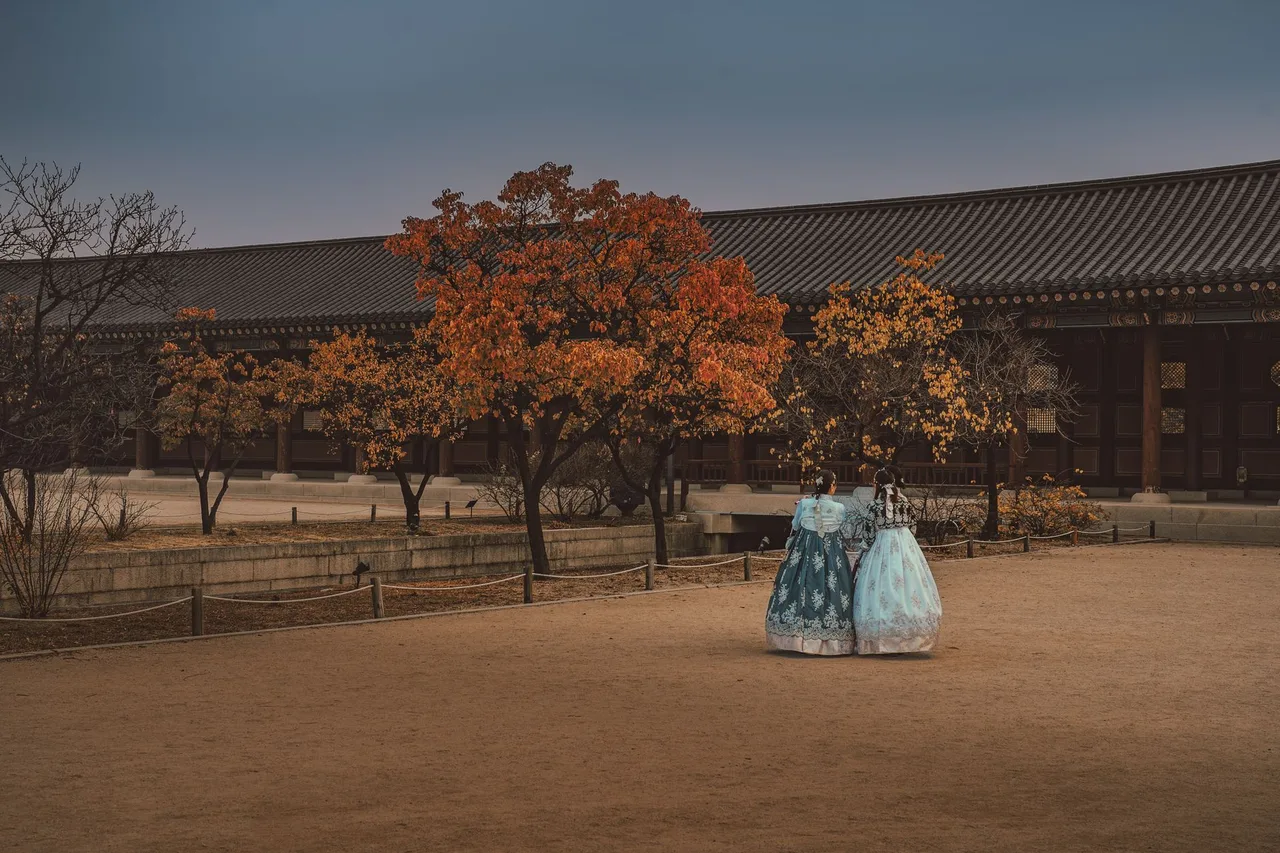
- Wear a hanbok and get in free. Rental shops cluster around the palace for roughly 15,000 to 30,000 won for a few hours, and anyone in traditional dress enters the palace grounds at no charge. It is touristy and it is also genuinely fun, and the photos are the reason half your feed visits Seoul.
- Jongmyo Shrine, a short walk from Jongno 3-ga station, is where the royal ancestral tablets were kept and where Confucian memorial rites are still performed. It's a UNESCO site and one of the most solemn, quiet spaces in the city.
- Suwon Hwaseong, Jeongjo's fortress, is a day trip south on Line 1 to Suwon Station if you want to walk a full Joseon rampart.
For more of these, the Korea UNESCO World Heritage sites guide maps out how much of the dynasty is protected and visitable.
The 10-minute timeline, boiled down
If you remember only this, you'll follow any sageuk:
- 1392 — General Yi Seong-gye founds Joseon and moves the capital to Seoul.
- 1443–1446 — King Sejong creates and publishes Hangul.
- 1592–1598 — The Imjin War; Admiral Yi Sun-sin and his turtle ships save the country at sea.
- 1776–1800 — King Jeongjo's late golden age and Hwaseong Fortress.
- 1897–1910 — The Korean Empire, then Japanese annexation ends the dynasty.
Learn those five markers and you can drop into almost any historical drama and know roughly where you are.
I'll be honest about why this one matters to me. Once you carry this rough map, Seoul stops being a backdrop and starts talking. The office towers sit on a grid a 14th-century king laid out. The alphabet on the convenience-store sign has a birthday. The bow your friend's grandmother expects is a 500-year-old habit. Go stand in Gyeongbokgung's main courtyard on a clear morning, watch the guards march, and the ten minutes you just spent reading will quietly rearrange everything you thought was only a drama set.
Sources
This guide was researched using the references below. Prices and times change, so confirm anything time-sensitive on the official page before you rely on it.
Related guides
- Exploring Seoul's Buddhist temples: a guide for visitorsDiscover Seoul's Buddhist temples, from the central Jogyesa to the serene Bongeunsa, and learn about their history, architecture, and visitor experiences.
- Exploring Seoul's royal palaces: a guide for visitorsDiscover Seoul's five grand palaces, their unique features, and practical tips for your visit.
- Korean folk villages worth visitingExplore Korea's rich history by visiting these traditional folk villages, each offering unique insights into the country's cultural heritage.
- Gyeongju: A guide to Korea's ancient Silla capitalGyeongju was Silla's capital for nearly 1,000 years. A practical guide to its UNESCO temples, royal tombs, night views, and how to visit by KTX.
- Visiting the Korean DMZ: A 2026 Guide for Foreign TravelersHow to visit the Korean DMZ from Seoul in 2026: guided tours only, passport rules, the main sites, and why JSA access at Panmunjom keeps changing.
- UNESCO World Heritage Sites you can visit in KoreaA first-person guide to Korea's UNESCO World Heritage sites, with real hours, won prices, and directions to Bulguksa, Changdeokgung and Jeju.