UNESCO World Heritage Sites you can visit in Korea
A first-person guide to Korea's UNESCO World Heritage sites, with real hours, won prices, and directions to Bulguksa, Changdeokgung and Jeju.
By Jae Park · Updated Jul 14, 2026
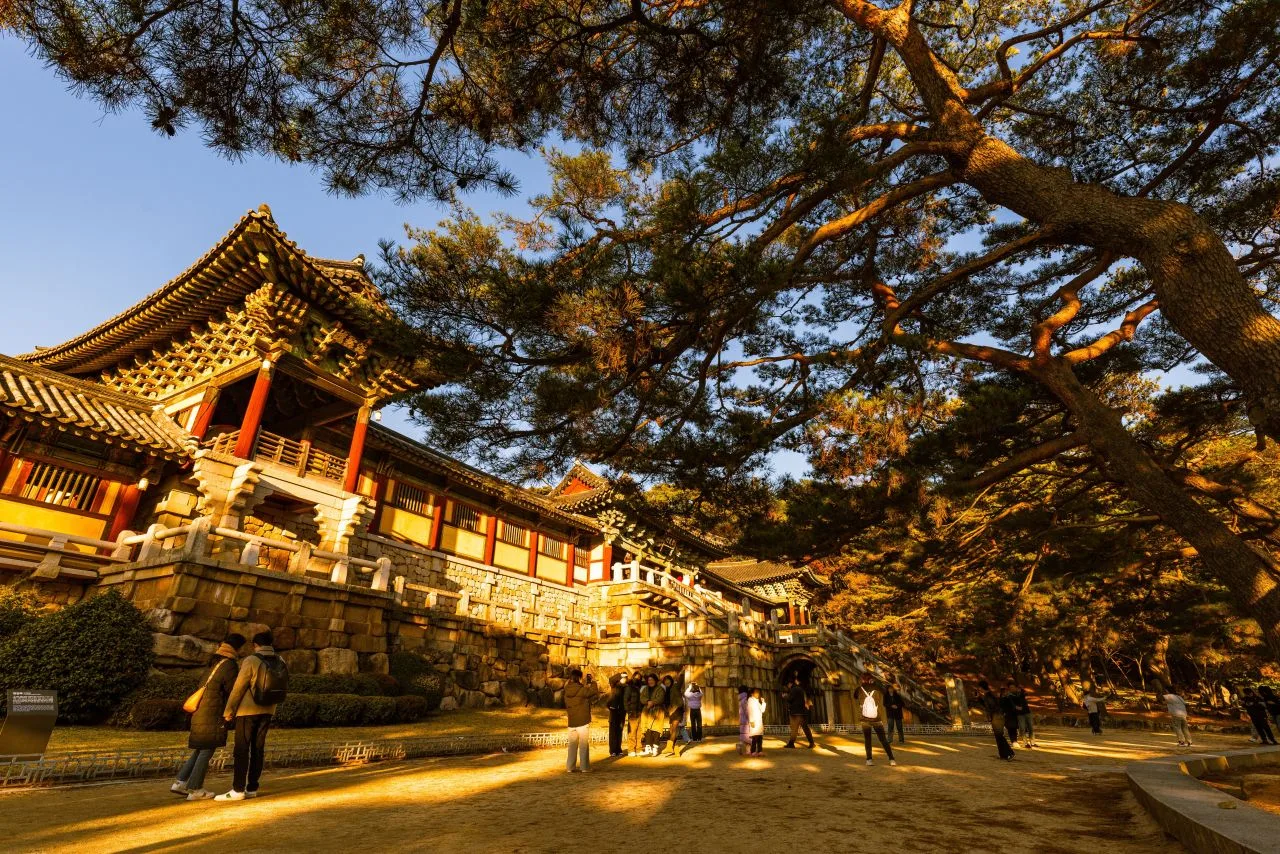
The first time I watched Moon Lovers: Scarlet Heart Ryeo, I kept hitting pause to stare at the courtyards behind the actors. Those weren't studio sets. A lot of sageuk (historical dramas) shoot at the same real Joseon-era palaces and shrines you can walk through yourself, and a surprising number of them carry a UNESCO World Heritage listing. If you keep a running list of K-drama filming locations to visit, several are already on it. Falling for a drama is one thing. Standing on the actual stone the story was built on is better.
Korea has sixteen UNESCO World Heritage Sites as of 2026: fourteen cultural and two natural. That count jumped by one in 2023, when the Gaya Tumuli, burial mounds of an ancient confederacy most Koreans only half-remember from school, made the list. You could spend a month chasing all sixteen. Most visitors won't, so here are the ones I'd actually prioritize, how to reach each, and what's worth your time once you're inside. Nearly all of them sit at the end of a train or subway line, so you rarely need a car.
Bulguksa Temple and Seokguram Grotto, Gyeongju
Bulguksa is my sentimental favorite, and it was one of the first three Korean sites inscribed, back in 1995. It sits on the wooded slopes of Mount Toham just outside Gyeongju, the old capital that ran the Silla kingdom for nearly a thousand years. The temple you see today traces to the mid-8th century, around 751 CE, when the Silla chief minister Kim Daeseong ordered it built, the temple for his parents in this life and the nearby Seokguram Grotto for his parents in a past life, or so the old chronicle says. Fire and war wrecked the wooden halls over the centuries. The stonework underneath is the real survivor.
What you come for: the two stone staircases the Silla called bridges, and two pagodas in the main courtyard that every Korean recognizes on sight. Seokgatap is plain and austere; Dabotap is ornate and busy, and it is the one printed on the back of the ten-won coin. Walk uphill past Daeungjeon, the main hall, to the quieter Birojeon and Geungnakjeon halls where the crowds thin out.
Seokguram is a separate ticket and a separate trip up the mountain, about a fifteen-minute drive or a long hike above the temple. Inside a man-made granite dome sits a single 3.5-meter Buddha on a lotus pedestal, one hand touching the earth, facing east toward the sea to catch the first light. You view it now through glass, behind a climate-controlled barrier that keeps the granite from sweating, so don't expect to get close. The serenity of that face still carries across the room.
Admission to Bulguksa itself is now free; the old ticket booths sit empty. Parking runs 1,000 to 2,000 won, and Seokguram charges a separate small fee. Gates are open roughly 9am to 6pm. Gyeongju has no subway, so from Gyeongju Station or the Express Bus Terminal, take city bus 10 or 11 to the temple gate, about forty minutes for roughly 1,500 won; a taxi from downtown is 15,000 to 20,000 won. The whole city is basically an open-air museum, its own listing as the Gyeongju Historic Areas, so pair the temple with the royal tombs and Cheomseongdae observatory and make a full day of it.
Changdeokgung Palace and its Secret Garden, Seoul
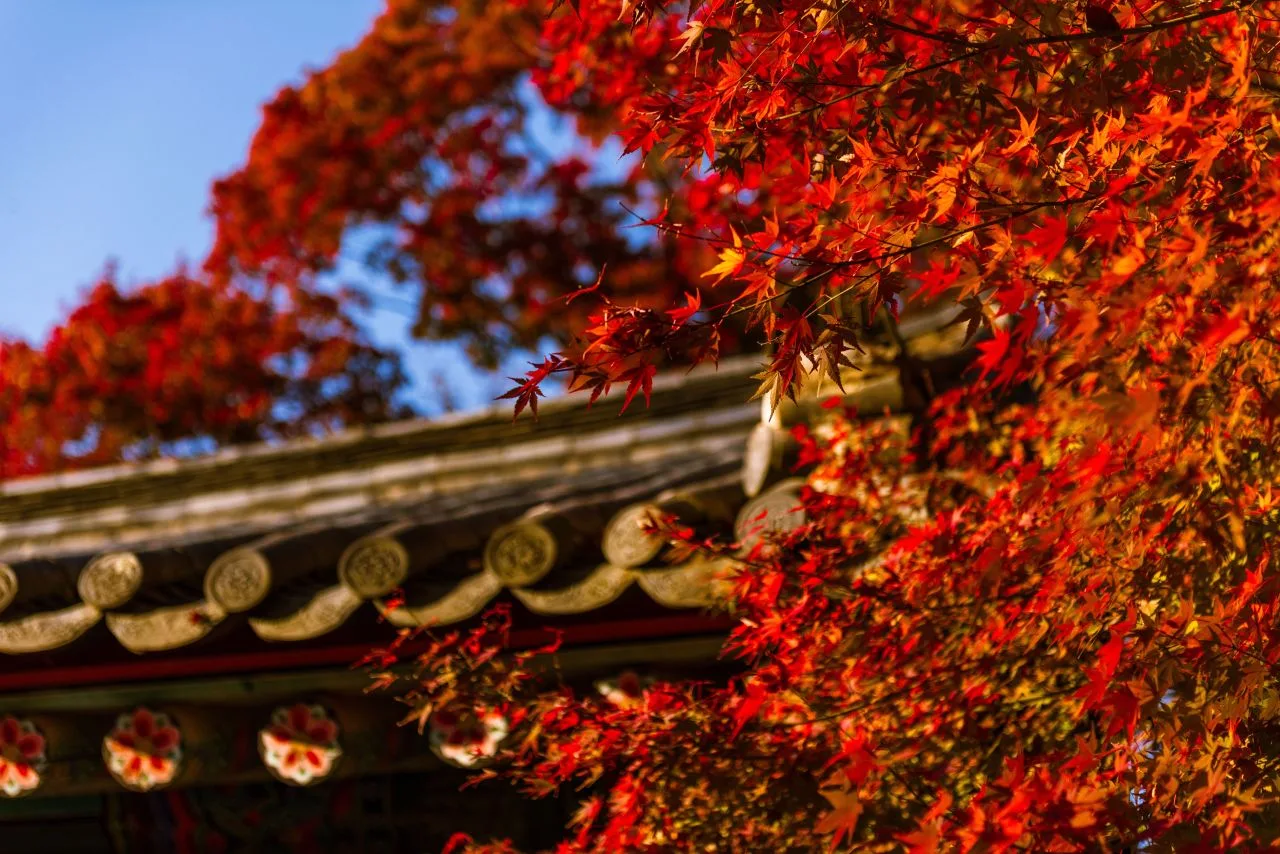
Of Seoul's five grand palaces, Changdeokgung is the one UNESCO singled out, in 1997, and it is the one I send friends to first. Gyeongbokgung is bigger and grander, but Changdeokgung was built to follow the land instead of flattening it, so the halls bend with the hills rather than marching in a rigid grid. Joseon kings actually preferred living here. If you want the full lineup, our guide to Seoul's five grand palaces sorts out which is which.
The reason to plan ahead is the Huwon, the Secret Garden behind the palace: a huge enclosure of ponds, pavilions and old trees that you can only enter on a timed guided tour. This is where those hushed drama scenes get their look, and both Jewel in the Palace and Moon Lovers filmed inside Changdeokgung. Tickets are capped at about 100 people per session, roughly half sold online at royal.khs.go.kr and half at the gate, and the good slots vanish in autumn.
The Secret Garden tour costs 8,000 won for adults and includes palace admission; seniors 65 and over pay 5,000, and ages 7 to 18 pay 4,000. The palace alone, without the garden, is 3,000 won. If you are palace-hopping, the 10,000-won Royal Palace Pass covers four palaces plus the Huwon and pays for itself fast. Open 9am to 5pm-ish, shifting with the season, last tickets an hour before close, closed Mondays. Anguk Station on Line 3, exit 3, is a three-minute walk from the gate.
Jongmyo Shrine, Seoul
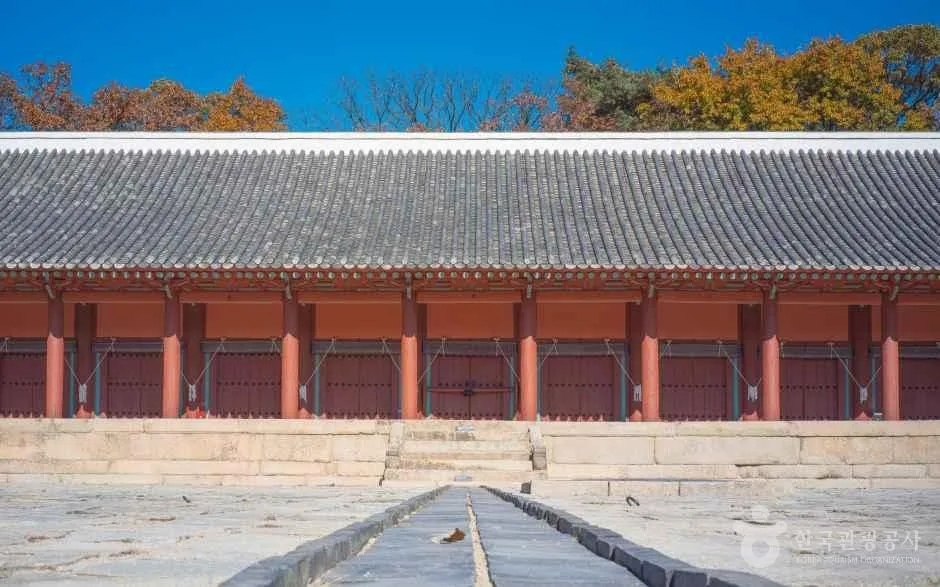
A ten-minute walk south of Changdeokgung, the two were once connected, is Jongmyo, the royal ancestral shrine of the Joseon dynasty and, quietly, one of the most moving places in Seoul. It was also inscribed in 1995. There is no gold, no throne, no scenery. There is one impossibly long wooden hall, Jeongjeon, holding the spirit tablets of Joseon's kings and queens, fronted by a vast empty stone courtyard. The restraint is the whole point. If the dynasty is a blur to you, our ten-minute Joseon primer makes the shrine click.
Jongmyo is still a living shrine. Once a year, in early May, the royal descendants perform the Jongmyo Jerye ancestral rite here, complete with the Jongmyo Jeryeak court music and dance, itself recognized by UNESCO as intangible heritage. If your dates line up with it, go.
On weekdays you can only enter Jongmyo with a guided tour; the English tours run at 10am, noon, 2pm and 4pm and last about an hour. On Saturdays and on the last Wednesday of each month, Culture Day, you walk it freely at your own pace, which I prefer. Admission is 1,000 won for adults, 500 for youths, and free if you are wearing hanbok. Jongno 3-ga Station on Lines 1, 3 and 5, exit 11, is five minutes away.
Hwaseong Fortress, Suwon
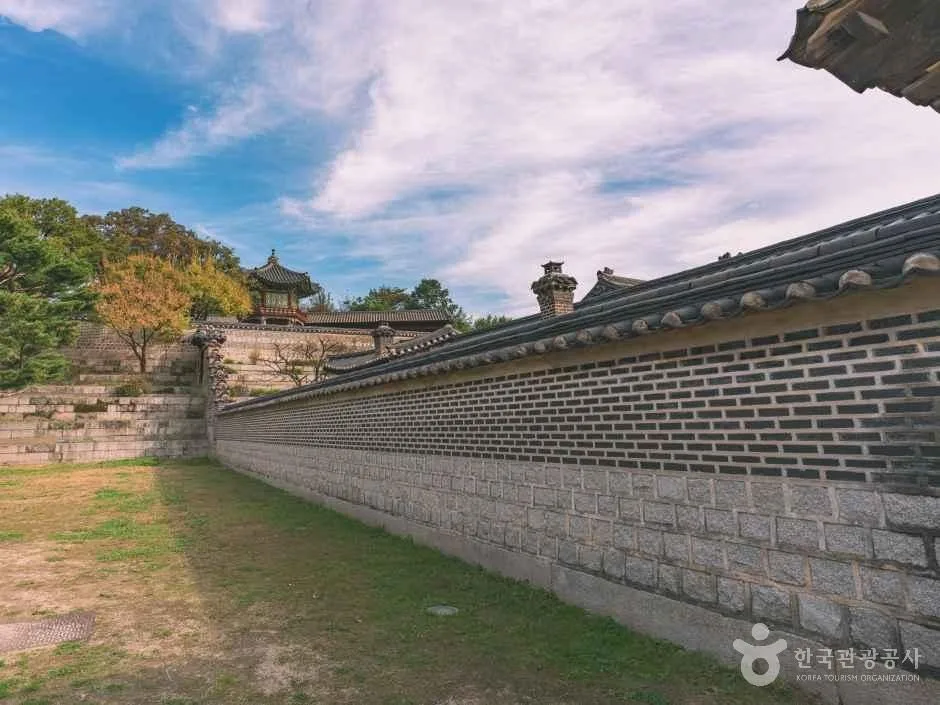
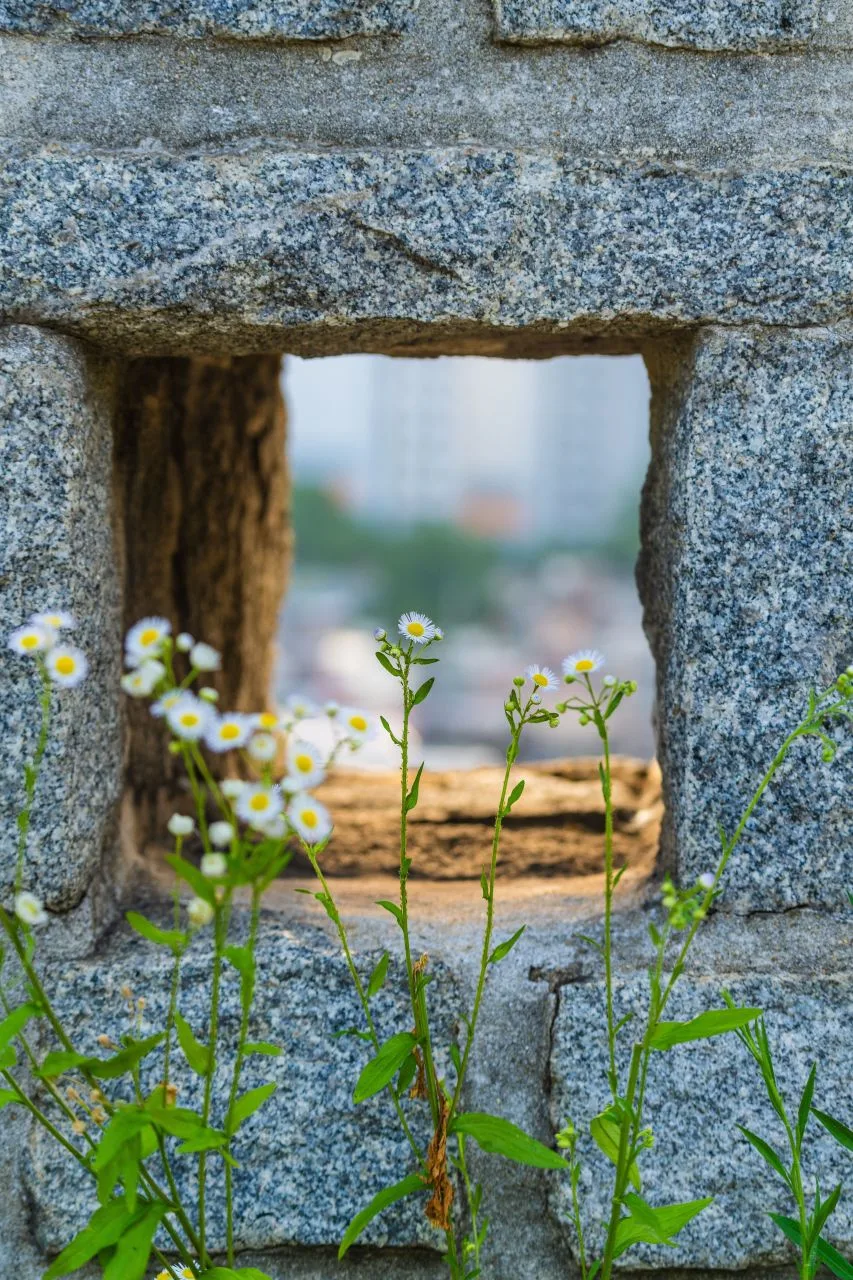
Suwon, half an hour south of Seoul, wraps a chunk of its downtown in a UNESCO-listed fortress wall, inscribed in 1997, and it is the easiest day trip on this list. King Jeongjo built Hwaseong in the 1790s, partly out of grief and politics, to honor his father Prince Sado, who had been executed by being sealed inside a rice chest. The engineering was ahead of its time. A young scholar named Jeong Yak-yong designed a pulley crane that slashed the labor, and the entire project was documented so thoroughly that it could be rebuilt exactly after Korean War damage.
You can walk the full 5.7-kilometer loop in two to three hours, past floodgates, command posts and arrow-slit battlements, with the city spread out below. Don't skip Hwaseong Haenggung, the temporary palace inside the walls where Jeongjo stayed; it is also a well-worn drama filming set. Walking the wall is free. The Haenggung palace charges a small admission, around 1,500 won for adults, and the archery range and trolley cost extra. Open roughly 9am to 6pm, to 5pm in winter, though the wall path is accessible around the clock and lit up at night. Take Subway Line 1 to Suwon Station, about 30 to 40 minutes from central Seoul, then bus 11, 13, 36 or 39, or just walk twenty minutes.
Jeju Volcanic Island and its lava tubes
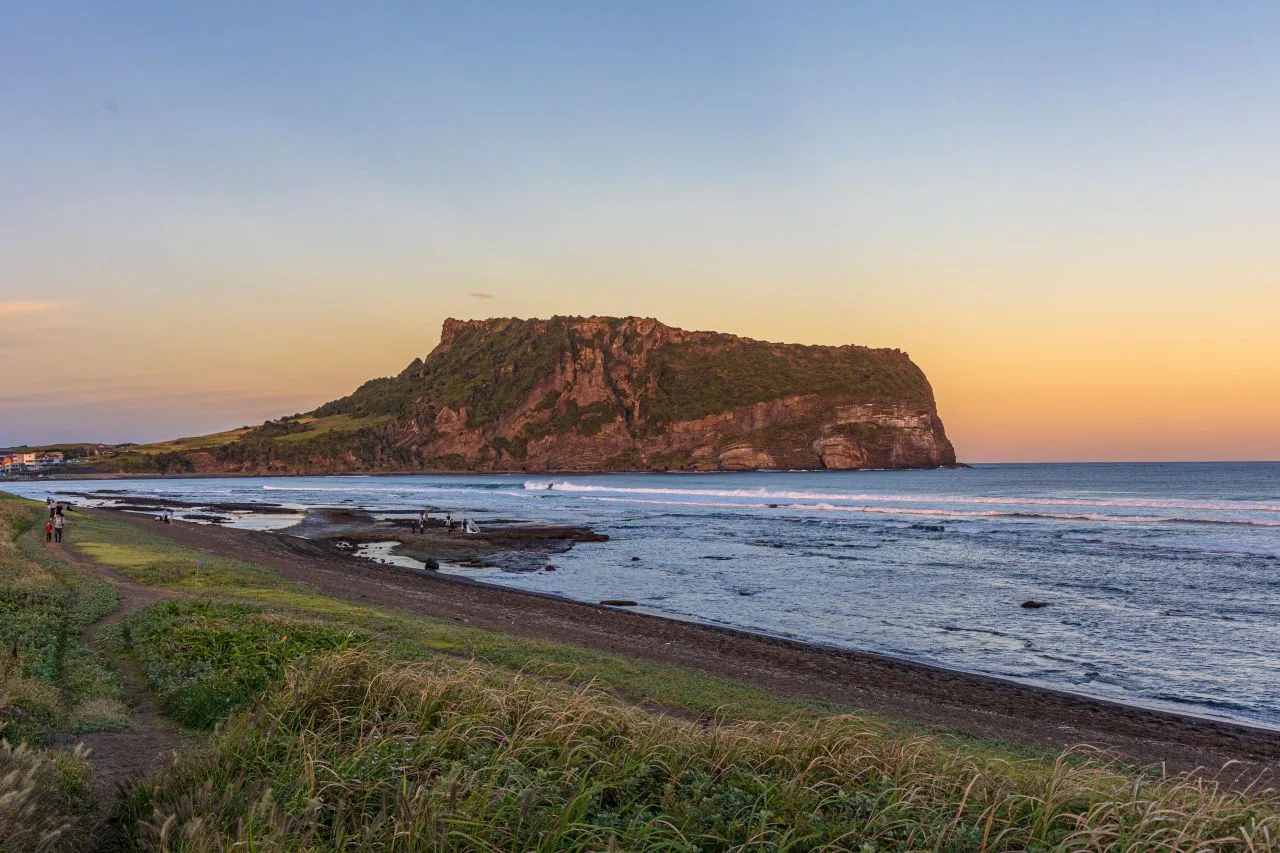
Korea's first natural World Heritage listing, in 2007, is really three things wrapped into one: Hallasan, the shield volcano at the island's center; the Geomunoreum lava tube system; and Seongsan Ilchulbong, the Sunrise Peak. K-content fans will recognize Jeju from countless dramas and idol shoots; Seongsan itself appeared in the classic drama All In, and the island's beaches and oreum turn up everywhere from variety shows to album photography.
Seongsan Ilchulbong is the postcard: a bowl-shaped tuff cone that erupted out of shallow sea about 5,000 years ago, its crater rim ringed by jagged cliffs that drop straight into the water. The climb to the top takes 30 to 40 minutes on a well-built stair path. Adults pay 5,000 won. Go at sunrise if your body clock allows, since that is literally what it is named for.
The lava tubes are the other half. Manjanggul, the section open to visitors, is a kilometer-long underground tunnel ending in a 7.6-meter lava column. Worth knowing for 2026: Manjanggul reopened on May 30, 2026 after more than two years closed following a rockfall, so if an old blog says it is shut, that page is outdated. Adults 4,000 won. Bring a jacket, because it is cold and damp down there all year.
A few more worth the detour
If you have more time, or you are the type who collects these, a handful more reward the detour. Hahoe and Yangdong, inscribed in 2010, are two clan villages where people still live in thatched and tiled houses; Hahoe, near Andong, hosts the Byeolsingut mask dance and drew a wave of fame when Queen Elizabeth II visited in 1999. Adult entry is 5,000 won, reached by bus 246 from Andong, about fifty minutes plus a short shuttle. Haeinsa, another of the 1995 sites, holds the Tripitaka Koreana, more than 80,000 wooden printing blocks of the Buddhist canon carved in the 13th century and still stored in 15th-century halls built to keep them from rotting. Sansa, the Buddhist Mountain Monasteries listed in 2018, is a set of seven working temples, among them Tongdosa, Buseoksa and Beopjusa, chosen for the open-courtyard layout that is distinctly Korean; several run templestay programs if you want to sleep over. The nine Seowon, Neo-Confucian academies added in 2019, are Joseon-era schools set beside a mountain and a stream, of which Dosanseowon near Andong is the best known. The Baekje Historic Areas from 2015 cluster around Gongju, Buyeo and Iksan and tell the story of the kingdom that exported Buddhism and art to Japan. And Getbol, the Korean tidal flats added in 2021, is the second natural site, vast coastal mudflats that feed migratory birds by the hundred thousand, better seen on a guided eco-walk than a quick photo stop.
Planning it without burning out
A realistic plan looks like this. Do the Seoul cluster, Changdeokgung and Jongmyo, with Hwaseong in Suwon as a day trip, over two or three days. Then ride the KTX high-speed train south to Gyeongju, about two hours to Singyeongju Station, for Bulguksa and Seokguram. Fly to Jeju for the volcanic sites if you have a week or more. A T-money transit card, sold at any convenience store, covers subways and buses at all of these except the Gyeongju and Andong village shuttles, where you pay cash.
A few things I wish someone had told me. Buy the combined palace pass and check tour times before you go, because the Secret Garden and the Jongmyo weekday tours sell out and will not wait for you. Prices and hours drift; the free-temple policy, seasonal closing times and Jeju's cave status all changed recently, so confirm on the official Korea Heritage Service or Visit Korea site the week you travel. And wear real shoes, because every one of these involves stairs, hills, or a few kilometers of stone. For more on planning routes around the country's old capitals, our history and heritage guides go deeper. You don't need to see all sixteen. Pick three, learn the story before you stand there, and the drama backdrop turns into something you can feel underfoot.
Location
Bulguksa Temple, Gyeongju
View on Google MapsSources
This guide was researched using the references below. Prices and times change, so confirm anything time-sensitive on the official page before you rely on it.
Related guides
- Exploring Seoul's Buddhist temples: a guide for visitorsDiscover Seoul's Buddhist temples, from the central Jogyesa to the serene Bongeunsa, and learn about their history, architecture, and visitor experiences.
- Exploring Seoul's royal palaces: a guide for visitorsDiscover Seoul's five grand palaces, their unique features, and practical tips for your visit.
- Korean folk villages worth visitingExplore Korea's rich history by visiting these traditional folk villages, each offering unique insights into the country's cultural heritage.
- Gyeongju: A guide to Korea's ancient Silla capitalGyeongju was Silla's capital for nearly 1,000 years. A practical guide to its UNESCO temples, royal tombs, night views, and how to visit by KTX.
- Visiting the Korean DMZ: A 2026 Guide for Foreign TravelersHow to visit the Korean DMZ from Seoul in 2026: guided tours only, passport rules, the main sites, and why JSA access at Panmunjom keeps changing.
- Seoul's five grand palaces, explainedA first-person guide to Seoul's five grand Joseon palaces: real 2026 prices, hours, subway exits, the hanbok free-entry hack, and how to see them without burning out.