How to read a Korean menu
Decode any Korean menu with the alphabet, a dozen cooking-method endings, real Seoul prices, kiosk tips and the Papago camera trick.
By Jae Park · Updated Jul 14, 2026
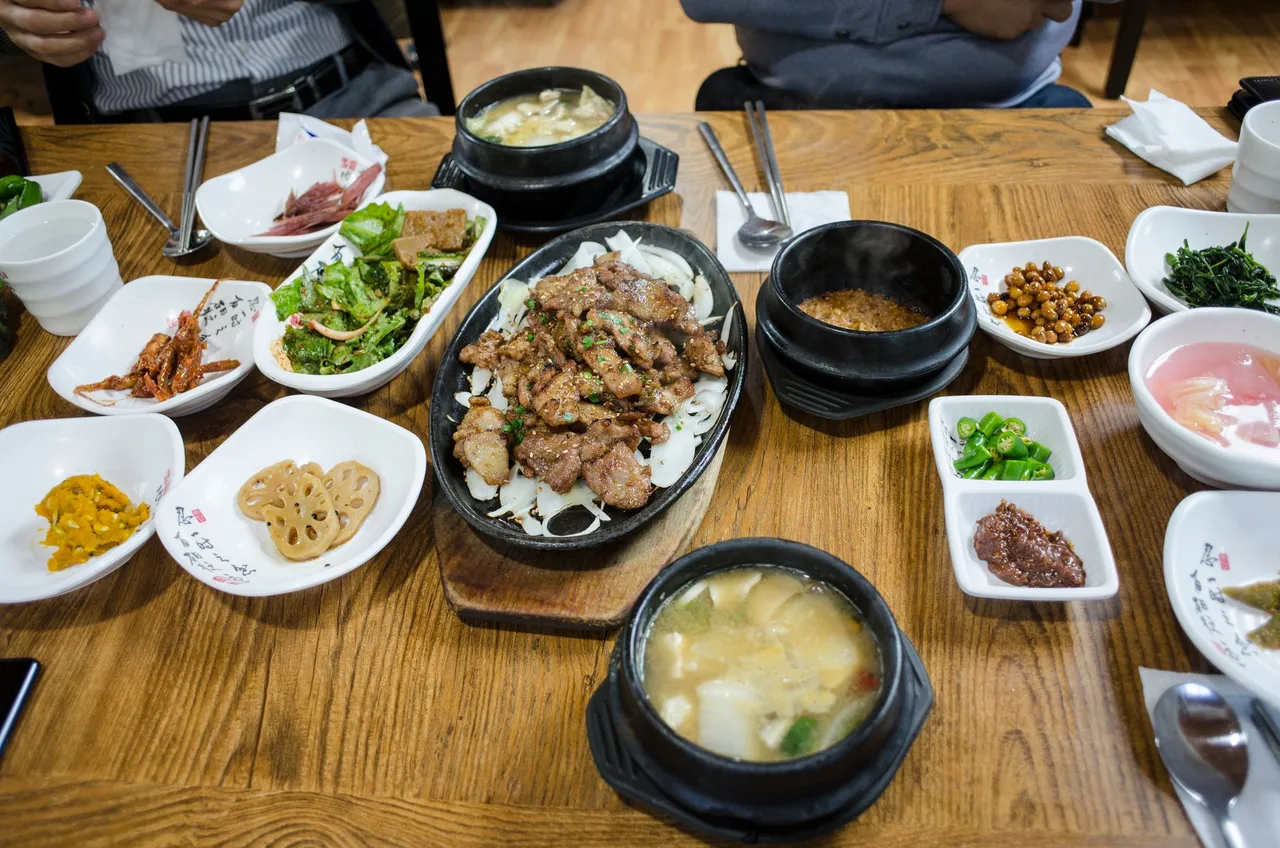
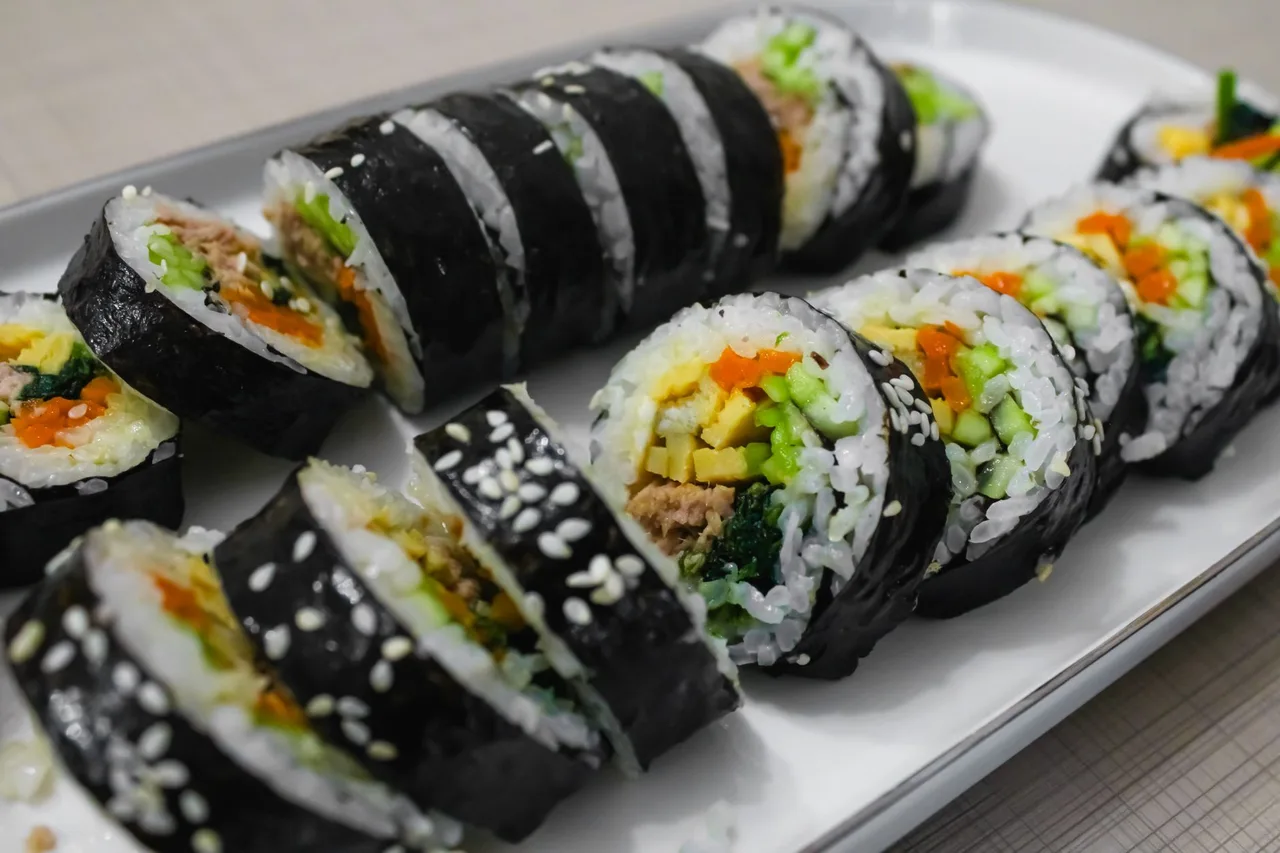
If you've watched Extraordinary Attorney Woo, you've watched someone eat a lot of gimbap. Woo Young-woo orders it constantly, and part of the appeal she describes is that she can see exactly what's inside — rice, seaweed, a tidy cross-section, nothing hidden. The first time I walked into a nine-table place near Euljiro with the menu handwritten on the wall entirely in Korean, I wanted that same certainty and had none of it. I pointed at a random line, got a bowl of intestines I wasn't ready for, and paid for the lesson.
That lesson is the whole point of this guide. Reading a Korean menu is not about memorizing 300 dishes. It's about learning a small alphabet and about a dozen word-endings, so that even a menu you've never seen breaks into parts you can decode. Once it clicks, a wall of Korean stops being a barrier and becomes a list you can actually shop from.
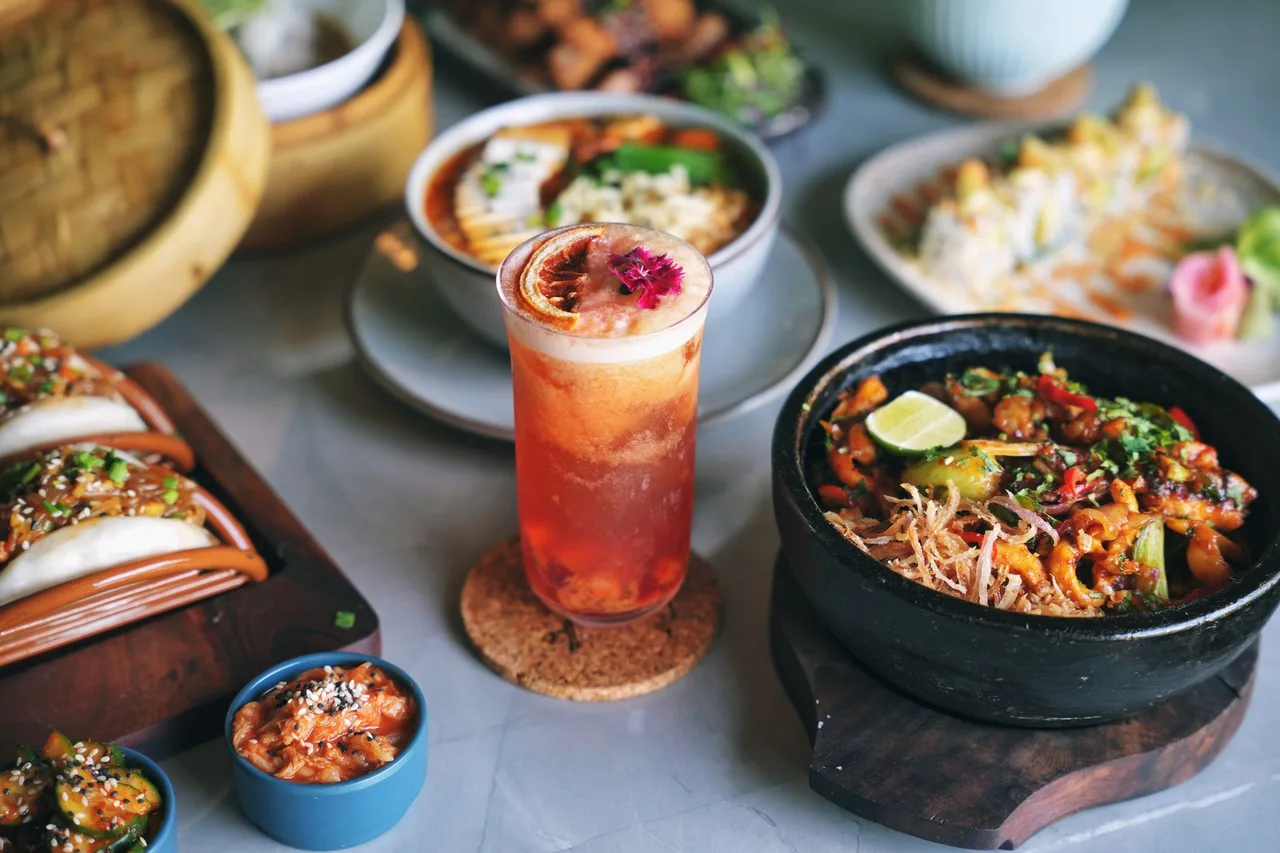
The menu is where Korea stops holding your hand
Airports, big hotels and touristy districts like Myeongdong or Hongdae mostly have English menus or at least photos. Step two blocks off the main drag, into the family-run gimbap shops, the pork-belly joints full of office workers, the old-school stew houses, and the English disappears. These are usually the places worth eating at. The menu is often just Korean text, sometimes brush-painted, sometimes a laminated grid of names and prices with no pictures at all.
You have three ways through: read enough Korean to decode it yourself, point your phone camera at it, or ask. The best travelers I know use all three, and the first one makes the other two far more reliable. When you can half-read a line, you can sanity-check what an app tells you, and you can point at the exact thing you want instead of the row above it.
Learn to read before you learn to speak
Here's the counterintuitive part: reading Korean is much easier than speaking it, and reading is what a menu demands. The alphabet, Hangeul, was commissioned by King Sejong and published in 1443 as the Hunminjeongeum, "the correct sounds for the instruction of the people." It was built on purpose to be learnable — one line from the era claims a wise person could master it in a morning and anyone else in ten days. Modern Hangeul has just 24 letters: 14 consonants and 10 vowels.
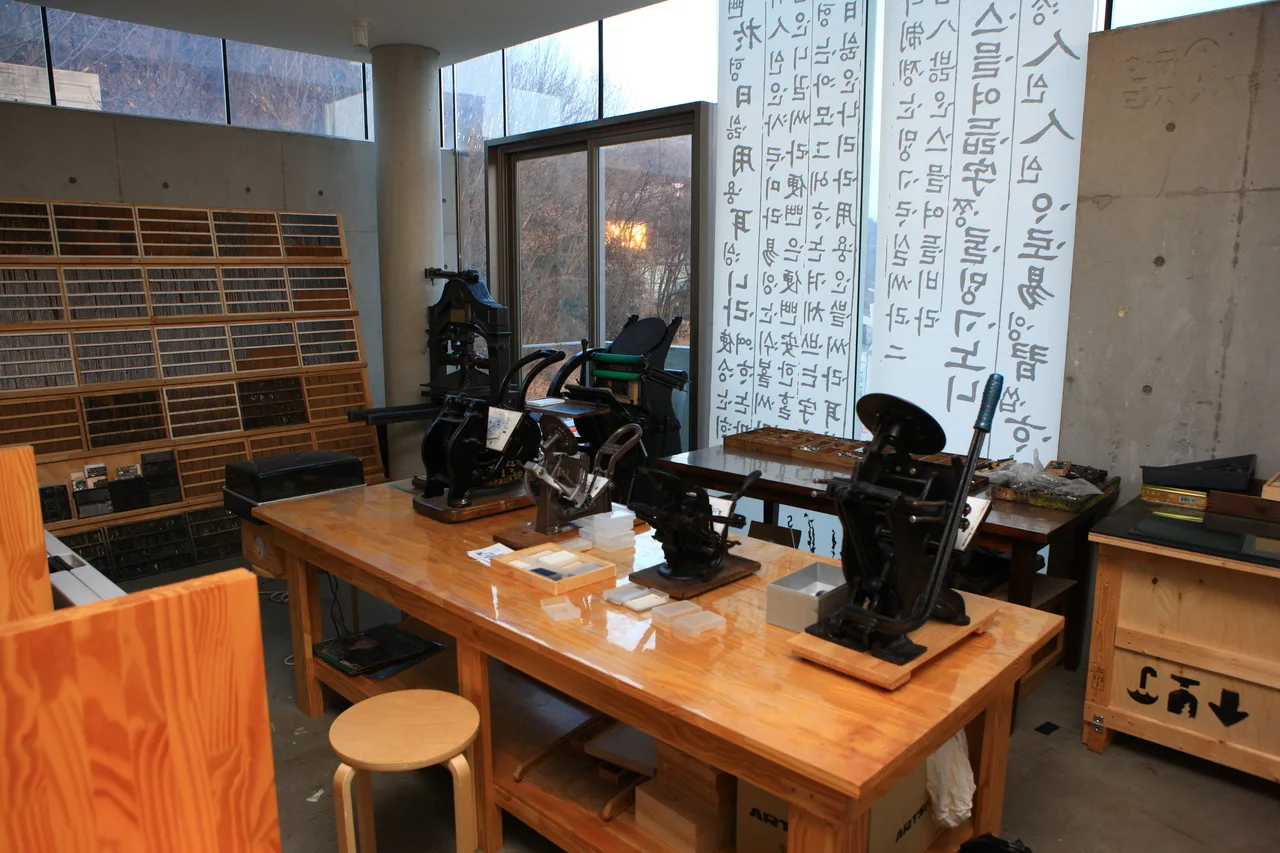
Letters group into syllable blocks. 밥 (bap, rice) is one block: ㅂ + ㅏ + ㅂ. 김치 (kimchi) is two blocks. Once you know the letters, you sound out the block left-to-right, top-to-bottom, and you're reading. You won't always know what a word means, but you'll be able to say it, which matters more than you'd think — a huge share of café and fast-food items are English loanwords written in Hangeul. 아메리카노 is "Americano." 치즈 is "cheese." 라떼 is "latte." Learn the alphabet and those decode themselves.
I'm not going to teach all 24 letters here, but a focused weekend genuinely does the job. Our read hangeul in a weekend guide is built for exactly this, and it's the single highest-return thing you can do before a trip. Everything below assumes you can at least sound words out.
The one trick that unlocks half the menu: the ending
Korean dish names are wonderfully logical. Most are built as ingredient + cooking method, and the cooking method sits at the end of the word. Learn the endings and you can guess a dish you've never met. Take mackerel, 고등어 (godeungeo): 고등어구이 is grilled mackerel, 고등어조림 is braised mackerel, 고등어탕 is mackerel soup. Same fish, three endings, three very different plates.
Here are the endings that carry the most weight:
- 구이 (gui) — grilled or roasted. 삼겹살구이 is grilled pork belly.
- 찌개 (jjigae) — a thick, salty, communal stew. 김치찌개, 된장찌개.
- 탕 (tang) — a heartier soup, usually meat- or bone-based. 갈비탕, 삼계탕.
- 국 (guk) — a lighter, everyday soup. 미역국 is seaweed soup.
- 전골 (jeongol) — a hot pot cooked at the table.
- 볶음 (bokkeum) — stir-fried. 제육볶음 is stir-fried spicy pork.
- 튀김 (twigim) — deep-fried.
- 조림 (jorim) — braised in seasoned liquid.
- 무침 (muchim) — dressed or seasoned, usually cold.
- 찜 (jjim) — steamed or slow-braised. 찜닭, 갈비찜.
- 볶음밥 / 덮밥 — fried rice / rice topped with something.
- 밥 (bap) — rice. 비빔밥 is "mixed rice."
- 면 (myeon) — noodles. 냉면 is cold noodles.
- 정식 (jeongsik) — a set meal with rice and many side dishes.
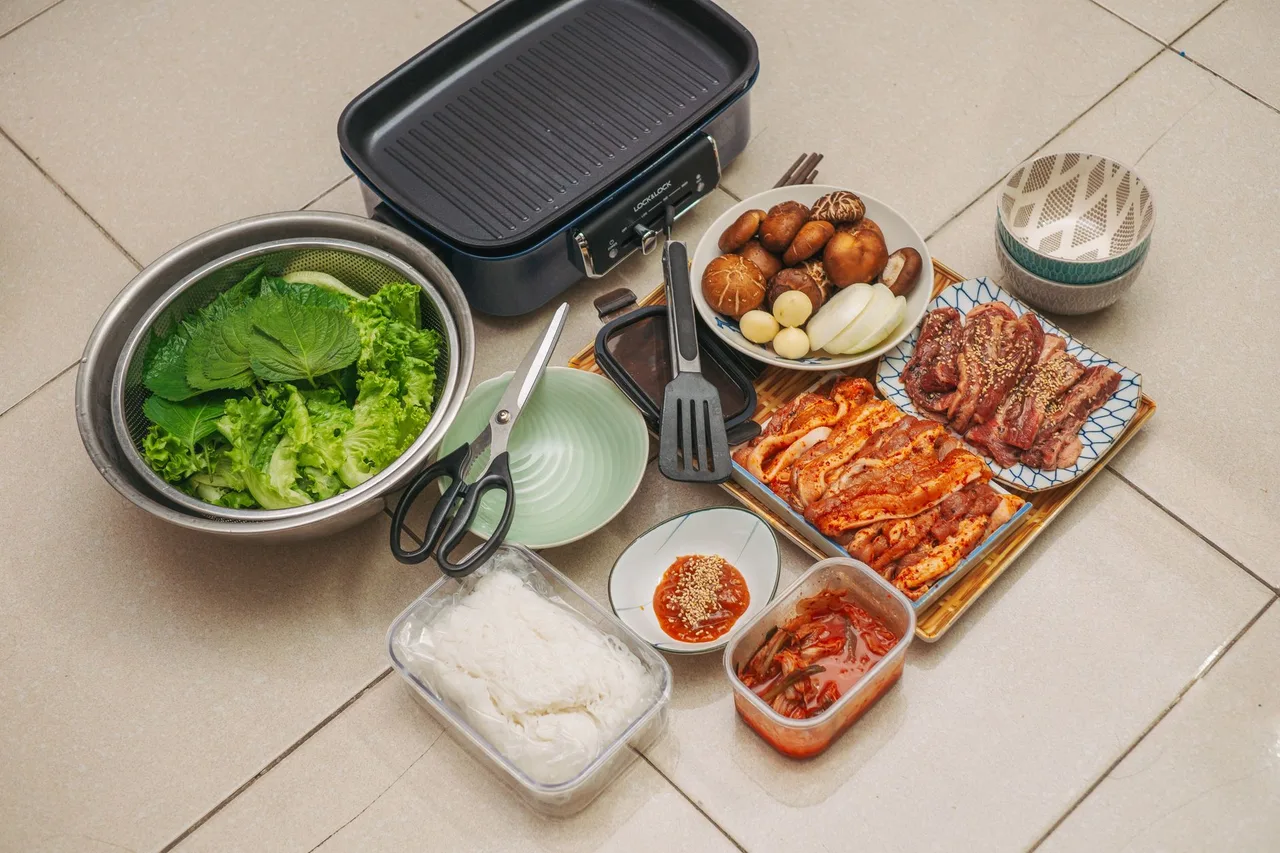
If you memorize only one column of this article, make it this one. A menu that looked like noise resolves into "grilled thing, stewed thing, fried thing, rice thing," and you can steer by mood. Craving something warm and soupy on a cold night? Scan for 탕 and 찌개. Want the sizzling grill experience? Look for 구이 and head to a table with a built-in grill — the ritual of it is covered in our Korean BBQ 101 guide.
Proteins and pastes: the front half of the word
If the ending tells you how it's cooked, the front tells you what's in it. A handful of ingredient words covers most menus:
- 소고기 (sogogi) — beef
- 돼지고기 (dwaejigogi) — pork; 삼겹살 (samgyeopsal) is the belly cut
- 닭 / 닭고기 (dak) — chicken
- 해물 / 해산물 (haemul) — seafood
- 김치 (kimchi)
- 된장 (doenjang) — fermented soybean paste
- 고추장 (gochujang) — red chili paste
- 간장 (ganjang) — soy sauce
- 마늘 (maneul) — garlic
Now combine. 돼지 + 국밥 = 돼지국밥, the pork-and-rice soup that's practically Busan's civic dish. 김치 + 볶음밥 = kimchi fried rice. 해물 + 파전 = seafood-and-scallion pancake. You're not translating anymore; you're assembling. This is the same skill our what to order as a first-timer guide leans on, just applied to the raw Korean instead of a translated list.
Soup, stew, or hot pot? Three endings worth slowing down on
English lumps a lot of things under "soup," and that flattening trips people up in Korea, where the category you pick changes the whole meal. It's worth pulling apart 국, 탕, 찌개 and 전골.
A 국 (guk) is the light, brothy soup that often comes as part of a set — think of the seaweed soup Koreans eat on birthdays. A 탕 (tang) is bigger and richer, a meal in itself: 삼계탕, the whole young chicken stuffed with rice and ginseng that people eat in the peak of summer to fight heat with heat, or 갈비탕, a clear beef-rib soup. A 찌개 (jjigae) is thicker, saltier and meant for sharing, ladled straight from the bubbling pot in the middle of the table — 김치찌개 and 된장찌개 are the everyday classics. A 전골 (jeongol) is the theatrical one, raw ingredients arranged in a wide pan and simmered in front of you.
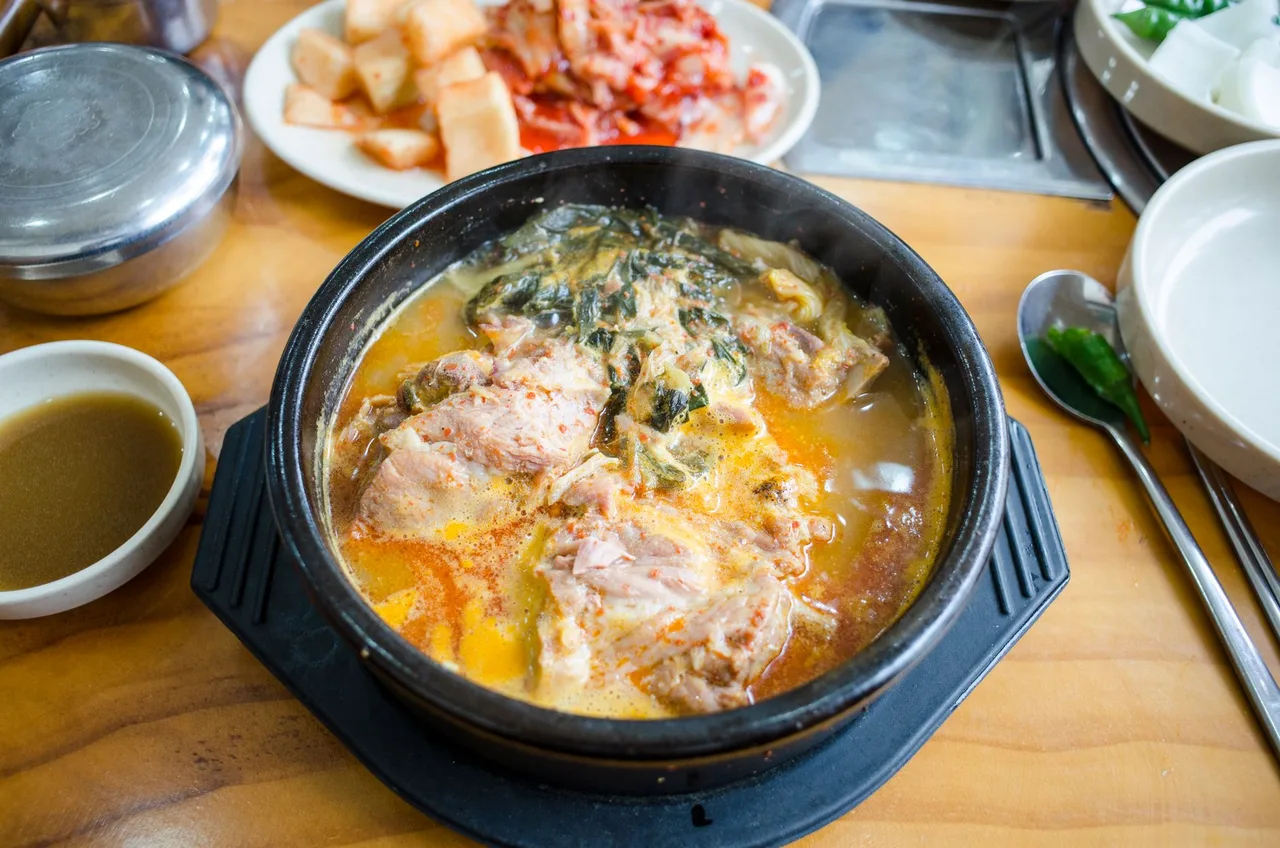
Practical upshot: if you're eating alone, a 국밥 (soup-with-rice) or a 탕 is a complete single-serving meal, while a 찌개 or 전골 is usually priced and portioned for two or more. I've watched solo travelers order a bubbling 부대찌개 for two and either overpay or overeat. Match the ending to your table size.
What it should cost
Prices in Korea have climbed noticeably in the last couple of years, and knowing the rough going rate keeps you from overpaying and helps you gut-check a menu. These are recent Seoul averages from the Korea Consumer Agency's eating-out price tracker and Korea Herald reporting through late 2025; treat them as a baseline, since figures drift upward and vary by neighborhood.
- 김밥 (gimbap): around 3,700 won for a basic roll
- 김치찌개 (kimchi stew), single set: roughly 8,500 won
- 칼국수 (kalguksu, knife-cut noodle soup): near 9,800 won
- 비빔밥 (bibimbap): around 11,500 won
- 삼계탕 (samgyetang): about 18,000 won
- 삼겹살 (samgyeopsal), per 200g serving: over 20,000 won
Two things to note. First, grilled meat is priced per portion of raw weight, usually 150g or 200g, and one portion is rarely enough for one hungry person — the number on the menu is not the number on your bill. Second, the side dishes (반찬, banchan) and often the rice and soup are free and refillable, which is why a 9,000-won bowl can genuinely fill you up. Understanding that rhythm is half of eating well here, and there's more on it in our how to eat like a local guide.
When the menu is a screen: kiosks
More and more, the "menu" isn't paper at all — it's a touchscreen kiosk by the door, and you order and pay before you sit. Korea has leaned hard into these; roughly 80% of McDonald's and over 90% of Lotteria locations here run on kiosks, and tiny gimbap and coffee shops have followed. For a visitor, the screen is where reading Korean pays off, because the English button is often a small toggle tucked in a corner, and even when you find it, options like "less ice," "for here or takeout" or spice level frequently stay in Korean.
Two survival notes. Many kiosks only accept payment on Korea's domestic card network (the VAN system), and a large majority don't take foreign chip-and-PIN cards, so carry some cash or a card you know works. And if you're stuck, staff will almost always come help if you catch their eye and say "저기요" (jeogiyo) — more on that phrase below. Some cities are catching up: Busan launched an AI multilingual menu platform called Busan Allang in June 2025, and similar efforts are spreading, but don't count on it everywhere yet.
Papago, your camera co-pilot
The app to install before you land is Papago, Naver's translator. Google Translate is fine, but for Korean specifically Papago tends to read menus better, including the brush-stroke and handwritten fonts old restaurants love. Open the camera mode, point it at the menu, and it overlays the translation in real time. Real-time camera translation has no daily cap; the separate "take a photo" mode is limited (50 scans a day, 300 a month as of early 2025), so just use the live camera and you'll never hit a wall. You can also download the Korean language pack for offline use, which is worth doing for basements and markets with no signal.
The trick is to use the camera and your own reading together. Apps still garble things — a 찌개 might come out as "jjigae" untranslated, or a regional dish might translate literally into something alarming. When you can read the ending yourself, you know the app got the gist right, and you can point confidently at the line you mean.
The phrases that close the deal
Reading gets you to the right dish; a few spoken phrases get it onto your table. These are the ones I use every day in Korea:
- 저기요 (jeogiyo) — "excuse me," to flag a server. Non-negotiable; there's rarely table service without it.
- 이거 주세요 (igeo juseyo) — "this one, please," while pointing.
- 하나 / 둘 / 셋 (hana / dul / set) — one / two / three, for quantity.
- 계산이요 (gyesan-iyo) — "the bill, please," though you often pay at the counter on the way out.
And because so much Korean food runs hot, learn the spice words. 맵다 (maepda) means spicy; 매운맛 is the "spicy version." If you want it toned down, "안 맵게 해주세요" (an maepge haejuseyo) means "please make it not spicy," and 순한맛 (sunhanmat) is the "mild" option some chains offer. It won't always be possible — a 김치찌개 is spicy by nature — but for stir-fries and chicken it often is.
For a fuller kit, including numbers, directions and the small politeness markers that make servers warm to you, keep our 20 survival Korean phrases guide open on your phone.
Reading one real line, start to finish
Put it together on a line you might actually see: 돼지고기 김치찌개 8,000. Front to back — 돼지고기 is pork, 김치 is kimchi, 찌개 is that thick communal stew, 8,000 is the price in won. So: a pork kimchi stew, about 8,000 won, likely spicy, probably portioned for one to share the pot. You now know what it is, roughly what it costs, that it'll be hot, and that it comes with free rice and banchan. No app required, though you can still aim the camera to confirm.
That's the entire method: sound out the block, read the ending for the cooking style, read the front for the ingredient, glance at the price, and check your table size against soup-versus-stew. Do it a few times and you stop noticing you're doing it. The menu that once felt like a locked door turns into the friendliest thing in the room — a plain list of good food, waiting for you to point.
Give yourself the weekend with Hangeul, load Papago, memorize the dozen endings above, and the next hole-in-the-wall with no English menu becomes the best meal of your trip instead of the scariest. That little gimbap shop off the main street has been there for a reason.
Sources
This guide was researched using the references below. Prices and times change, so confirm anything time-sensitive on the official page before you rely on it.
Related guides
- Hangul alphabet: a guide for beginnersDiscover the history, structure, and cultural significance of Hangul, the Korean alphabet, and learn how to read and write it.
- Essential Korean phrases for daily lifeMaster key Korean phrases to navigate daily interactions, from greetings to ordering food, enhancing your experience in Korea.
- Essential Korean phrases for travelersMastering key Korean phrases enhances your travel experience, making interactions smoother and more enjoyable.
- Learn Korean language: a practical guide for foreignersMastering Korean is achievable with structured study: start with Hangul, use quality resources, and practice consistently.
- Korean phrases you will hear in K-dramasDiscover essential Korean phrases commonly heard in K-dramas, their meanings, and how to use them in real-life conversations.
- Korean numbers explained for travelersKorea uses two number systems. Learn native and Sino-Korean numbers, when to use each, and how to read prices, tell time, and count in won.