20 survival Korean phrases for travelers
The 20 survival Korean phrases I actually use in Seoul, with real pronunciation and exactly where to say each one, from ordering to emergencies.
By Jae Park · Updated Jul 14, 2026
The first Korean word most of us learn never comes from a textbook. It comes from a drama. Someone slides open a restaurant door, raises a hand palm-down, and calls out "저기요!" across the room. A server appears with a tray of soju glasses. You have watched this scene a hundred times without knowing you were being taught your single most useful travel phrase.
I have spent enough time eating alone in Korean restaurants to tell you that phrase is not a nice-to-have. It is the difference between getting your food and starving politely in the corner. Korean service culture is call-based, not hover-based. No one drifts over to check if everything is okay. You summon them, and until you do, you are invisible.
So this is not a list of pretty sentences you will never say. These are the twenty phrases I actually reach for in Seoul, grouped by where you will need them, with the pronunciation written the way it really sounds.
One rule that makes all twenty work
Korean has speech levels, and travelers only need one: the polite casual level, the one that ends in "-yo." You will notice almost every phrase below finishes with that little "yo" sound. That ending is your force field. It signals respect without forcing you to learn the stiff formal grammar that Koreans reserve for news anchors and job interviews.
The other thing worth knowing before you open your mouth is the vowel written "eo" in romanization. It is not "ee-oh." It sounds like the "aw" in "saw" or "law." So 저기요 is "jaw-gi-yo," not "jee-oh-gi-yo." Get that one vowel right and your Korean instantly sounds less like a tourist reading a phrasebook. If you want to go a step further and read the actual letters, our guide on how to read Hangeul in a weekend makes it doable on a flight over.
Five phrases for your first hour on the ground
1. 안녕하세요 — annyeong-haseyo — Hello.
This is the one you say every single time you enter anywhere. A convenience store, a cafe, a taxi, a hotel lobby. Koreans greet on entry as a reflex, and skipping it reads as cold. You do not need to bow deeply. A small nod of the head while you say it is plenty.
2. 감사합니다 — gamsa-hamnida — Thank you.
Full and slightly formal, and you will use it constantly. There is a softer, warmer version, 고마워요 (gomawoyo), for cafe staff and people your age, but you can survive an entire trip on 감사합니다 alone.
3. 죄송합니다 — joesong-hamnida — I'm sorry / excuse me.
Use it when you bump someone on a packed subway car, when you need to squeeze past, or when you genuinely mess up. A lighter option is 미안해요 (mianhaeyo), but 죄송합니다 is never wrong.
4. 네 / 아니요 — ne / aniyo — Yes / no.
"Ne" is yes, and you will hear it answered on phones as "ne, ne, ne" in rapid fire. "Aniyo" is no. Simple, and you will use both dozens of times a day.
5. 저기요 — jeogiyo — Excuse me (to get attention).
The K-drama phrase. It literally means "over there," and that indirectness is the point. You are addressing the space rather than pointing a finger at a person, which keeps it polite. Raise your hand slightly, palm down, and say it. Many restaurants have a physical call button on the table instead. Press it once. It lights up your table number at the counter, and no, you do not need to keep pressing it.
Getting around a city that runs on efficiency
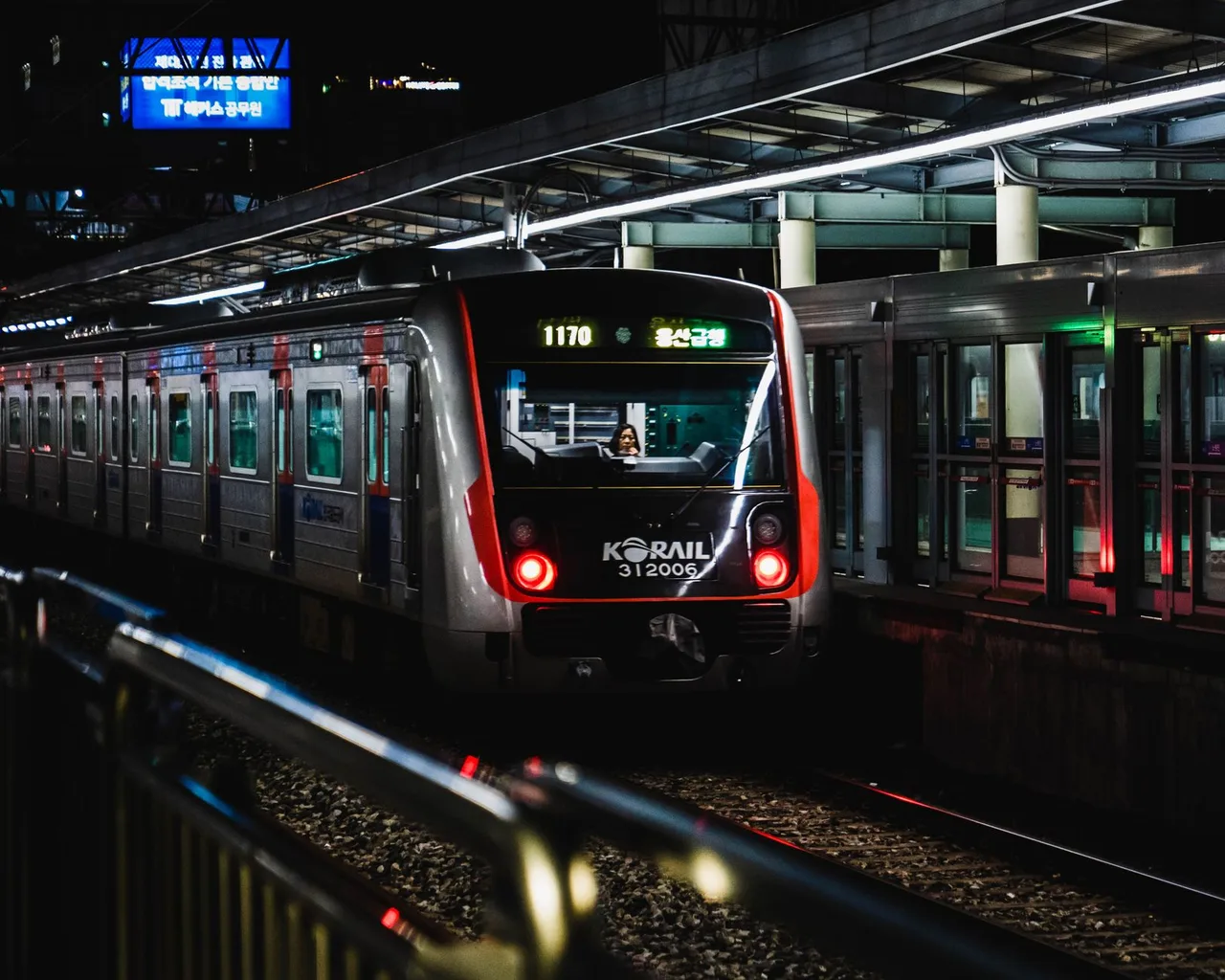
Korea moves fast. There is a word for it, 빨리빨리 (ppalli-ppalli, "hurry hurry"), and you feel it the moment you tap into the subway. The good news is that the transport system is so well signposted in English that you barely need to speak. These phrases cover the gaps.
6. ...어디예요? — ...eodiyeyo? — Where is...?
The most flexible sentence you will learn. Attach it to any noun. 화장실 어디예요 for the bathroom, 지하철역 어디예요 (jihacheol-yeok eodiyeyo) for the subway station, 편의점 어디예요 (pyeonuijeom eodiyeyo) for the convenience store. Point at a map on your phone and say the word plus "eodiyeyo," and someone will physically walk you halfway there.
7. 화장실이 어디예요? — hwajangsil-i eodiyeyo? — Where's the bathroom?
Worth memorizing as one whole chunk because you will need it under pressure. Most subway stations, department stores, and cafes have clean, free restrooms. In a pinch, any large station works.
8. 여기 세워 주세요 — yeogi sewo juseyo — Please stop here (in a taxi).
Seoul taxis are cheap and plentiful. Base fare sits at a few thousand won and many drivers now use translation apps, but this phrase gets you out exactly where you want. "Yeogi" means "here." If you booked through Kakao T, the app handles the destination for you, so this is mostly for the "actually, right here is fine" moment.
9. 이거 주세요 — igeo juseyo — This one, please.
The phrase that quietly runs your whole trip. "Igeo" is "this," "juseyo" is "please give me." Point at a pastry, a bottle of makgeolli, a phone charger, anything, and add "juseyo." Learn the pattern and you can buy the entire country.
10. 얼마예요? — eolmayeyo? — How much is it?
For markets, street food carts, and small shops without price tags. Vendors will usually punch the number into a calculator and show you, so you do not even need to understand the spoken answer. At Gwangjang Market or Myeongdong's night stalls, this plus a smile gets you a fair price.
One practical backup for all of this: get a data connection before you rely on any of it. A working phone means Naver Map, Papago translation, and Kakao T all work in your pocket. Our SIM vs eSIM in Korea breakdown covers which to buy at the airport.
Ordering food without pointing at everything
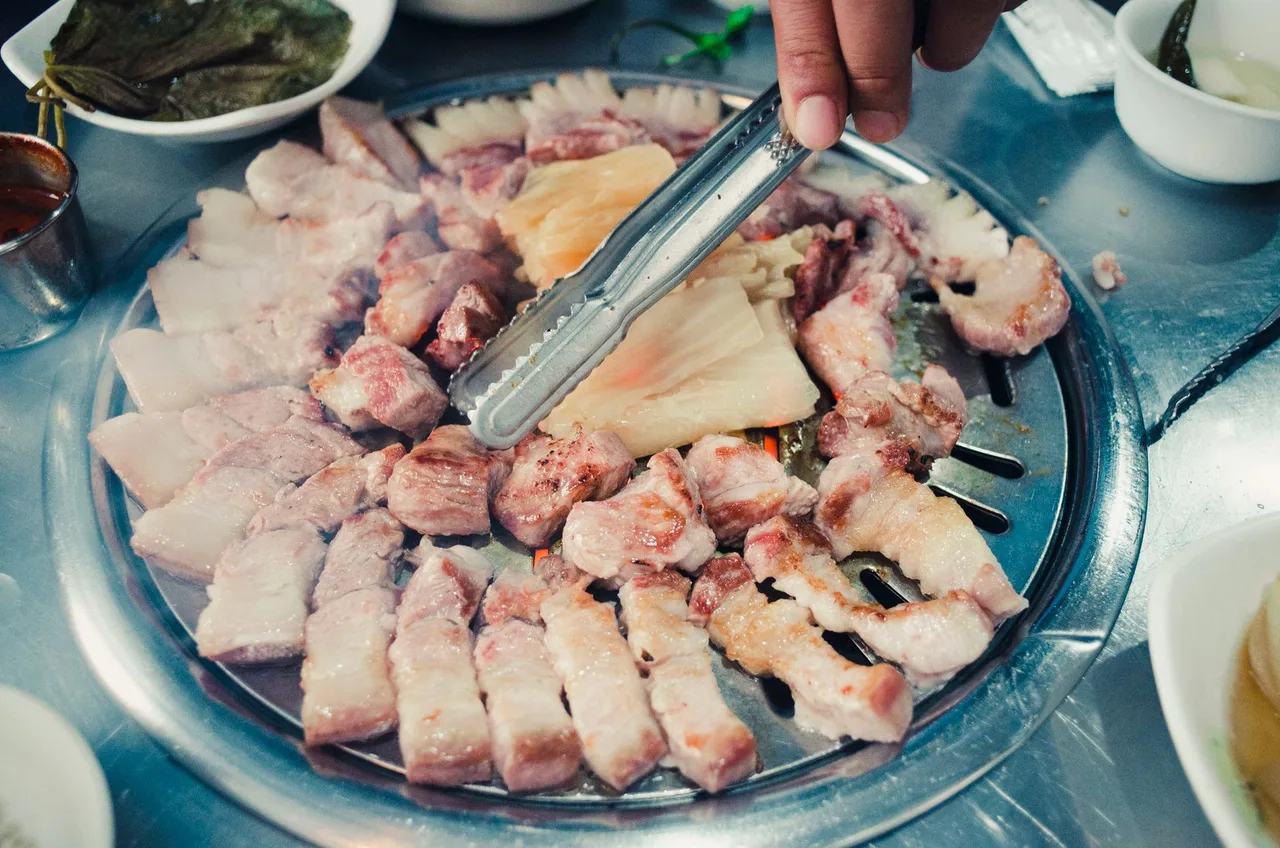
This is where the phrases earn their keep. Korean menus are getting more English-friendly, especially in Seoul, but the small neighborhood places with the best food often have Korean-only walls of paper. Knowing a handful of lines turns a stressful meal into a good one. If you want to actually decode what is on the menu, pair this with our guide on how to read a Korean menu.
11. 메뉴판 주세요 — menyu-pan juseyo — Menu, please.
"Menyu-pan" is the menu board. Say it as you sit, or after you have called the server with 저기요.
12. 물 주세요 — mul juseyo — Water, please.
Water in Korea is free and usually self-serve. Look for a water dispenser and a stack of steel cups near the door. If you cannot find it, this phrase works, though the staff may just point you to the dispenser.
13. 매워요? — maewoyo? — Is it spicy?
Or the answer you may want to give: 안 매워요 (an maewoyo, "not spicy"). A lot of Korean food carries real heat, and this one word saves you from a rough dinner. Be warned that Korean tolerance runs high, so "a little spicy" here can still surprise you.
14. 맛있어요 — masisseoyo — It's delicious.
Say it to the ajumma who ran your kitchen and watch her face change. It costs you nothing and means everything. You will also hear it constantly in mukbang videos and cooking shows for a reason.
15. 계산서 주세요 — gyesanseo juseyo — Check, please.
Except in Korea you usually do not pay at the table. You carry the bill, or just yourself, to the counter by the door and pay there. So this often becomes 계산이요 (gyesan-iyo), which you say while standing up and heading toward the register. Splitting the bill is less common than one person paying, so do not be surprised if a Korean friend quietly covers it.
When something goes wrong
Most trips go smoothly. But the phrases that matter most are the ones you hope not to use.
16. 도와주세요 — dowajuseyo — Please help me.
Lost, hurt, or in trouble. This is the one. Said with any urgency, it gets attention immediately.
17. 영어 하세요? — yeongeo haseyo? — Do you speak English?
A polite opener before you launch into English at someone. Younger Koreans often speak more than they let on. Older folks may wave their hands and find someone who does.
18. 잠깐만요 — jamkkanmanyo — One moment / hold on.
For when you need a second to find your card, check your phone, or figure out what you are doing. It also works as a gentle "excuse me, coming through" in a crowd.
19. 괜찮아요 — gwaenchanayo — It's okay / I'm fine / no thanks.
A quiet workhorse. It answers "are you alright?" and it politely declines the extra bag or the pushy sales pitch. If it sounds familiar, it is the heart of two drama titles, "It's Okay, That's Love" and "It's Okay to Not Be Okay." One word, endless uses.
There is one more layer of backup worth writing on your hand: 1330. It is the Korea Travel Hotline, run by the Korea Tourism Organization, staffed around the clock in English and several other languages. It is not just for directions. If you are stuck at a restaurant, lost in a neighborhood, or need something translated on the spot, you can call 1330 and the operator will interpret for you, even speaking to the person in front of you on your behalf. You pay only the local call charge. For genuine emergencies, dial 112 for police and 119 for fire or ambulance.
Two bonus words that will make Koreans light up
20. 잘 먹겠습니다 — jal meokgetseumnida — I'll eat well.
Said before you start eating, roughly "thank you for this food." Its partner, 잘 먹었습니다 (jal meogeotseumnida), means "I ate well" and is said after. If a Korean host or a restaurant grandmother is watching you eat, these two land harder than any tip.
And one you will hear before you ever say it: 대박 (daebak), the all-purpose "wow / awesome / no way." Drop it when the food arrives sizzling or the view opens up, and you will get a grin every time.
How to actually make these stick
You do not need to memorize all twenty before you land. Pick the five from the first section, the greetings and 저기요, and get those solid. Those alone carry you through most of a day. Add the food phrases the night before your first proper Korean meal. Learn the emergency ones on the plane and hope you never use them.
Say them out loud, badly, early. Koreans are generous with travelers who try. The gap between pointing silently and offering a wobbly 안녕하세요 is enormous in how you get treated. I have watched a shopkeeper's whole manner soften over one clumsy 감사합니다. Effort reads as respect here, and respect is the currency the whole culture runs on. If you want to understand why, our guide to Korean etiquette dos and don'ts fills in the unwritten rules behind the phrases.
One last honest note. Nobody expects you to be fluent, and nobody will mock your accent. The bar is not "speak Korean." The bar is "you tried," and clearing it takes about four words. Learn those four, say them like you mean them, and the country meets you more than halfway.
Sources
This guide was researched using the references below. Prices and times change, so confirm anything time-sensitive on the official page before you rely on it.
Related guides
- Hangul alphabet: a guide for beginnersDiscover the history, structure, and cultural significance of Hangul, the Korean alphabet, and learn how to read and write it.
- Essential Korean phrases for daily lifeMaster key Korean phrases to navigate daily interactions, from greetings to ordering food, enhancing your experience in Korea.
- Essential Korean phrases for travelersMastering key Korean phrases enhances your travel experience, making interactions smoother and more enjoyable.
- Learn Korean language: a practical guide for foreignersMastering Korean is achievable with structured study: start with Hangul, use quality resources, and practice consistently.
- Korean phrases you will hear in K-dramasDiscover essential Korean phrases commonly heard in K-dramas, their meanings, and how to use them in real-life conversations.
- Korean numbers explained for travelersKorea uses two number systems. Learn native and Sino-Korean numbers, when to use each, and how to read prices, tell time, and count in won.