What to Order in Korea as a First-Timer
An honest first-timer guide to what to order in Korea: chimaek, bibimbap, samgyeopsal, tteokbokki and more, with real prices and how to order it.
By Jae Park · Updated Jul 14, 2026
The first Korean meal I ever wanted came with no plot around it — just Jun Ji-hyun in *My Love from the Star* declaring that a snowy day is perfect for chicken and beer. I watched that scene long before I set foot in Incheon, and by the time I did, "chimaek" was already a word I'd said out loud in my own kitchen. That's how it tends to go. You fall for the country through a screen, then you show up hungry, standing in front of a laminated menu with forty photos on it, with no clue where to begin.
This is the answer I wish someone had handed me on day one. Not a ranked list of the "best" restaurants, but the dozen or so dishes that actually teach you how Korean food works — what they cost, how you're expected to order them, and the small table habits that keep you from feeling lost. The prices below are what I've paid recently on 2025–2026 menus. Seoul has been climbing steadily, so read every figure as "roughly," and confirm before you sit down.
Start where the dramas do: chimaek
Fried chicken and beer sound too simple to matter, and then you eat it in Korea and understand why an entire drama subplot can hang on it. "Chimaek" mashes *chi*(cken) and *maek*(ju, beer) into one word, and it only really became a national obsession around the 2002 World Cup, when people packed parks to watch matches on big screens with chicken in one hand and a cold lager in the other. The number of chicken shops in the country roughly doubled in the years after. Then *My Love from the Star* aired, and the craze jumped borders — fans in China reportedly queued for hours outside Korean chains after Cheon Song-yi swooned over her chimaek nights.
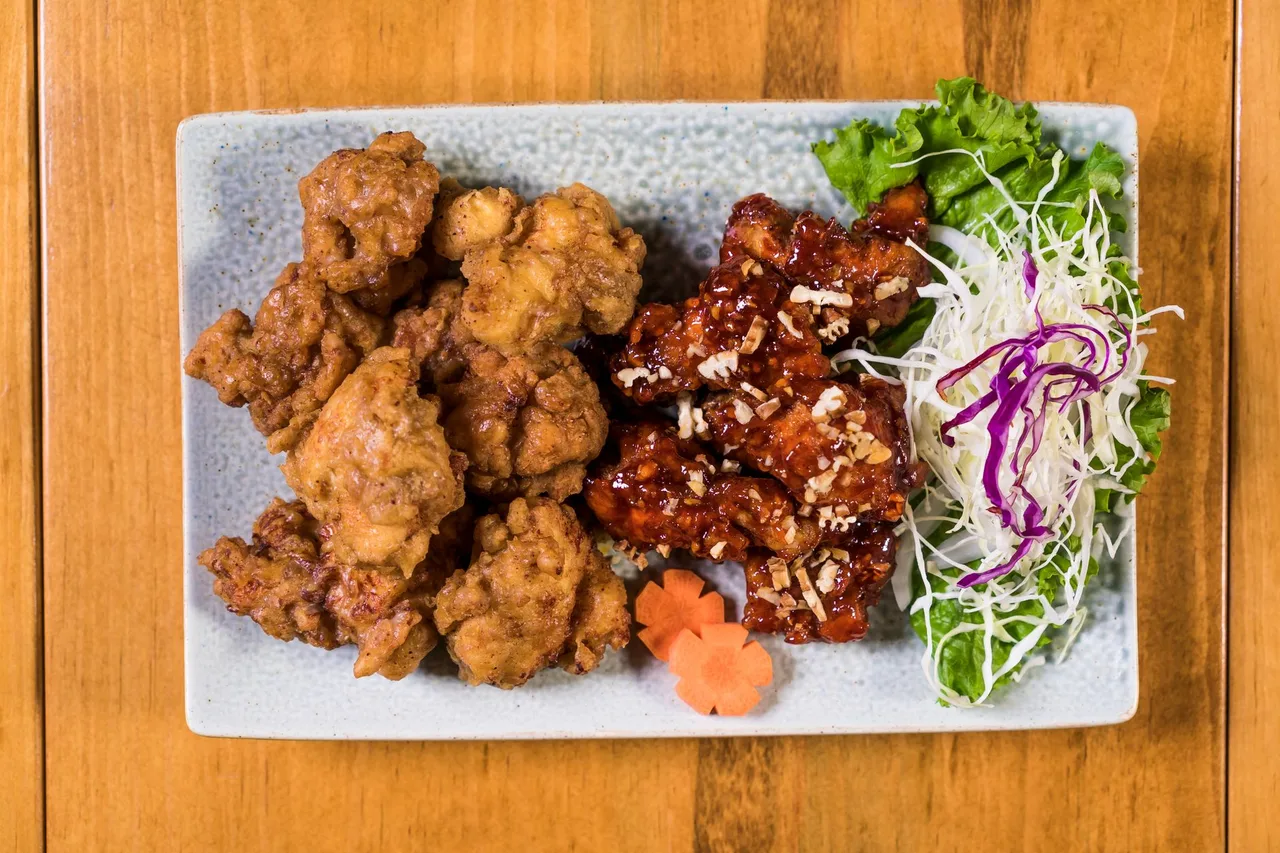
Order it as a whole bird (한 마리, *han mari*), usually 18,000–23,000 won, easily shared by two. The classic move for a first-timer is "half and half" (반반, *banban*): half plain crispy *huraideu*, half sweet-spicy *yangnyeom* glaze. Pair it with a draft beer or a bottle of soju and you've recreated the scene. Most shops also deliver, and ordering chicken to a park bench along the Han River on a warm evening is one of those small things locals do that no itinerary tells you about.
The bowl that explains everything: bibimbap
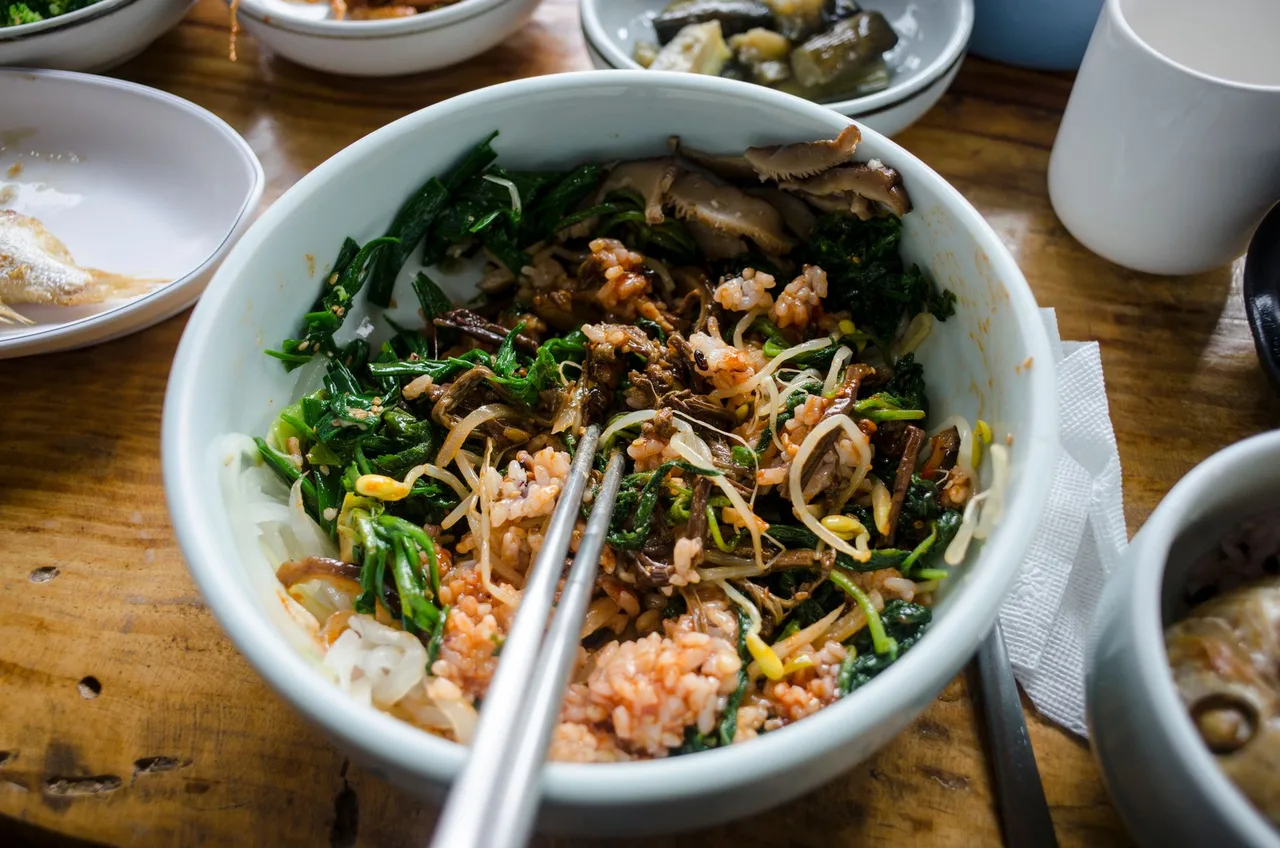
If you eat one dish that unlocks the whole cuisine, make it bibimbap. The name just means "mixed rice," and that plainness is the point — rice under a fan of seasoned vegetables, often with beef, a raw or fried egg, and a dollop of gochujang. Jeonju, a couple of hours south of Seoul and a UNESCO Creative City of Gastronomy, claims the definitive version, sometimes built from thirty-plus ingredients arranged by the five traditional colors of red, yellow, green, white and black. One story traces it to the royal table; another to farmers' wives with no time for a spread of side dishes, tossing everything into a single bowl.
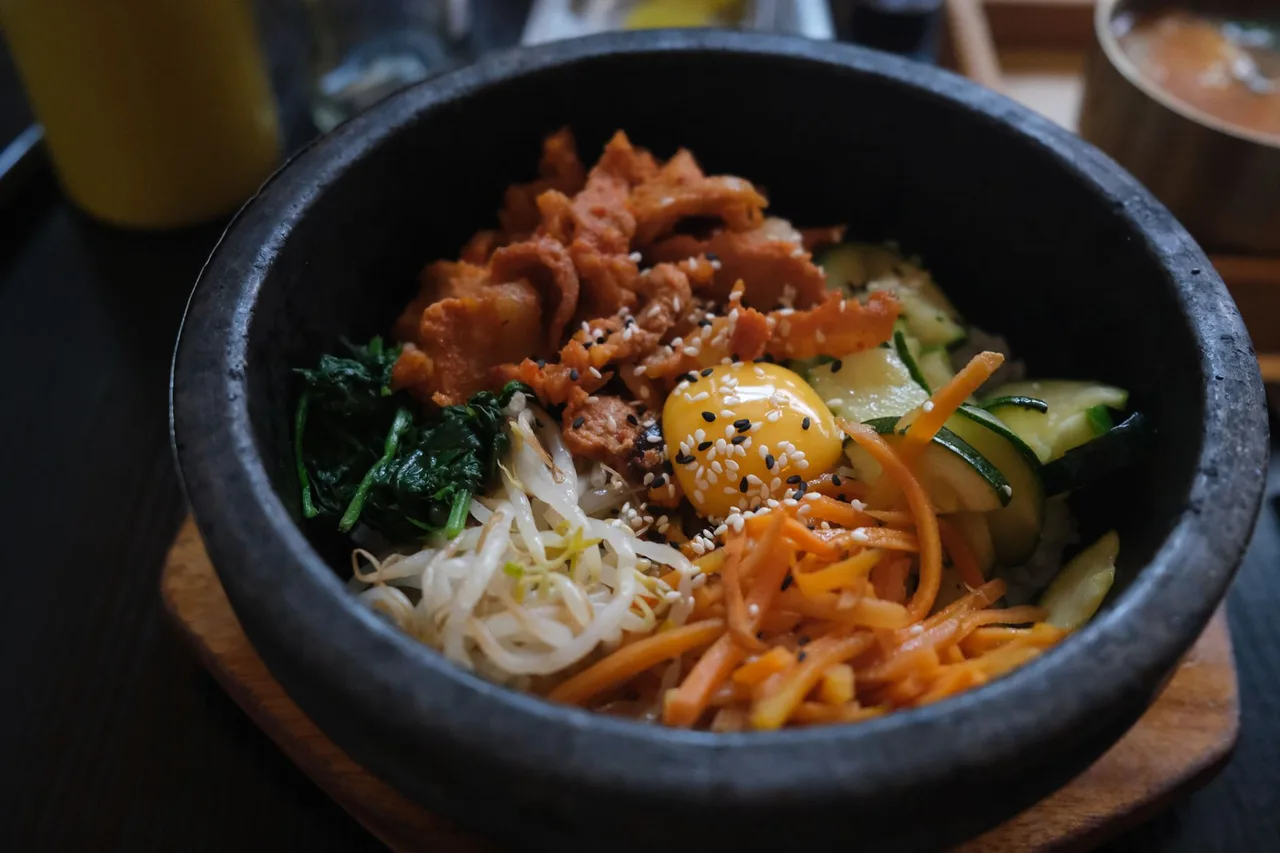
Here's the part visitors get wrong: you're supposed to mix it, hard, until the color goes uniform and the gochujang coats every grain. Ask for *dolsot* bibimbap (돌솥) if you can — it arrives in a screaming-hot stone bowl, and the rice against the sides crisps into a golden crust called *nurungji* that you scrape up at the end. Expect 9,000–15,000 won. Vegetarians, this is your safe harbor; just ask them to hold the beef and the egg.
Grill your own: samgyeopsal and the barbecue table
Korean barbecue is a verb more than a dish. The everyman cut is samgyeopsal — thick, unmarinated pork belly you grill yourself over a grate set into the table. You order it by the portion, called *inbun* (인분), and most places set a two-portion minimum, so it's built for company. Budget 15,000–35,000 won per person before drinks; a 200-gram serving of belly cracked past the 20,000-won mark in Seoul in 2025, a number that made the local news, so prices genuinely do bite now.
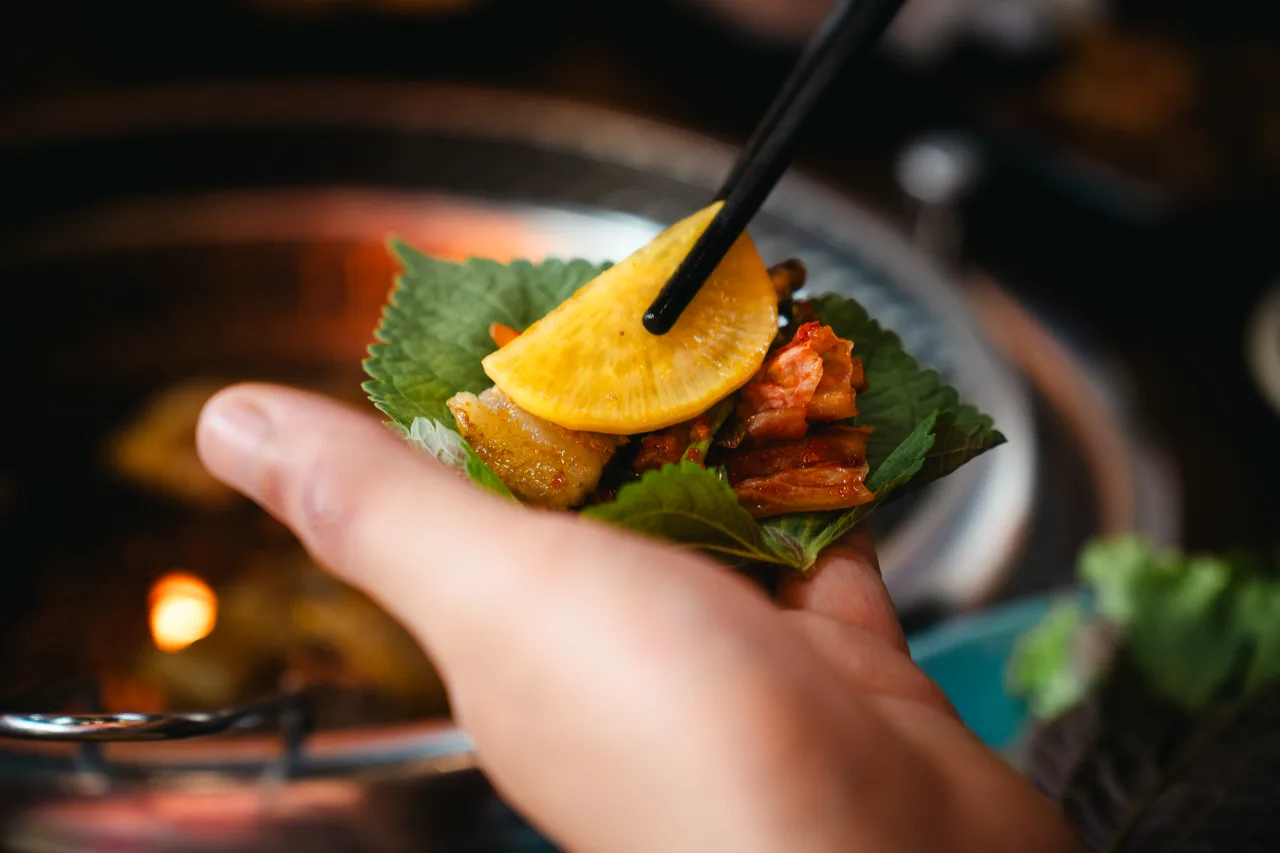
What arrives for free alongside is half the joy: a spread of *banchan* — kimchi, sliced raw garlic and chili, dipping sauces, often a little pot of *doenjang jjigae* (soybean-paste stew) — plus lettuce and perilla leaves for wrapping. Grill a piece until the fat renders and the edges catch, drop it on a leaf with a smear of *ssamjang*, a sliver of garlic, maybe a strip of kimchi, fold it into a *ssam* parcel and eat it in one bite. At many places the server does the first round of cutting and flipping; watch, then take over. If the mechanics feel like a lot, our Korean BBQ 101 guide walks through cuts, sauces and grill timing.
Stews that come in a stone pot
Nothing on a Korean table is as underrated as *jjigae*, the bubbling stews served in a *ttukbaegi*, a black earthenware pot that keeps boiling for a while after it reaches you. Sundubu jjigae is the gateway: silken tofu so soft it breaks into spoonfuls, in a spicy, briny broth. It usually arrives with a raw egg on the side — crack it straight into the boiling pot, let the heat set it, then stir. It comes with rice and banchan, and runs about 9,000–12,000 won.
The one with the best backstory is *budae jjigae*, literally "army stew." It was improvised in the lean years after the Korean War, when cooks stretched scavenged American rations — Spam, hot dogs, instant noodles — into something hot enough to feed a family. Today it's a shared bubbling pot of ramyeon, kimchi, sausage, baked beans and rice cakes, unapologetically a fusion of hardship and ingenuity, and I find it hard to stop eating. Kimchi jjigae, made from older, deeply sour kimchi, is the everyday staple locals eat when they want to feel at home.
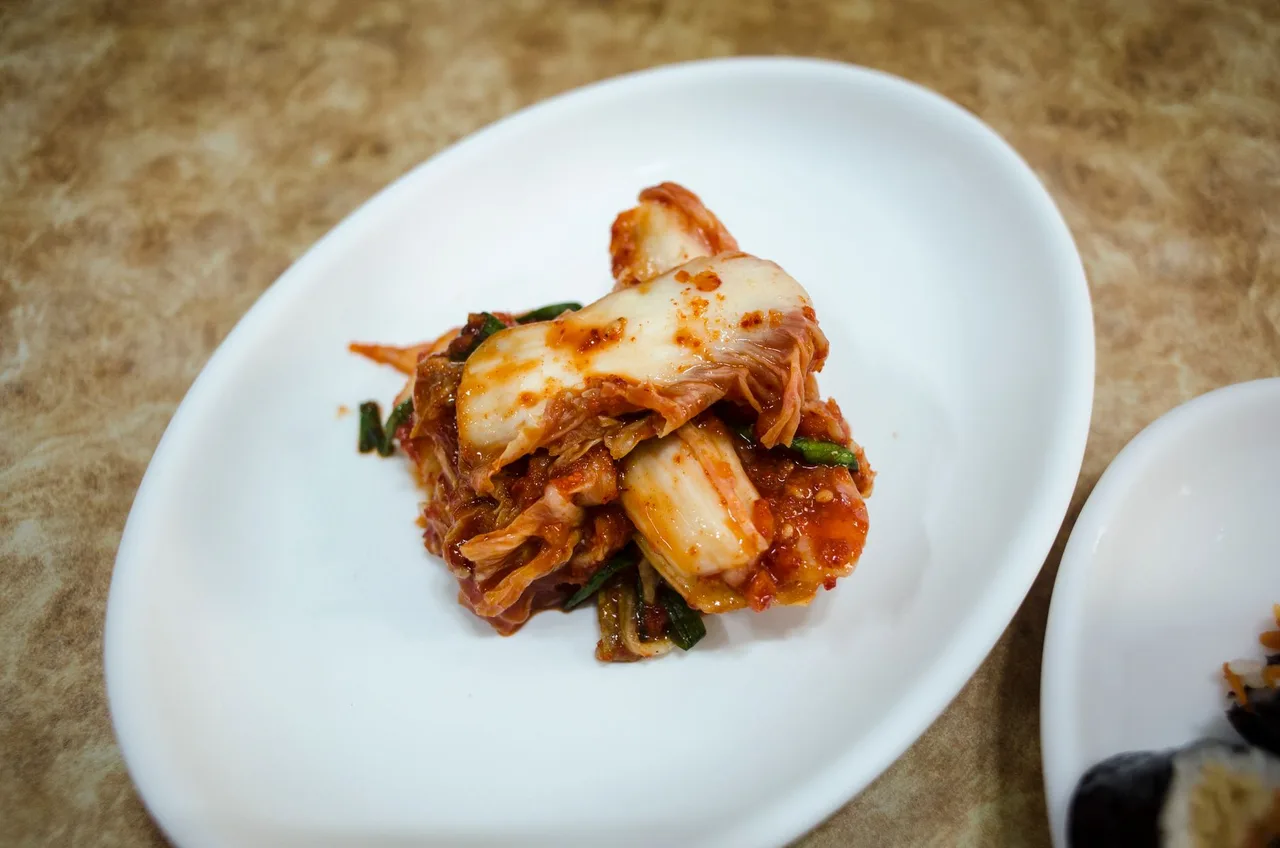
That older kimchi points at something bigger. Kimchi isn't a single recipe but a whole preserving tradition, and *kimjang* — the late-autumn ritual of families making and sharing winter kimchi together — was inscribed on UNESCO's list of intangible cultural heritage in 2013. Taste it fresh and crunchy at a barbecue joint, then taste it stewed and sour in a jjigae, and you've eaten the same ingredient at two ends of its life.
The market crawl: Gwangjang and street snacks
For pure atmosphere, spend an afternoon eating your way through Gwangjang Market, near Jongno 5-ga Station (Line 1, exit 8) or Euljiro 4-ga (Lines 2 and 5). Its food alleys got a second life after Netflix's *Street Food: Asia* featured a kalguksu grandmother, and the crowds have grown ever since. The two dishes to hunt down: *bindaetteok*, thick mung-bean pancakes ground and fried to order, crisp at the edges and served with soy-and-onion dip; and *mayak gimbap*, "narcotic" mini seaweed rolls so called because you can't stop at one, dunked in mustard-soy sauce.
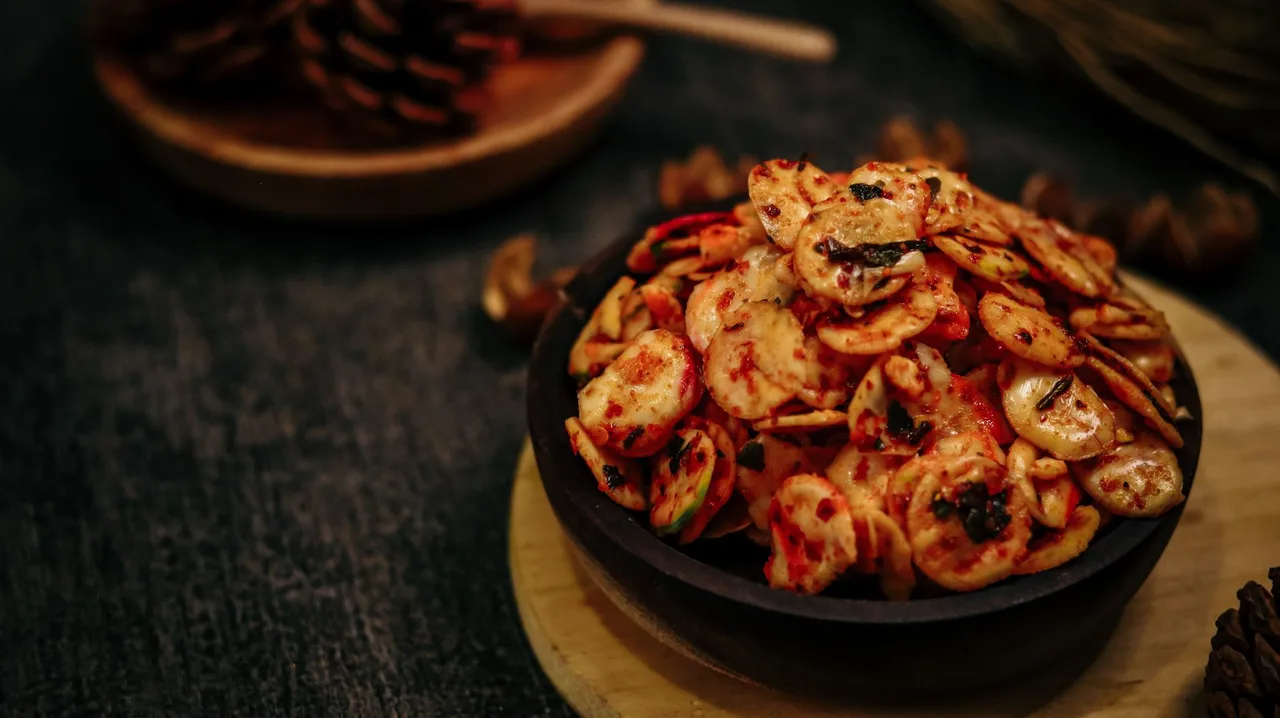
Then there's tteokbokki, the chewy rice cakes in sweet-spicy gochujang sauce that show up in half the school scenes in K-dramas. It used to be the cheapest snack going; a market plate now runs around 5,000 won, franchise versions 4,500–8,000 for a single, and rosé or premium styles climb past 11,000. It's the flavor that most reliably makes people who "don't like spicy" reconsider. One honest warning: a few market stalls have leaned into the tourist rush with vague pricing, so glance at the posted prices and confirm the total before you order, especially for platters.
When it's hot: naengmyeon and cold noodles
Come in summer and you'll see why Koreans build an entire dish around cold. *Naengmyeon* is a bowl of thin, chewy buckwheat noodles that traces back to Pyongyang and the Joseon era, and there are two schools. *Mul naengmyeon* sits in an icy, faintly tangy beef or radish-water broth, sometimes with shards of actual ice floating in it. *Bibim naengmyeon* comes with no broth and a fiery gochujang dressing you mix in yourself.
Both arrive with a pair of scissors — you're meant to snip the noodles so they're easier to eat — and small pots of vinegar and hot mustard to adjust the broth to taste. It's the classic chaser after a heavy grilled meal, which is why so many barbecue places list it at the bottom of the menu for around 10,000–13,000 won. The first sour, cold slurp on a 33-degree Seoul afternoon is a genuinely restorative thing.
Convenience stores and the soju question
Some of my favorite Korean meals cost under five dollars and came from a CU, GS25 or 7-Eleven. Convenience stores here are a food destination in their own right: banana milk, triangle *gimbap*, hot bins of steamed buns, and instant ramyeon you cook at a machine by the window and eat at a counter. It's the cheapest, lowest-stakes way to try things when you're too tired to decode a menu.
They're also where you'll meet soju, that clear little green bottle from every drinking scene you've watched. At a convenience store it's about 1,900 won; at a restaurant, 3,000–5,000. If you drink it with Koreans, a couple of rules matter more than the taste. Never pour your own glass — you fill others', they fill yours. Pour and receive with two hands, or steady your pouring arm with your free hand, as a mark of respect. And when an elder pours, turning slightly away to drink is the polite old-school touch. Say *geonbae* (cheers) and you're in.
How to actually order without stress
A few practical things nobody tells you, and they remove most of the anxiety:
- Banchan is free and usually refillable. Those little side dishes aren't a bill trap; if you love the kimchi or the egg, you can ask for more at no charge.
- Pointing works. Menus lean on photos for exactly this reason. Point and say *igeo juseyo* ("this one, please") and you're understood.
- Portions are shared. Barbecue, stews and chicken are ordered by *inbun* or by the pot for the table, not per plate per person. Solo travelers, aim for bibimbap, noodles and convenience-store meals.
- Payment is easy. Cards are accepted almost everywhere, you pay at the counter on the way out, and there is no tipping — leaving extra just causes confusion.
If reading the menu itself is the hurdle, how to read a Korean menu breaks down the characters you'll see most, and 20 survival Korean phrases covers the handful of words that carry you through a meal. For the softer stuff — where to sit, when to wait, how not to be the loud table — how to eat like a local goes deeper than I can here.
My one real piece of advice: order the thing you can't pronounce. The first time I stabbed a finger at an unknown line on a Gwangjang menu, it turned out to be *sundae*, blood sausage, and I've ordered it on purpose ever since. You came all this way for the real version of what the screen sold you. Skip the safe choice at least once and let the country surprise your mouth.
Sources
This guide was researched using the references below. Prices and times change, so confirm anything time-sensitive on the official page before you rely on it.
Related guides
- Korean recipes with ground beefExplore easy and flavorful Korean dishes using ground beef, from bulgogi bowls to kimchi mandu, perfect for quick meals.
- Korean BBQ options near Incheon AirportA guide to enjoying authentic Korean BBQ near Incheon Airport, including top restaurant recommendations and practical tips for travelers.
- Korean BBQ in Incheon: A guide for foreignersDiscover the best Korean BBQ spots in Incheon, understand local dining etiquette, and learn how to enjoy this culinary experience like a local.
- Korean BBQ in Seoul: A guide for first-time visitorsDiscover the essentials of enjoying Korean BBQ in Seoul, from ordering and etiquette to top restaurant recommendations and solo dining options.
- Korean chicken recipes to try at homeExplore a variety of Korean chicken dishes, from spicy stir-fries to comforting soups, with recipes and cultural insights.
- Easy Korean recipes for beginnersDiscover simple Korean dishes like kimchi fried rice and bulgogi that you can make at home with minimal ingredients and time.