Korean traditional music (gugak) and where to hear it
Where to hear Korean traditional music in Seoul, from the National Gugak Center's Saturday concerts to Jongmyo rite music, plus what the sounds mean.
By Jae Park · Updated Jul 14, 2026
The first time most people hear gugak, they don't know that's what it is. It sneaks in through K-pop. Agust D, which is Suga of BTS, built his track "Daechwita" on top of the real *daechwita*, the blaring royal military procession music that once announced a king on the move, taepyeongso oboe screaming over the beat. A couple of years earlier the band Leenalchi took a two-hundred-year-old pansori story about a tiger and turned it into the hook behind the Korea Tourism Organization's "Feel the Rhythm of Korea" clips, the ones your algorithm probably fed you at some point.
So you have likely already heard gugak. You just met it wearing streetwear.
This guide is about hearing the real thing, live, in a room, played the way it was meant to sound, and knowing enough to follow along. I'll start with what the word means, walk through the instruments and genres so the sounds stop blurring into one exotic wash, then get specific about where to go, beginning with the National Gugak Center in Seoul.
What "gugak" actually means
Gugak (국악) translates literally as "national music," and it is a bit of a retroactive label. The term came into use in the late Joseon dynasty, coined by the Jangagwon, the royal music office, to mark a line between homegrown music and the foreign music arriving from China and, later, the West. Everything on the Korean side of that line became gugak. Under one word sits more than a thousand years of very different material.
The cleanest way to split it is court music versus folk music, because they were made by different people for different rooms. Court music, broadly called jeongak (정악), is slow, spacious, and deliberately unhurried. It was played for kings, Confucian rites, and the scholar class, and it carries three older streams inside it: aak, ritual music adapted from Chinese ceremonial music; hyangak, native Korean court repertory; and dangak, pieces of Tang-Chinese origin that got naturalized over centuries. The first time I sat through a jeongak piece I checked my watch, waiting for something to "happen." Nothing did, in the pop sense. That is the point. The music is about the shape of a single held note, the breath before it, the slow bend at the end.
Folk music is the opposite temperature. It is loud, physical, and built to move a crowd of farmers or a village square. That is where pansori, sanjo, samulnori, and the regional folk songs live. Same country, same instruments in some cases, completely different heartbeat.
The instruments, and how to tell them apart
Once you can name three or four instruments by ear, a gugak concert stops being a blur. These are the ones you'll meet most:
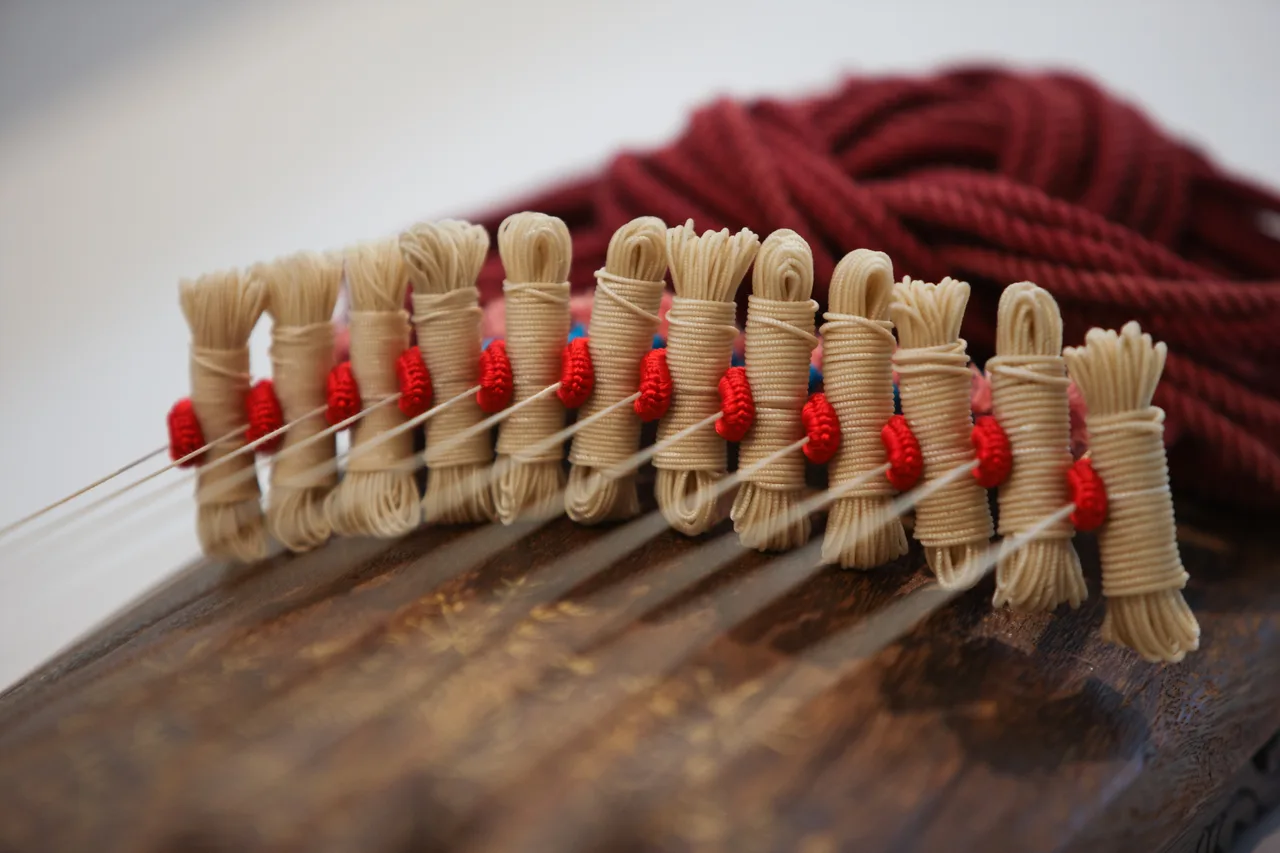
- Gayageum (가야금) — a long zither with twelve silk strings, plucked with the fingers. Warm, rounded, the sound people picture when they think "traditional Korean." A modern 25-string version shows up in a lot of fusion.
- Geomungo (거문고) — a heavier six-string zither struck with a short bamboo stick. Darker and more percussive than the gayageum. This is the growling instrument in Leenalchi and the metal band Jambinai.
- Daegeum (대금) — a large transverse bamboo flute with a buzzing membrane that gives it a breathy, reedy edge you can pick out instantly once you know to listen for it.
- Piri (피리) — a small double-reed pipe, thin and piercing, and the taepyeongso, its bigger cousin, is the one blasting through "Daechwita."
- Haegeum (해금) — a two-string vertical fiddle with no fingerboard, so notes slide and cry. It sounds almost like a human voice complaining.
- Janggu (장구) — the hourglass drum, one skin high and sharp, the other low and round. It is the backbone of nearly every ensemble.
At the far ceremonial end are the pyeonjong, a rack of bronze bells, and the pyeongyeong, tuned stone chimes. You mostly hear these in court ritual music, and there is something genuinely strange and beautiful about pitched stone.
The genres worth knowing before you go
A handful of names will cover most of what you'll encounter.
Pansori (판소리) is the one to prioritize. One singer, one drummer, and a story that can run four or five hours in full, sung in a deliberately rough, wrung-out voice that singers spend years damaging and rebuilding to achieve. The drummer calls out *chuimsae*, little shouts of encouragement, and the audience is expected to join in. It earned a UNESCO listing in 2003, and it deserves its own explainer, which we have in what is pansori.
Sanjo (산조) is a solo instrumental form from the late 1800s, a slow build that accelerates through fixed rhythmic cycles into something virtuosic and a little wild. Sinawi is its group, semi-improvised cousin, rooted in shaman music.
Samulnori (사물놀이) is the four-percussion piece that tourists usually meet first: janggu, buk drum, kkwaenggwari gong, and jing gong, hammering interlocking patterns until the room vibrates. It was arranged for the stage in 1978 from older outdoor farmers' music called pungmul, so it is technically modern, though it feels ancient.
Then there is minyo, regional folk song, which ranges from work songs to the many versions of "Arirang," the melody nearly every Korean knows by heart.
National Gugak Center: where to start
If you only do one gugak thing in Korea, make it the National Gugak Center in Seoul. It is the country's flagship institution for traditional music, and its lineage is not a marketing line. It traces back through the Joseon-era Jangagwon all the way to a royal music office in Silla in the seventh century. The center in its modern form was founded in 1951, during the Korean War, and moved to its current campus in Seocho-gu in 1987. This is where the archival knowledge lives and where the best players perform.
The address is 2364 Nambusunhwan-ro, Seocho-gu, and the campus holds several halls. Yeakdang is the main auditorium at around 700 seats. Umyeondang is a mid-size hall of roughly 230 seats. The one I would steer you toward, though, is the Pungnyu Sarangbang, a small room of about 130 seats built to feel like a scholar's study. You take your shoes off, sit on floor cushions, and hear the instruments completely unamplified. No speakers, no microphones, just the actual sound of a gayageum a few meters away. It is the closest thing to how this music was heard for centuries.
The easiest entry point is the Saturday concert, a roughly 70-minute program that runs most Saturday afternoons at 3:00 p.m. and rotates through court music, folk pieces, dance, and the occasional headline ritual. It is deliberately built as a sampler, so you get a bit of everything in one sitting. Tickets at the box office typically run in the 10,000 to 20,000 won range, with discounts for seniors, children, and groups. Travel resellers like Klook and KKday sometimes list it cheaper, but schedules and prices shift, so confirm the current program and time on the official site, gugak.go.kr, before you build your day around it. If you want to book properly in advance, our walkthrough on buying Korean performance tickets in English covers the reservation sites that actually work for foreigners.
Getting there is the one slightly awkward part, so plan it. The nearest subway stop is Nambu Bus Terminal Station (남부터미널역) on Line 3, and you want Exit 5. From there the center is about 1.1 kilometers away, which is a 12 to 15 minute walk, or you can hop on local bus 4429 for a few stops. Give yourself buffer time, because that walk is longer than it looks on the map. After Saturday performances the center runs a free shuttle bus back toward Seocho Station and Nambu Bus Terminal, which is a nice touch once your legs are tired. Doors usually open 30 minutes before showtime, and I would aim to be in your seat 10 minutes early. There is also a gugak museum on the same campus with old instruments and ritual sets if you arrive with time to spare.
Other places to hear it live
The National Gugak Center is home base, but it is not the only stage.
The most moving gugak I have witnessed was not in a concert hall at all. It was Jongmyo Jeryeak, the music of the royal ancestral rite, performed outdoors at Jongmyo Shrine while robed participants carry out a Confucian ceremony that has continued in essentially the same form for six centuries. The music and the rite together hold a UNESCO listing, and the full ceremony at the shrine happens on the first Sunday of May and again on the first Saturday of November. Those are recurring dates, not fixed calendar promises, so check the official schedule for the year you visit. Jongmyo is one of Korea's UNESCO World Heritage sites, and seeing the rite in its original setting is a different order of experience from a staged excerpt.
For something dinner-shaped, Korea House near Chungmuro Station (Lines 3 and 4, Exit 3) in Jung-gu pairs a traditional performance of court dance, folk music, and samulnori with royal-court cuisine, which is a good way to fold gugak into an evening if you are short on days. Jeongdong Theater, just west of City Hall near the old legation quarter, programs polished stage shows built around yeonhui, the blend of music, dance, and acrobatics, with English subtitles that make the storytelling easy to follow. Outside Seoul, Jeonju is the spiritual home of pansori and hosts a dedicated Sori festival each autumn, and Namsangol Hanok Village in central Seoul often stages free daytime performances in its traditional houses.
How to listen so it actually clicks
A few things I wish someone had told me before my first concert.
Feel the rhythm, not the melody. Korean music organizes itself around *jangdan*, long rhythmic cycles held down by the janggu drum, and once you lock onto that pulse the slow court pieces stop feeling shapeless. Watch the drummer's hands as much as the melody players.
Let the "flaws" be the point. That rasp in a pansori voice, the sliding sour notes on the haegeum, the way a held tone wavers instead of sitting still, none of it is a mistake. Korean aesthetics prize the bent, breathing, imperfect sound over a clean one, and that taste is the whole gap between gugak and Western classical.
Mind the room. At a formal concert, hold applause until a full piece ends rather than after each movement. At folk and pansori shows the etiquette flips, and calling out *"eolssigu!"* or *"jota!"* is welcome, even expected. If you want the broader ground rules, our guide to Korean etiquette has you covered.
Start with the sampler, then chase what grabbed you. Almost nobody falls for all of gugak at once. Maybe it is the geomungo growl, maybe the four-drum storm of samulnori, maybe a single pansori singer holding a room. Follow that thread. There is a lifetime of it behind whichever door you opened, and it connects straight back to the K-content that got you curious in the first place, from palace dramas scored with piri to idols sampling the music of dead kings.
Location
National Gugak Center, Seoul
View on Google MapsSources
This guide was researched using the references below. Prices and times change, so confirm anything time-sensitive on the official page before you rely on it.
Related guides
- Where to buy Korean pottery: a guide for foreignersDiscover where to purchase authentic Korean pottery, from traditional markets in Seoul to renowned ceramic towns, and learn about the rich history behind t
- Exploring traditional Korean art stylesAn in-depth look at traditional Korean art styles, including painting, ceramics, and crafts, highlighting their history and cultural significance.
- What is minhwa, Korean folk painting?Minhwa, meaning 'painting of the people,' is Korean folk art created by anonymous artists to depict everyday life and convey symbolic meanings.
- An introduction to Korean traditional dance for visitorsA clear guide to Korean traditional dance for foreigners: court and folk forms, buchaechum, talchum, salpuri, seungmu, and where to watch them live.
- Korean tea culture and where to experience itA visitor's guide to Korean tea, from Boseong's green tea fields and the darye ceremony to jujube and citron brews and where to drink it in Seoul.
- Where to try Korean crafts: pottery, calligraphy and hanjiTry Korean pottery, calligraphy and hanji papermaking in Insadong, Icheon and Jeonju, with real prices, subway routes and how to book.