Where to try Korean crafts: pottery, calligraphy and hanji
Try Korean pottery, calligraphy and hanji papermaking in Insadong, Icheon and Jeonju, with real prices, subway routes and how to book.
By Jae Park · Updated Jul 14, 2026
When BTS's RM posted a photo of himself with a moon jar and said it made him feel calm, a lot of people outside Korea met Joseon white porcelain for the first time. He has spoken openly about loving 달항아리 (dalhangari), the round, slightly lopsided jars that potters shaped four hundred years ago, and he bought one from the ceramist Kwon Daesup. I understand the pull. Holding a piece of Korea that a person made by hand does something a glass museum case never will.
Here is the part most guides skip: you can make your own. Not a museum-grade moon jar, but a real cup, a sheet of paper, a brush-painted scroll, in the same neighborhoods where these crafts have been sold for centuries. This guide covers where and how you actually try them, starting in Insadong and reaching out to the pottery town of Icheon and the paper city of Jeonju.
A little history, so you know what you're holding
Korean pottery goes back thousands of years, but the two names worth knowing are celadon and baekja. Celadon (청자) is the jade-green ware perfected under the Goryeo dynasty, and Song-dynasty China rated it 'first under heaven.' The finest pieces use a Korean invention called sanggam inlay, where potters carve designs into leather-hard clay, fill the grooves with white or black slip, then glaze over the top so cranes and clouds seem to float beneath the surface. When the Joseon dynasty arrived with its Confucian taste for restraint, green gave way to white, and baekja (백자) white porcelain became the ware of scholars and the court. The moon jar RM loves is baekja. Between the two sits buncheong, a looser, folksier stoneware that ordinary people used. You will also run into onggi, the fat brown earthenware jars Koreans still ferment kimchi and soy paste in, which are the everyday cousins of all this museum ware. If any of this is new, our 10-minute Joseon dynasty primer lays out the timeline.
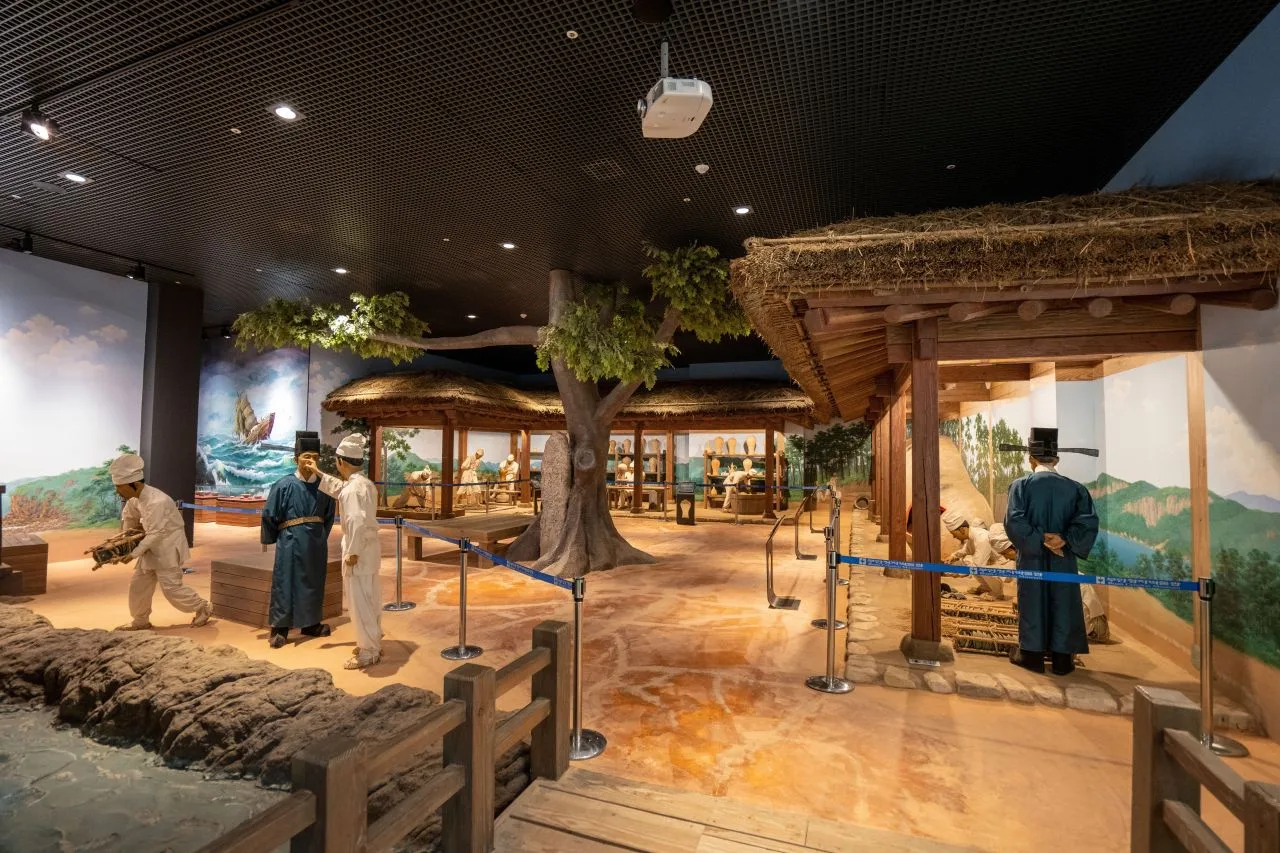
Hanji (한지) is the other craft worth understanding before you book. It is paper made from the inner bark of the mulberry tree, called dak, and Koreans have made it for well over a thousand years. The process is slow on purpose: bark harvested in winter, boiled in lye from buckwheat or bean stalks, rinsed in cold stream water, bleached by sunlight, then screened one sheet at a time. Artisans say it takes a hundred touches to make a single sheet. The reward is paper that lasts. Well-kept hanji survives a thousand years without yellowing, which is why old Buddhist scriptures and court records were written on it, and why hanok windows and floors were papered with it.
The third craft, calligraphy (서예), is one you have already seen without knowing it. Every scholar scribbling with a brush in a sageuk period drama is doing seoye. The same brushwork hangs on the signboards of half the palaces you will visit. It runs on four tools Koreans call the four friends of the study: brush, ink stick, inkstone and paper. Learning to grind your own ink is half the lesson.
Insadong: the easiest place to start
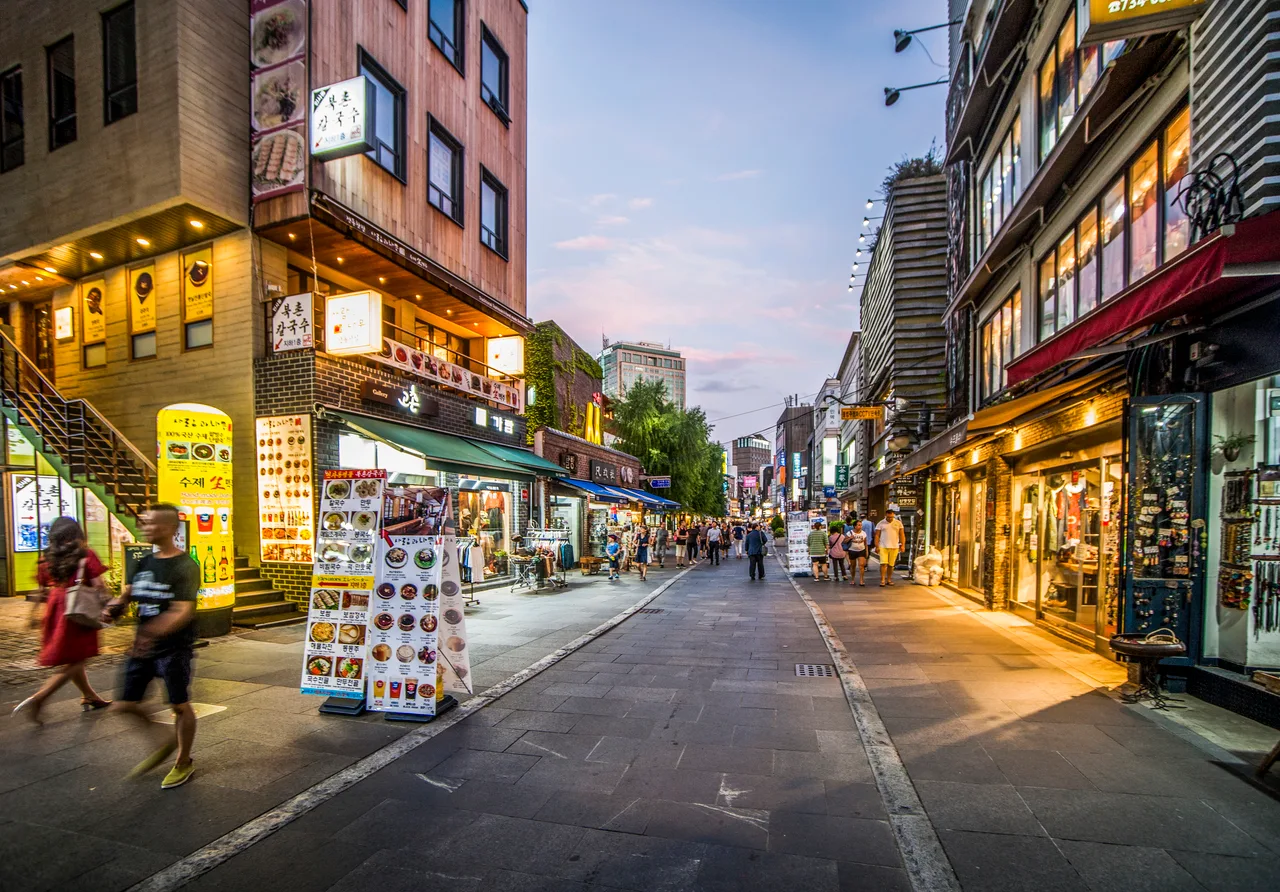
If you only have an afternoon, start in Insadong. It is a 600-metre pedestrian spine of galleries, brush shops, tea houses and craft studios in central Seoul, and it has been the city's art-and-antiques district for generations. Take Line 3 to Anguk Station, leave from Exit 6, walk about 100 metres and turn left into Insadong-gil. Coming in on Line 1, use Jonggak Station Exit 3 instead.
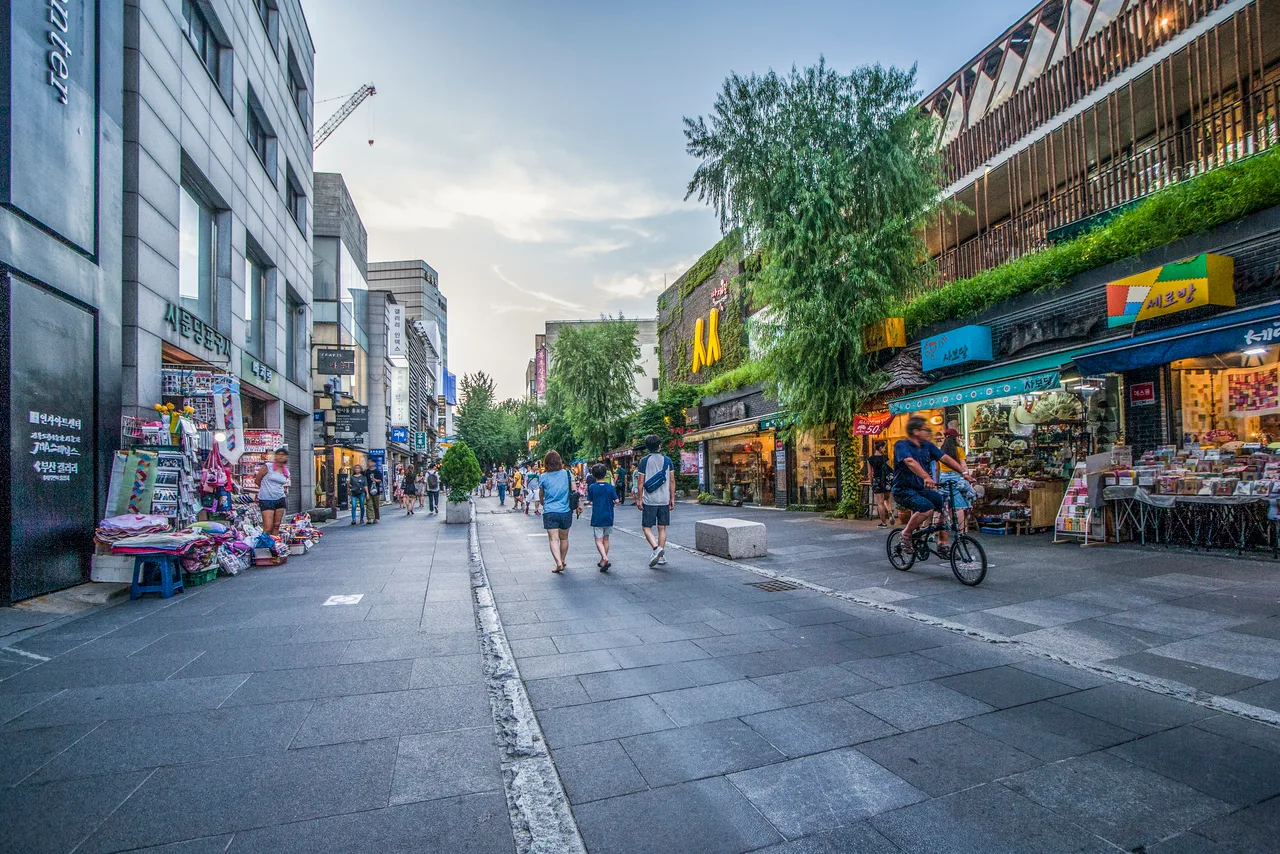
Calligraphy is the signature Insadong experience. A well-reviewed class run by a local calligrapher on Insadong-gil lasts about 90 minutes and costs roughly 45 US dollars a person; you learn to hold the brush, grind the ink, and write a phrase or your own name in Hangul on a scroll you take home. Beginners are the whole point, so do not worry that your strokes wobble. Mine did. These studios are small and reservation-only, so book a day or two ahead rather than hoping to walk in. Insadong also runs a longer two-hour course that starts from the very beginning, preparing ink, brush and paper before you write, plus combined calligraphy-and-bookbinding sessions where you hand-stitch a small notebook of hanji. The shops alone are worth an hour: this is the best place in Seoul to buy an inkstone, a stack of hanji, or a starter brush set to carry the hobby home. If you want to read what you are writing, spend a weekend first with our guide to learning Hangeul.
Bukchon: workshops between the hanok roofs
A ten-minute walk north of Insadong, Bukchon Hanok Village is a hillside of restored traditional houses, many of them now small museums and craft workshops. From Anguk Station on Line 3, Exit 2, it is about a 600-metre walk uphill. Because Bukchon sits between Gyeongbokgung and Changdeokgung, it pairs naturally with a palace day, and our guide to Seoul's five grand palaces maps them out.
The anchor here is the Bukchon Traditional Crafts Center on Bukchon-ro 12-gil. It runs rotating daily classes in hanji crafts, traditional knotwork and accessory-making, most in the 5,000 to 15,000 won range, and unusually for Seoul it takes no reservation, which makes it a good rainy-afternoon fallback. It opens 10am to 6pm in the warmer months, closes an hour earlier in winter, and shuts for Seollal and Chuseok. Nearby, the Gahoe-dong hanji studios teach lamp-making (about two hours), hanji dolls (around 90 minutes) and simpler framed pieces (an hour), while the Donglim Knot Workshop lets you tie your own maedeup bracelet or charm for around 10,000 to 12,000 won. The Gahoe Museum next door adds folk-painting sessions where you brush a tiger or a pair of magpies onto a paper fan, from about 3,000 to 30,000 won plus a small admission. Plenty of visitors rent a hanbok in this neighborhood first and do their class in costume, which is either delightful or a lot, depending on you.
Icheon: where the potters actually live
To get your hands genuinely muddy, leave the city. Icheon, about an hour southeast of Seoul in Gyeonggi Province, has been a pottery town since the Bronze Age and is where many of Korea's working ceramists still fire their kilns. Its Ceramic Village holds roughly 40 studios, kilns and shops along one walkable stretch, and the neighboring Gyeonggi ceramic museums anchor it with serious collections if you want to see master work before you try your own.
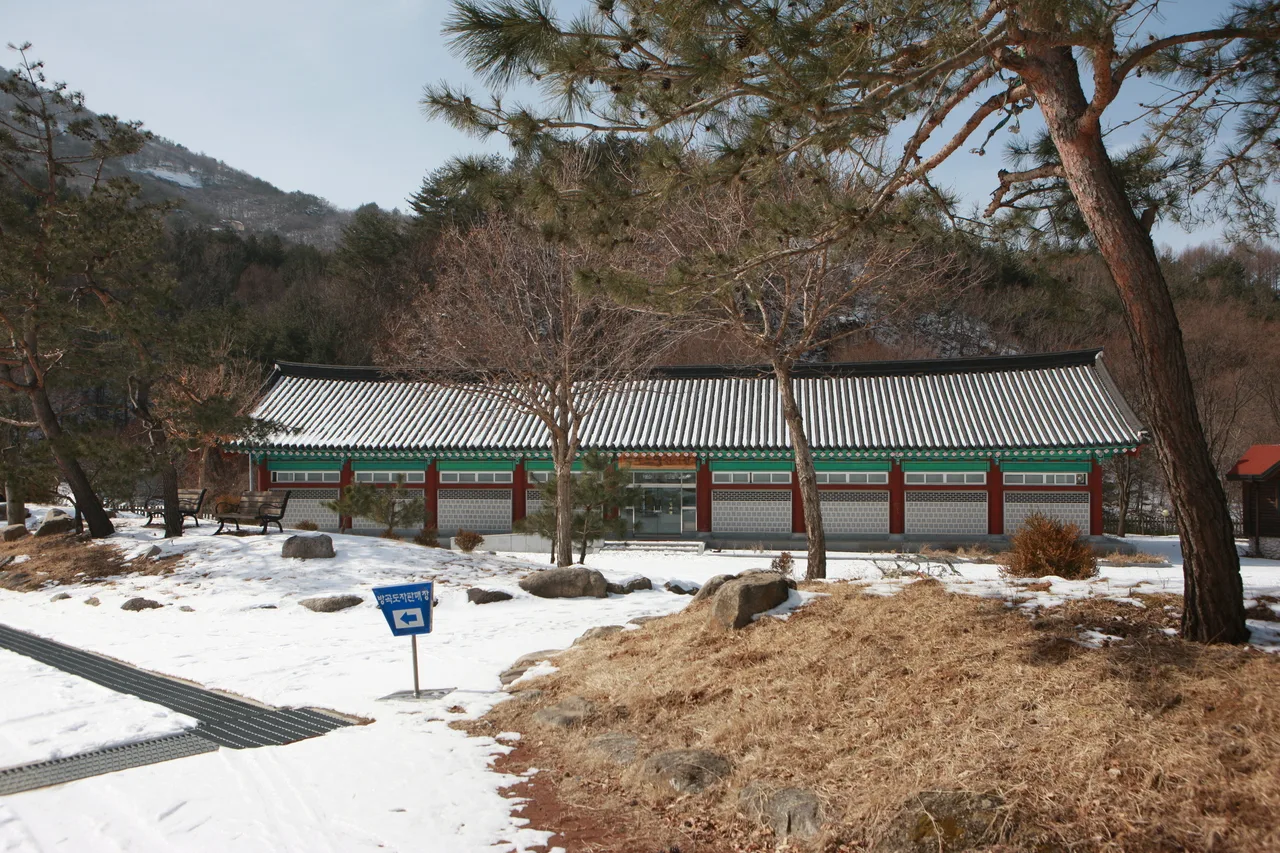
Getting there takes some doing but is not hard. From Gangbyeon Station (Line 2, Exit 2) walk to Dong Seoul Bus Terminal and catch an intercity bus to Icheon; express buses also run from the Express Bus Terminal on Lines 3, 7 and 9. From Icheon's own terminal, local buses 114, 24-7 or 20-4 reach the village in about 15 minutes for 1,500 won, or a taxi runs around 7,000 won. Studios such as Hankook Dojakwon by the village gate take walk-in beginners; shaping a cup or small bowl on the wheel starts as low as 5,000 won, while a green celadon piece runs from about 50,000 won. Plan for one thing: your pot has to dry, glaze and kiln-fire, which takes weeks, so ask upfront whether the studio ships overseas or whether you are really making a gift for your host.
If you can time it, the Icheon Ceramic Festival takes over the town each spring, usually across late April and May, with more than 120 studios selling and demonstrating and hands-on booths where you can throw a pot yourself. The dates move year to year, so confirm them on the official festival page or the Korea Tourism site before you plan a trip around it.
Jeonju: hanji at the source
Jeonju, in North Jeolla Province about three hours south of Seoul by train or bus, is the home of hanji. Its Hanok Village is one of Korea's largest clusters of traditional houses, and it happens to be one of the best food cities in the country too, so the paper and the bibimbap make an easy pairing. If you are heading down, our guide to eating like a local will keep you fed between craft stops.
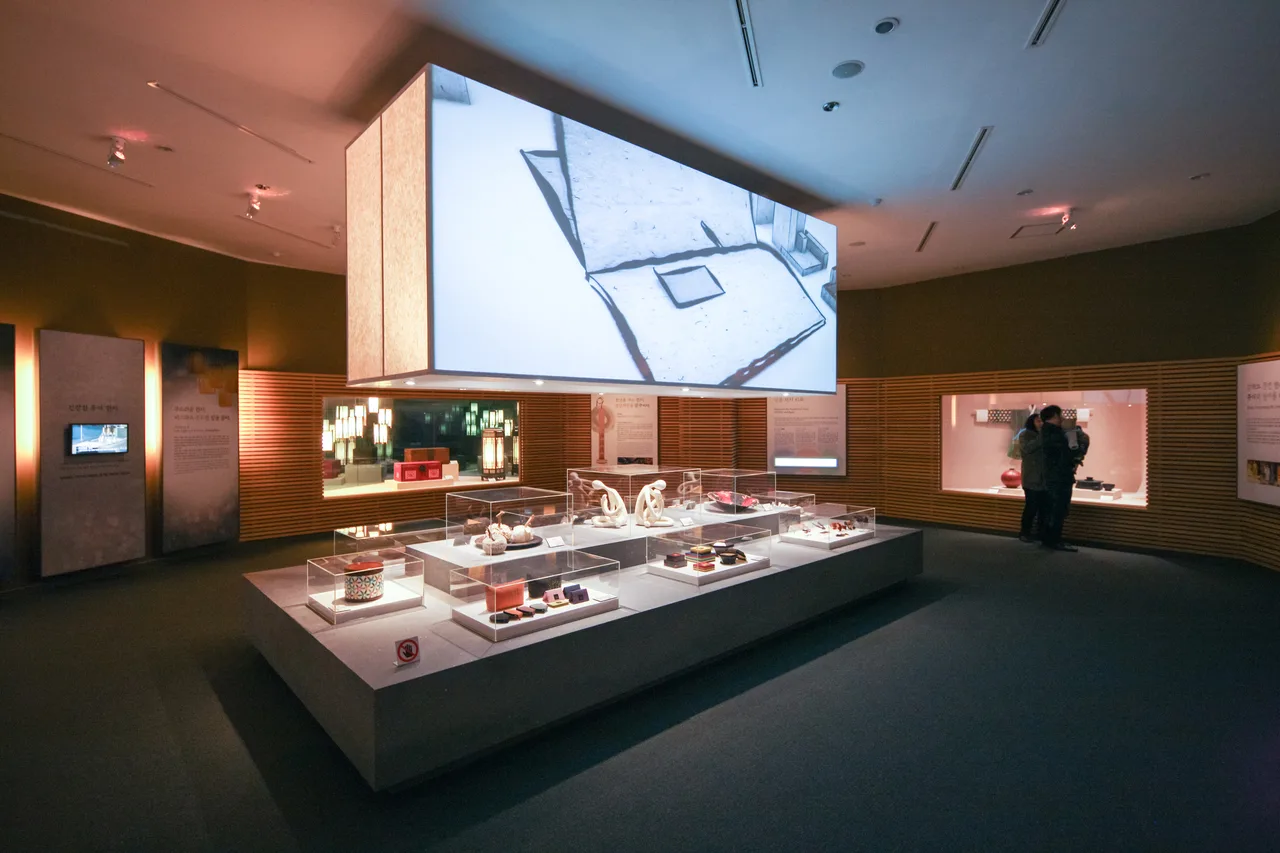
Inside the village, small craft shops run short hanji classes, usually 40 minutes to an hour and priced around 8,000 to 15,000 won. Studios like Yedam Gongyae teach hanji mirrors, dolls and bracelets, and the crowd favorite, an LED hanji chorong, a traditional Korean lantern that actually lights up. For the full process, the Jeonju Hanji Museum runs a papermaking workshop where you prepare the pulp, dip the screen and press your own sheet, the same steps the artisans use, just scaled to a morning. There is also a hanji experience school near the Jeonju Hyanggyo Confucian shrine. Further north, the city of Wonju in Gangwon Province built an entire Hanji Theme Park around the craft if you get properly hooked.
One craft you can try at the airport
If your schedule is tight, you do not even have to leave the airport to try this. The Korea Traditional Culture Center inside Incheon International Airport runs free hands-on sessions in hanji, najeon (mother-of-pearl lacquer) and traditional knots, open through the day in both terminals. It is a genuinely good use of a long layover, and it is free, which is more than almost anything else at an airport can claim.
What it costs, how to book, and a few honest tips
Prices are refreshingly low. Most drop-in craft classes sit between 5,000 and 15,000 won, private calligraphy sessions cost more because they run longer, and pottery depends entirely on what you make and whether it gets fired. Budget more time than money.
Booking splits into two styles. Reservation-only studios, mostly the private calligraphy and pottery classes, are easiest to arrange through platforms like Trazy, Klook or Viator, which list English times and prices and confirm on the spot. Walk-in centers, including Bukchon Traditional Crafts and many of the Jeonju and Icheon studios, you can simply turn up to, though weekends fill fast, so go in the morning. Almost every class is built for total beginners, and most instructors work with international visitors daily, so language rarely gets in the way.
What you walk away with depends on the craft. From a calligraphy class it is a finished scroll, dry and ready to frame. From hanji you get a lamp, a small mirror, a lantern or a stitched notebook. From a Seoul pottery-painting studio you decorate a pre-made piece and carry it out the same day; from a wheel session in Icheon you get a raw pot the studio fires and you collect or have shipped weeks later. Ask which kind you are booking, because a 'pottery class' can mean either.
Two more things I wish I had known. Ask about drying and firing times before you commit to pottery, because a wheel-thrown cup will not be ready the same day. And wear clothes you do not mind staining, especially around ink and clay. If you want a full day of it, cluster by neighborhood: Insadong for calligraphy and shopping, Bukchon for hanji and knots with a palace next door, and save Icheon or Jeonju for a proper day trip out to where the professionals work.
The souvenirs in the shops are fine. But the wobbly cup I pulled off a wheel and the crooked Hangul scroll that dried on my hotel desk are the two things from that trip I would grab in a fire. Pick one craft, book it before you fly, and give yourself the whole afternoon.
Location
Insadong, Seoul
View on Google MapsSources
This guide was researched using the references below. Prices and times change, so confirm anything time-sensitive on the official page before you rely on it.
Related guides
- Where to buy Korean pottery: a guide for foreignersDiscover where to purchase authentic Korean pottery, from traditional markets in Seoul to renowned ceramic towns, and learn about the rich history behind t
- Exploring traditional Korean art stylesAn in-depth look at traditional Korean art styles, including painting, ceramics, and crafts, highlighting their history and cultural significance.
- What is minhwa, Korean folk painting?Minhwa, meaning 'painting of the people,' is Korean folk art created by anonymous artists to depict everyday life and convey symbolic meanings.
- An introduction to Korean traditional dance for visitorsA clear guide to Korean traditional dance for foreigners: court and folk forms, buchaechum, talchum, salpuri, seungmu, and where to watch them live.
- Korean tea culture and where to experience itA visitor's guide to Korean tea, from Boseong's green tea fields and the darye ceremony to jujube and citron brews and where to drink it in Seoul.
- Korean traditional music (gugak) and where to hear itWhere to hear Korean traditional music in Seoul, from the National Gugak Center's Saturday concerts to Jongmyo rite music, plus what the sounds mean.