What is pansori? A beginner's guide
A first-timer's guide to pansori, Korea's epic story-singing: what it is, the five stories, its history, and where to see it live in Seoul and Jeolla.
By Jae Park · Updated Jul 14, 2026
The first time I heard pansori, I had no idea that's what it was. I was watching one of those Korea Tourism Organization ads, the ones with the thumping bass line and a woman in a reworked hanbok half-singing, half-barking "범 내려온다" — beom naeryeoonda, "the tiger is coming down." That was the band Leenalchi, and the clip has pulled hundreds of millions of views. What took me a while to learn is that the hook is lifted straight out of a story that's roughly 300 years old, and that the gravel in the singer's voice isn't a stylistic choice. It's a technique people spend a lifetime building.
So the short answer, before we go deep: pansori is Korea's tradition of epic storytelling through song. One singer, one drummer, one folding fan, and a story that can run for hours. If K-pop is the country's loud, polished export, pansori is the raw material underneath a lot of it, and once you know how to listen, you start hearing it everywhere.
So what is pansori, exactly?
Pansori is performed by two people. The singer is called the sorikkun, and the drummer is the gosu, who plays a barrel drum called the buk. That's the entire ensemble. No band, no orchestra, no backing track. The singer holds a folding fan, and over the course of a performance that fan becomes a sword, a letter, a writing brush, a wall to hide behind. It's the only prop, and watching a master use it is half the show.
The performance moves between three modes. There's sori, the actual singing, which carries the emotional peaks. There's aniri, spoken narration that moves the plot along and gives the singer a moment to breathe. And there's ballim, the physical gesture and movement. A skilled sorikkun slides between all three so smoothly you stop noticing the seams. One second they're narrating in a plain speaking voice, the next they're wailing a mother's grief, the next they're doing the comic voice of a scheming turtle.
The thing that surprises most first-timers is the length. A full pansori epic can run anywhere from three to eight hours. Chunhyangga, the most famous one, is up near the top of that range. You are not expected to sit through all of it on your first go — most performances you'll actually attend are excerpts or highlights — but knowing the scale helps you respect what you're watching. This is closer to a marathon than a pop single. Pansori sits inside the broader family of Korean traditional music known as gugak, but it's really its own beast: less an instrumental form than a one-person theatre.
Where the sound came from
The word itself is a clue. "Pan" (판) means a place where people gather — a public square, a market, a crowd. "Sori" (소리) means sound, or song. Pansori is, quite literally, the song of the gathering place.
It grew up in the 17th century in the southwest of the peninsula, the Jeolla region, with roots tangled up in shamanic ritual music. For a long time it was entertainment for ordinary people, sung in marketplaces and courtyards by traveling performers who passed the hat. It wasn't respectable art. That changed over the 1800s, near the end of the Joseon dynasty, when the form picked up more literary polish and started drawing in the educated elite.
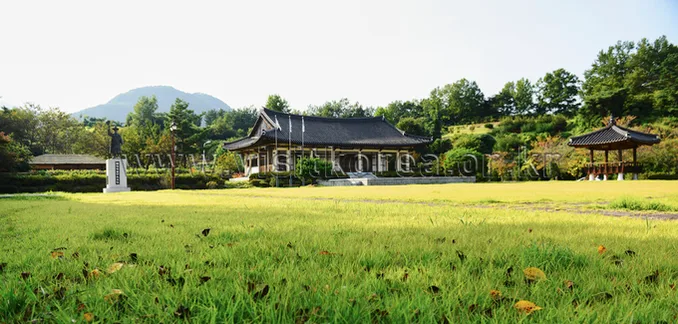
One man matters enormously here. Sin Jae-hyo, a scholar and patron from Gochang in North Jeolla, spent the mid-19th century organizing and refining the sprawling repertoire, editing the texts and coaching singers. He's often called the father of pansori, and his old home in Gochang is now a museum devoted to the art. Sin also trained Jin Chae-seon, who in 1867 became the first celebrated female pansori singer at a time when women were essentially barred from performing in public. If that name rings a bell, it's because her story became the 2015 film The Sound of a Flower, with the K-pop idol and actress Bae Suzy in the lead — she studied pansori for a full year to play the part.
Historians think at least twelve full epics, each called a madang, once existed. Only five survived intact. In 2003, UNESCO proclaimed pansori a Masterpiece of the Oral and Intangible Heritage of Humanity, cementing its status as something worth protecting rather than letting fade.
The five stories you'll actually hear
Because only five madang survived, you'll run into the same handful of stories again and again. Learning them in advance changes the whole experience, because pansori is sung in older, dense Korean that even native speakers don't fully catch. Knowing the plot lets you follow the emotion instead of straining for the words.
- Chunhyangga — a love story, and the crowd favorite. Chunhyang, the daughter of a courtesan, and Mongryong, a nobleman's son, fall for each other across a class line that's supposed to keep them apart. A corrupt magistrate tries to force himself on her; she refuses and is nearly killed for it. It's romance, class rebellion, and courtroom drama in one.
- Simcheongga — the tearjerker. Simcheong, a devoted daughter, sells herself as a human sacrifice to sailors and throws herself into the sea, all to buy the rice offering that's meant to restore her blind father's sight. Bring tissues.
- Heungbuga — the comedy with a moral. Kind, poor Heungbu mends a swallow's broken leg and is rewarded; his greedy brother Nolbu tries to game the same trick and gets what's coming to him. Magic gourds are involved.
- Jeokbyeokga — "Song of the Red Cliff," the war epic, adapted from the Chinese classic Romance of the Three Kingdoms. The most masculine and martial of the five.
- Sugungga — the animal fable, and the most fun. The Dragon King of the sea is dying and needs a rabbit's liver to cure himself, so a loyal turtle is sent up to land to trick a rabbit into coming down to the palace. This is the story Leenalchi mined for "Tiger is Coming."
Why the voice sounds like that
If you're used to the clean, soaring tone of Western opera, a pansori voice can be a shock. It's rough, husky, sometimes almost hoarse. That texture is deliberate and prized. There's a Korean word, deukeum (득음), that means roughly "obtaining the sound" — the point where a singer has drilled so long that a new, rawer voice emerges. The old stories say singers trained beside waterfalls, pushing their voices to carry over the roar of the water until, in the more dramatic tellings, they coughed up blood. Whether or not that's literal, the years of punishment are real, and you can hear them.
Underneath the technique is a mood Koreans call han (한), a word people love to say is untranslatable. It's something like accumulated sorrow, grief, and resentment that hardens into a kind of endurance. Pansori is often described as the sound of han, which is why some Western writers reach for "the Korean blues" as a comparison. It's not a bad shorthand. Both grew from the pain of ordinary people and both turn that pain into something you'd pay to hear.
If you want one piece of homework before you ever buy a ticket, watch the 1993 film Seopyeonje by director Im Kwon-taek. It follows a father driving his adopted daughter to master pansori, no matter the cost to her, and it became the first Korean film to draw more than a million viewers. It single-handedly revived national interest in the art in the '90s, and it will teach you more about why that voice sounds the way it does than any explainer, this one included.
The audience has a job
Here's my favorite thing about pansori, and the part nobody warns you about: you're not supposed to sit there in reverent silence. There's a whole tradition of audience response called chuimsae (추임새) — shouts of encouragement tossed at the singer throughout. The drummer does it constantly, and the crowd joins in. You'll hear "얼씨구!" (eolssigu, roughly "that's it!"), "좋다!" (jota, "good!"), and "잘한다!" (jalhanda, "you're killing it!"). It's call-and-response, and it keeps the singer's energy up through a marathon set.
The first time I went, I sat frozen, terrified of doing it wrong, while an older Korean man three seats down belted "좋다!" at every big moment like he was at a baseball game. By the end I was doing it too, badly. Nobody minds if you're clumsy; enthusiasm is the point. Picking up a few survival Korean phrases before you go makes it far less intimidating to open your mouth.
Where to see pansori in Seoul
You have real options in the city, and prices are gentle by concert standards.
The easiest entry point is the National Gugak Center (국립국악원) in Seocho-gu. Their Saturday concert runs most Saturdays at 3 p.m., lasts about 90 minutes, and covers a rotating program of traditional music and dance, with pansori regularly in the mix — the first Saturday of each month tends to spotlight UNESCO intangible-heritage repertoire. Tickets run roughly 20,000 to 30,000 won. Take Subway Line 3 to Nambu Bus Terminal Station and use Exit 4-2; there's a free shuttle bus to the center. The address is 2364 Nambusunhwan-ro, Seocho-gu.
For the real thing — a single story sung all the way through — look for wanchang (완창) pansori, meaning a "complete performance," at the National Theater of Korea on the slope of Namsan. The theater institutionalized its complete-pansori project back in 1985 and has staged hundreds of full-length performances since. A wanchang can genuinely run four or five hours, so it's a commitment, but there is nothing like watching one singer carry an entire epic on their own voice. Take Line 3 to Dongguk University Station, Exit 6, where a shuttle bus runs up to the theater. If you want a smaller, sweatier room where you can see the singer's face, the intimate traditional theaters around the Insadong and Jongno area sometimes program pansori too.
Whichever venue you pick, book ahead. Sorting out Korean performance tickets in English is straightforward once you know which official sites to use, and the good wanchang dates sell out. The dates and programs rotate constantly, so treat anything you read — including this — as a starting point and confirm the current schedule on each venue's official website before you plan a day around it.
Beyond Seoul: Jeolla, the heartland
If pansori grabs you, the pilgrimage is south. The Jeolla provinces are where the art was born and where its living tradition is strongest.
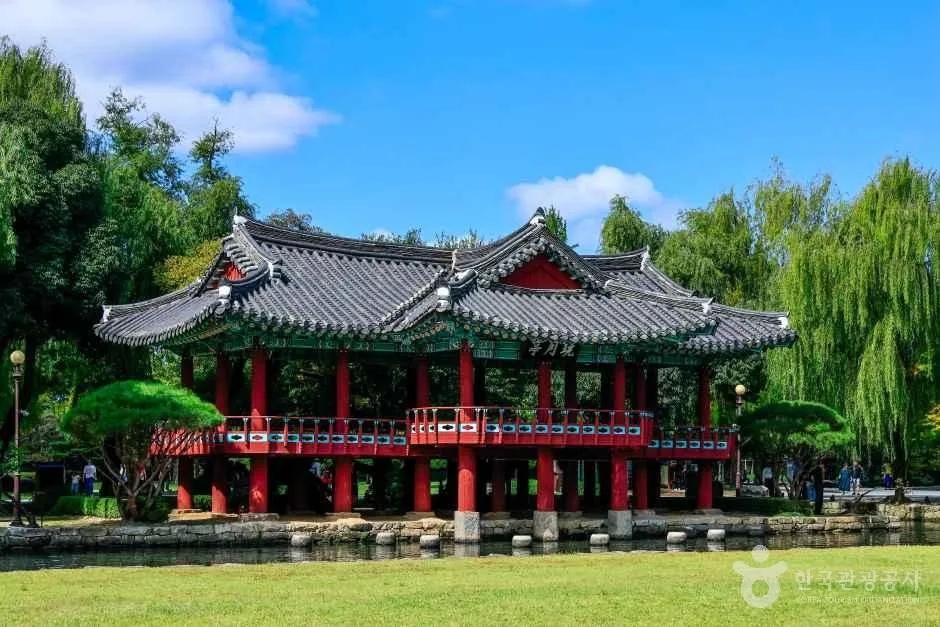
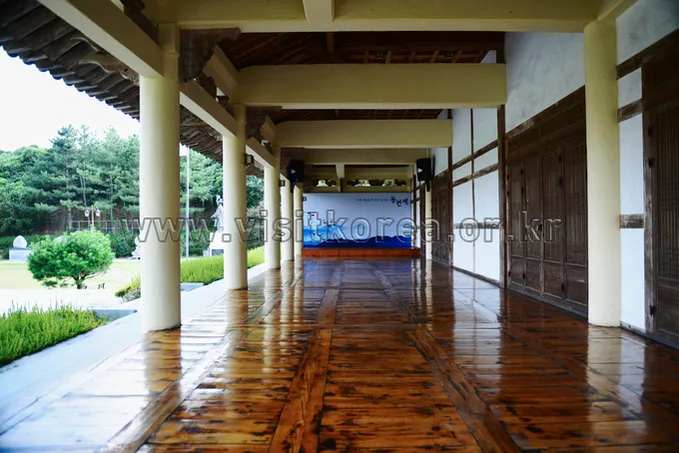
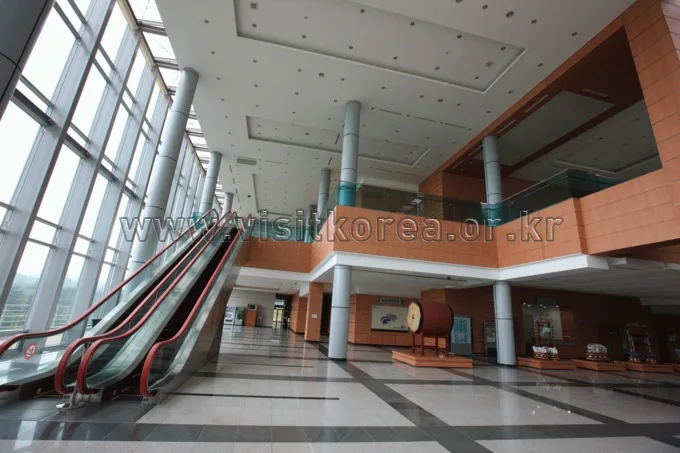
In Gochang, the Pansori Museum sits in Sin Jae-hyo's former residence and holds over a thousand artifacts tied to the great singers, including objects that belonged to Sin himself. In Namwon, the town that Chunhyangga is set in, the Chunhyang Festival takes over the city each spring around May, with pansori performances centered on the beautiful Gwanghallu pavilion and garden where the fictional lovers met. The festival has been running in some form since the 1930s. As with any recurring event, check the exact dates each year rather than assuming a fixed weekend.
How to listen your first time
A few things I wish someone had told me. Read the synopsis of whatever story is on the program before you go in — five minutes of prep transforms it. Don't try to catch every word; even Koreans don't, and that's fine. Watch the fan and the face as much as you listen. And if a full performance feels like too much on day one, start with Leenalchi. Their album Sugungga takes those old passages and drops them over bass lines that wouldn't be out of place in a '70s disco, and it's a shockingly gentle on-ramp. The line got so embedded in the culture that a snippet of Sugungga even turned up on the Korean college entrance exam, and students recognized it instantly from the song.
That's the strange, wonderful thing about pansori in 2026. It's a UNESCO-protected art with roots in shaman rituals and 300-year-old scripts, and it's also the reason a bass-heavy tourism ad went viral and got a whole generation shouting about a tiger. Go hear it live at least once. Shout "좋다" when it moves you.
Sources
This guide was researched using the references below. Prices and times change, so confirm anything time-sensitive on the official page before you rely on it.
Related guides
- Where to buy Korean pottery: a guide for foreignersDiscover where to purchase authentic Korean pottery, from traditional markets in Seoul to renowned ceramic towns, and learn about the rich history behind t
- Exploring traditional Korean art stylesAn in-depth look at traditional Korean art styles, including painting, ceramics, and crafts, highlighting their history and cultural significance.
- What is minhwa, Korean folk painting?Minhwa, meaning 'painting of the people,' is Korean folk art created by anonymous artists to depict everyday life and convey symbolic meanings.
- An introduction to Korean traditional dance for visitorsA clear guide to Korean traditional dance for foreigners: court and folk forms, buchaechum, talchum, salpuri, seungmu, and where to watch them live.
- Korean tea culture and where to experience itA visitor's guide to Korean tea, from Boseong's green tea fields and the darye ceremony to jujube and citron brews and where to drink it in Seoul.
- Korean traditional music (gugak) and where to hear itWhere to hear Korean traditional music in Seoul, from the National Gugak Center's Saturday concerts to Jongmyo rite music, plus what the sounds mean.