A guide to Korean convenience store food
Explore the diverse and affordable food options available at Korean convenience stores, from classic snacks to unique meal combinations.
By Jae Park · Updated Jul 15, 2026
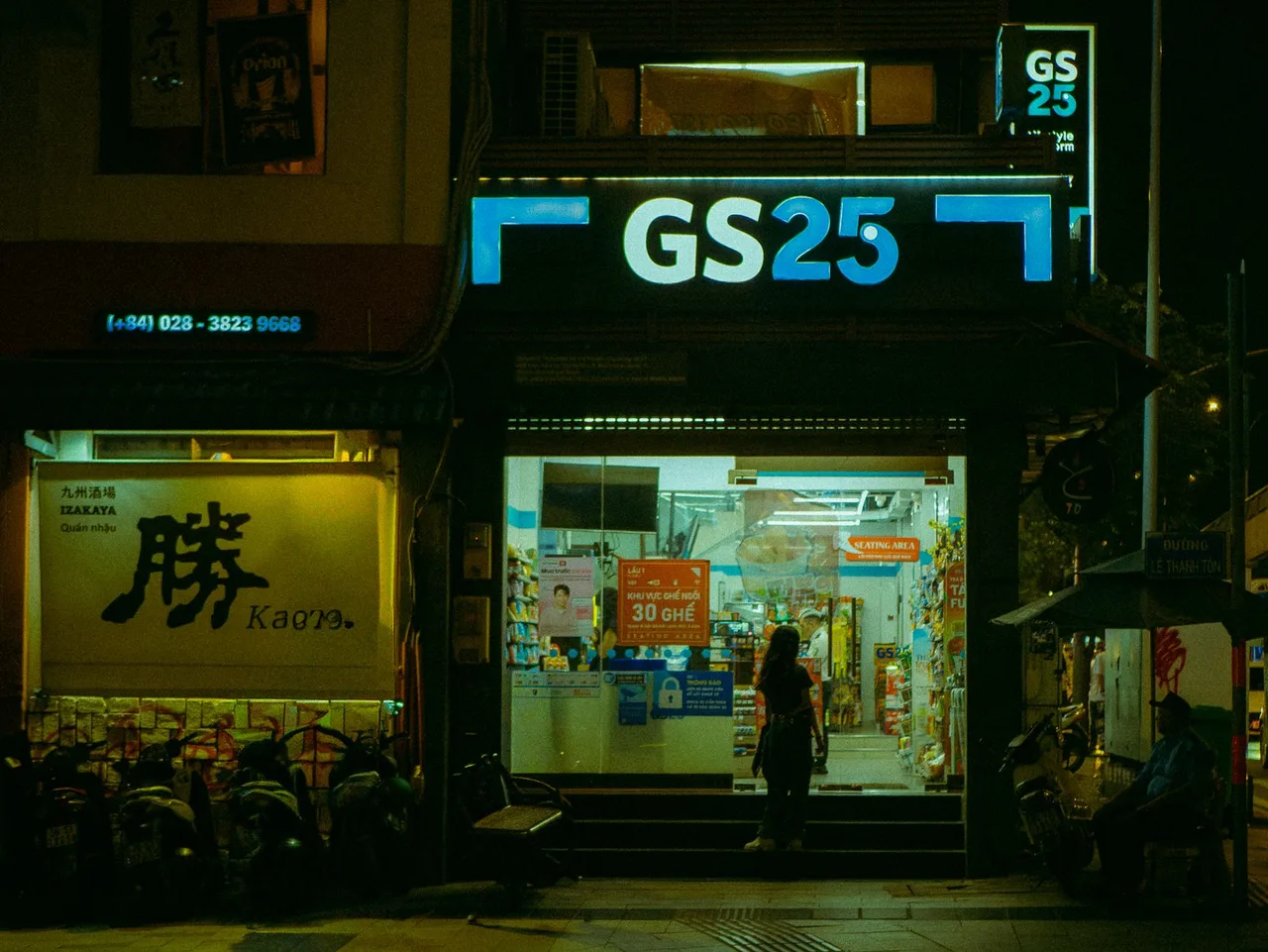
Korean convenience stores — pyeonuijeom (편의점) — were the first thing I fell for on my first trip to Seoul, and they're still where I eat when I want something fast, cheap, and genuinely good. There's one on nearly every corner, most run 24 hours, and the food goes well past chips and gum: rice balls, hot lunchboxes, ramyeon you cook at the counter, and a fridge wall of drinks you can't get back home. Here's how I shop one, what I actually buy, and how to pay without fumbling at the register.
What are the main convenience store chains in Korea?
Four chains cover most of the country: CU, GS25, 7-Eleven, and Emart24. They stock a similar core — gimbap, ramyeon, lunchboxes, coffee, ice cream — but each has its own private-label lines and rotating exclusives, so I'll duck into whichever one I pass and still find something worth trying. They're genuinely everywhere, and foreign shoppers have caught on: CU reported its overseas-customer sales jumped 101.2% from 2025 to 2026, and GS25 saw a 74.2% rise over the same stretch. That tells you how many travelers now treat these stores as a food stop, not just a restroom break.
How do the big four chains differ?
Once you've been in a few, the personalities show.
- GS25 is the trendsetter, usually first to carry viral collabs and limited runs. Its Kim Hye-ja lunchbox line — named after a beloved actress, and the reason the slang word *hyeja* (meaning generous, good value) stuck — leans homestyle and balanced; a grilled marinated-beef version runs about ₩5,000. Its Cafe25 coffee starts around ₩1,000, and the Omori kimchi-stew ramyeon, which hides a pouch of real aged kimchi in the cup, is the one I refill on every trip.
- CU goes bolder and meatier. Its Baek Jong-won lunchbox line, built with Korea's most famous restaurateur, has sold hundreds of millions of units; a truffle set with soy-sauce bulgogi, spicy bulgogi, and mala chicken over rice lands around ₩5,500.
- 7-Eleven is my stop for drinks — it carries the widest banana-milk selection and its own donut series.
- Emart24 stores tend to run a little larger, with a stronger wine and craft-beer wall if that's what you're after.
None of this is worth overthinking. Walk into the nearest one and you'll eat well; chase a specific exclusive only if you're curious.
How do you actually use a Korean convenience store?
The part that trips up first-timers is that a lot of the food isn't ready until you finish it yourself, and the store expects you to. Look for these stations, usually near the back or by the window counter:
- Hot-water dispenser — free, for cup ramyeon and instant soups.
- Microwave — for lunchboxes, buns, and anything labeled with a heating time.
- Utensils and seating — disposable chopsticks, forks, and napkins sit by the microwave, and most stores have a counter or a few tables, some facing the street.
To cook a cup ramyeon: peel the lid halfway, add hot water to the inside line, close it back down (I rest my chopsticks on top to hold it), wait about three minutes, then stir. For a lunchbox, lift a corner of the film so steam can escape and microwave it for the two to three minutes printed on the label. When you're done, sort your trash into the bins by the counter — Koreans separate it, and staff notice if you don't.
Which foods should you try first?
If you only remember five things to grab, make it these. For a wider primer on ordering beyond the convenience store, our guide on what to order as a first-timer pairs well with this list.
Samgak gimbap (triangle rice ball)
The single most-bought item in these stores, and the best ₩1,100–2,000 you'll spend. It's a seaweed-wrapped rice triangle stuffed with tuna mayo, bulgogi, kimchi, or spicy squid. The wrapper is engineered so the seaweed stays crisp: pull tab 1 down the middle, then slide out tabs 2 and 3 on each side, and the nori folds around the rice on its own. It takes one try to get right, and you'll feel weirdly proud when you do.
Cup ramyeon (instant noodles)
The counter ritual. Shin Ramyun and the fire-red Buldak are everywhere, but seek out chain exclusives like GS25's Omori kimchi stew. Cups run roughly ₩1,000–2,500 depending on size, and the free hot-water dispenser turns one into a full meal for pocket change.
Dosirak (lunchbox)
A microwaveable tray of rice, a main protein, and several side dishes — the closest thing to a home-cooked plate for ₩3,300–6,700. This is where the chain rivalry pays off: CU's Baek Jong-won boxes for bold, meaty flavors; GS25's Kim Hye-ja boxes for the balanced, motherly version.
Hot bar and the register counter
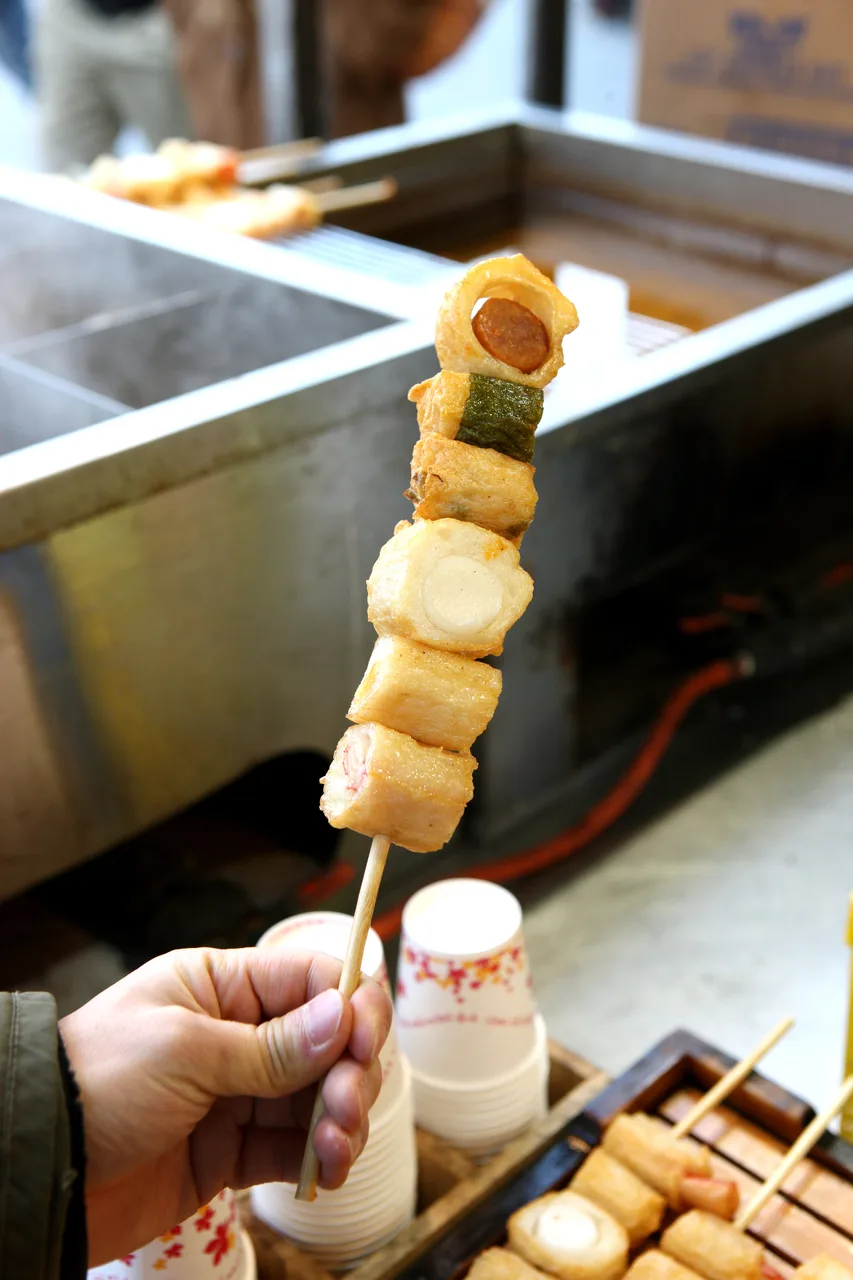
By the till there's usually a heated case of hot bar (fried fish-cake sausage on a stick), corn dogs, steamed buns, and eomuk skewers, mostly ₩1,000–2,300 each. It's basically street food moved indoors — and if you want the real outdoor version, our Korean street food guide covers the market stalls it came from.
Banana milk
The sweet, creamy drink in the stubby little bottle, around ₩1,500. It's pure nostalgia for Koreans and an easy yes for everyone else — grab one, then let 7-Eleven's wider lineup tempt you into the melon or coffee versions too.
What are the best convenience store combos?
Half the fun is assembling meals the way regulars do — it's one of the small habits that makes you feel less like a tourist. If you want more of that, our guide on how to eat like a local goes deeper. A few combos I keep coming back to:
- Buldak ramyeon + string cheese — the cheese melts into the broth and tames the burn. Around ₩3,500–5,000.
- Cup ramyeon + samgak gimbap — dunk the rice triangle into the leftover soup at the end; nothing goes to waste. Around ₩2,500–4,000.
- Dosirak + a small cup ramyeon — the classic filling dinner when you're too tired to sit down anywhere. Around ₩5,500–7,500.
- Banana milk + a sweet bun — a lazy, nostalgic breakfast for about ₩3,000–4,000.
Prices shift with the store and the season, but a full day of three convenience-store meals plus snacks and drinks still runs only about ₩15,000–25,000.
How do the 1+1 and 2+1 deals work?
You'll see 1+1 and 2+1 stickers all over the shelves. 1+1 means buy one, get one free; 2+1 means buy two, get the third free — and you have to physically put the extra item in your basket, because the register won't add it for you. The promos rotate monthly and land most often on bottled coffee, iced tea, yogurt drinks, sparkling water, cup ramyeon, and snacks. Two things I've learned the hard way: check that the free item is the same product (mix-and-match usually isn't allowed), and glance at the receipt to confirm the second item rang up at ₩0. Now and then a plain markdown beats a 1+1, so compare the unit price on the tag before you assume the deal is the cheapest option.
How do you pay — cash, card, or T-money?
Every chain takes cash and credit or debit cards, and foreign cards work at the vast majority of stores. But the smoothest way to pay for snacks is the same T-money card you use for the subway and buses. It's a rechargeable transit card you can buy for about ₩2,500–4,000 at any convenience store counter, and you top it up with cash at the register or the machines by the subway gates. Tap it to pay for your ramyeon and you skip the card-insert dance; some stores even shave a few won off the total. It's the single most useful thing to buy on day one — I load mine at the airport and use it for transit and store runs the entire trip.
Why do convenience stores matter so much in Korea?
These stores are stitched into daily life here in a way they aren't in most countries. Students camp at the window counter to study, office workers grab a lunchbox between meetings, and friends split a late-night ramyeon over cans of beer at the outdoor tables. The prices stay low, the doors rarely close, and the rotating exclusives give people something small to look forward to. Eating at one isn't a compromise — it's a normal, slightly beloved part of the day.
What's worth knowing before you go?
Convenience-store food is one of the easiest, cheapest ways to eat your way through Korea, and it's a low-stakes place to be adventurous — if a ₩1,500 experiment flops, you're out pocket change. The prices and exclusives here are current for 2026, but they change often, so treat the numbers as a guide and check the shelf tag before you buy. Try the combos, chase a chain exclusive or two, and you'll land on a favorite fast. For more on eating across the country, browse our food and dining section.
Frequently Asked Questions
What is the best food to try at a Korean convenience store?
Start with a samgak gimbap, a cup ramyeon (a chain exclusive like GS25's Omori kimchi stew if you can find it), and a banana milk. All three are cheap, iconic, and stocked at every chain, so they make a safe, satisfying first order.
Can I eat inside Korean convenience stores?
Yes. Most stores have a microwave, a free hot-water dispenser, disposable utensils, and a counter or a few tables, so you can heat a lunchbox or cook a cup ramyeon and eat it right there. Just sort your trash into the bins when you're done.
How do I prepare cup ramyeon in a convenience store?
Peel the lid back halfway, fill the cup with hot water to the inside line using the store's dispenser, close the lid and weight it down (chopsticks on top work), wait about three minutes, then stir and eat.
Are Korean convenience stores open 24 hours?
Most are open 24/7, especially in cities, which makes them a reliable option for a late-night or early-morning meal. A few in quieter areas keep shorter hours, so check the door if you're relying on one overnight.
How much does a typical meal cost at a Korean convenience store?
A filling meal usually runs about ₩5,000–7,000 — say, a dosirak with a drink, or a cup ramyeon paired with a samgak gimbap. A full day of convenience-store eating, snacks and drinks included, tends to total around ₩15,000–25,000.
Sources
- Korean Convenience Store Food: GS25 and CU Guide (2026)
- Korean Convenience Store Guide 2026: Must-Try Foods at CU & GS25
- Korean Convenience Store Food Culture: GS25 & CU Guide
- Korean Convenience Store Guide: 20 Must-Try Foods at CU & GS25
- Korean Convenience Store Food Guide: What Tourists Are Actually Buying
- Seoul Convenience Store Food Guide 2026
- GS25 Korea Guide: Must-try Ramen, Snacks, and 1+1 Deals
- Best Korean Convenience Store Food Must-Try Items 2026
- T-money Card: Complete Guide for Tourists in Korea (2026)
- Popular Items in Korean Convenience Store — VisitKorea
Location
{"name": "Seoul, South Korea", "query": "Seoul South Korea"}
Location
Seoul, South Korea
View on Google MapsFrequently asked questions
What is the best food to try at a Korean convenience store?
Start with a samgak gimbap, a cup ramyeon (a chain exclusive like GS25's Omori kimchi stew if you can find it), and a banana milk. All three are cheap, iconic, and stocked at every chain, so they make a safe, satisfying first order.
Can I eat inside Korean convenience stores?
Yes. Most stores have a microwave, a free hot-water dispenser, disposable utensils, and a counter or a few tables, so you can heat a lunchbox or cook a cup ramyeon and eat it right there. Just sort your trash into the bins when you're done.
How do I prepare cup ramyeon in a convenience store?
Peel the lid back halfway, fill the cup with hot water to the inside line using the store's dispenser, close the lid and weight it down (chopsticks on top work), wait about three minutes, then stir and eat.
Are Korean convenience stores open 24 hours?
Most are open 24/7, especially in cities, which makes them a reliable option for a late-night or early-morning meal. A few in quieter areas keep shorter hours, so check the door if you're relying on one overnight.
How much does a typical meal cost at a Korean convenience store?
A filling meal usually runs about ₩5,000–7,000 — say, a dosirak with a drink, or a cup ramyeon paired with a samgak gimbap. A full day of convenience-store eating, snacks and drinks included, tends to total around ₩15,000–25,000.
Sources
This guide was researched using the references below. Prices and times change, so confirm anything time-sensitive on the official page before you rely on it.
Related guides
- Korean recipes with ground beefExplore easy and flavorful Korean dishes using ground beef, from bulgogi bowls to kimchi mandu, perfect for quick meals.
- Korean BBQ options near Incheon AirportA guide to enjoying authentic Korean BBQ near Incheon Airport, including top restaurant recommendations and practical tips for travelers.
- Korean BBQ in Incheon: A guide for foreignersDiscover the best Korean BBQ spots in Incheon, understand local dining etiquette, and learn how to enjoy this culinary experience like a local.
- Korean BBQ in Seoul: A guide for first-time visitorsDiscover the essentials of enjoying Korean BBQ in Seoul, from ordering and etiquette to top restaurant recommendations and solo dining options.
- Korean chicken recipes to try at homeExplore a variety of Korean chicken dishes, from spicy stir-fries to comforting soups, with recipes and cultural insights.
- Easy Korean recipes for beginnersDiscover simple Korean dishes like kimchi fried rice and bulgogi that you can make at home with minimal ingredients and time.