Eating vegetarian and vegan in Korea
A first-person guide to vegetarian and vegan eating in Korea: temple food, meat-free dishes, hidden fish broths, key phrases, apps and areas.
By Jae Park · Updated Jul 15, 2026
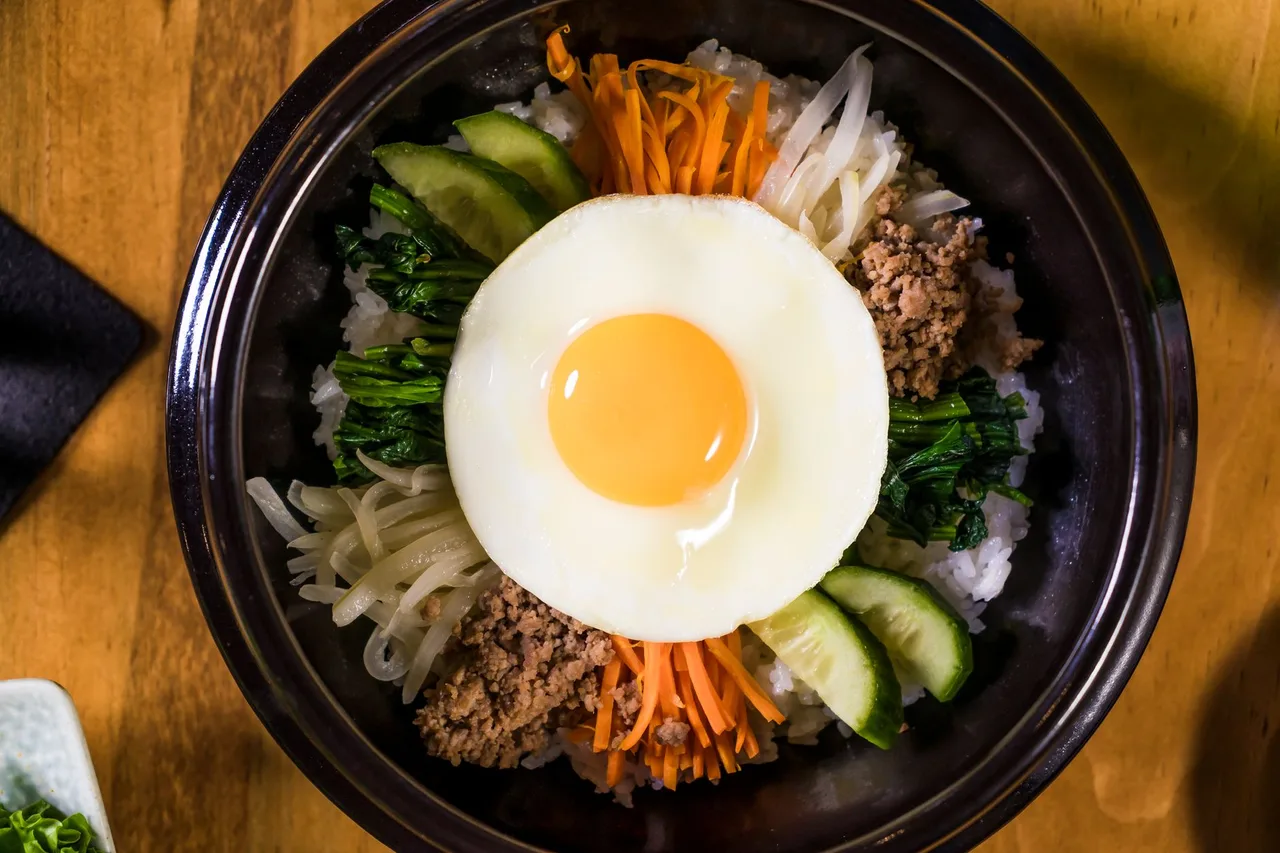
I got into Korean food the way a lot of us did: through a screen. A drama character wolfing down noodles at 2 a.m., a variety show where everyone eats too fast and laughs too hard, then one very quiet Netflix episode of *Chef's Table* about a Buddhist nun named Jeong Kwan who cooks without meat, without garlic, and without any rush at all. I landed in Seoul braced to fight for every meal as a vegetarian. What I found was messier and far better than a fight. This is the guide I wish someone had handed me at the airport: what is genuinely meat-free, where the fish hides, the phrases that actually work, and how to eat the way the monks who started all of this still do.
Korea is easier and harder than the internet says
Korea has a reputation as a carnivore's country, and the reputation is half earned. Pork belly on a tabletop grill, fried chicken with beer, blood sausage, beef soups that simmer for a day. If you only read travel listicles, you would think a vegetarian starves here.
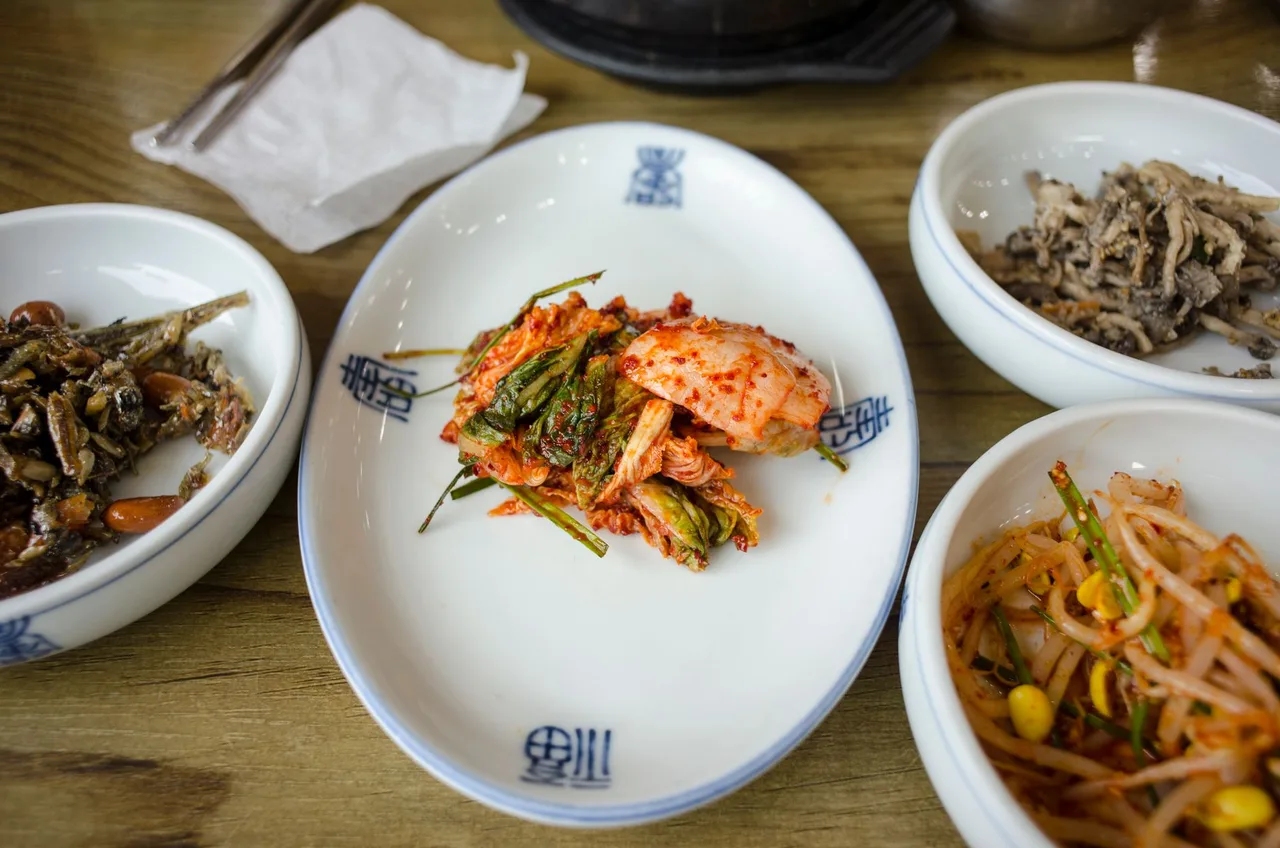
Then you sit down and the free side dishes arrive: seasoned spinach, bean sprouts, braised lotus root, five kinds of pickled and fermented vegetables you never ordered. Korea has one of the deepest vegetable-cooking traditions in Asia, shaped by lean winters, mountain foraging, and centuries of Buddhist kitchens. The catch is umami. Korean savoriness often comes from the sea, so a plate that looks fully plant-based can carry anchovy, shrimp, or fish sauce you never see. The food is not the problem. The hidden broth is.
It helps that veganism is having a moment here. The actor Im Soo-jung went plant-based back in 2015 and now recommends restaurants to her followers, and idols like Tiffany of Girls' Generation have talked openly about eating plant-based most of the week. Younger Koreans have made 비건 (bigeon, 'vegan') an everyday loanword. The scene is still small, but it grows every year, which means more labeled options each time I go back.
Temple food, where Korean vegan cooking really comes from
Long before 'plant-based' was a marketing word, Korean monastics were doing it as a spiritual practice. Buddhism reached the peninsula roughly 1,700 years ago, and with it came a monastic diet that excludes all meat and fish. Temple cuisine, 사찰음식 (sachal eumsik), also drops the five pungent vegetables known as oshinchae: garlic, green onion, leek, and two kinds of chive. Monks believe these overheat the body and stir up desire, which gets in the way of meditation. No artificial flavor enhancers either. What is left is seasonal, fermented, and quietly intense.
This tradition is why Korea, of all places, produced a global vegan icon. Jeong Kwan, a Seon Buddhist nun at Baegyangsa temple, has no restaurant and no formal training, yet her *Chef's Table* episode in 2017 sent chefs and food writers on pilgrimages to a mountain hermitage. She has cooked for and influenced people like René Redzepi of Noma, and chefs such as Mingoo Kang of Mingles now fold temple techniques into fine-dining menus. Korea's tourism board promotes temple food as a headline experience. So when you eat vegan here, you are not settling for a modern substitute. You are eating something older than most of the country's cities.
Dishes that are already (almost) meat-free
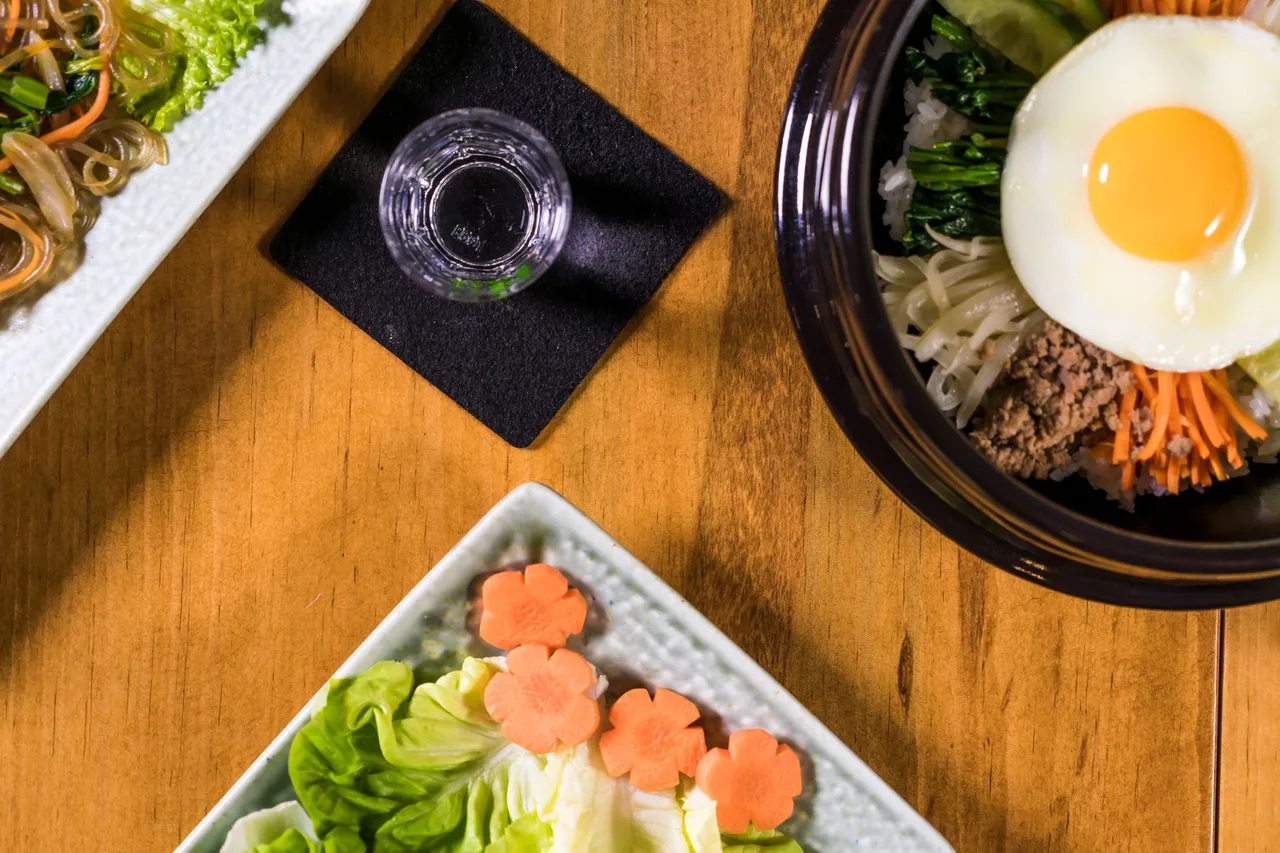
Start with the dishes that were never built around meat in the first place.
- Bibimbap (비빔밥): rice topped with seasoned vegetables and gochujang. Ask for no egg and no beef and it is often vegan. Sanchae bibimbap, made with mountain greens, is the safest bet. Expect roughly 10,000 to 13,000 won; a plain bowl in Seoul crossed 11,000 won on average a couple of years back and keeps creeping up.
- Japchae (잡채): sweet-potato glass noodles stir-fried with vegetables. It usually hides a little beef, so ask them to leave it out.
- Jeon (전): savory pancakes. Skip the seafood pajeon and order gamjajeon (potato) or buchujeon (garlic chive). Shareable, around 10,000 to 18,000 won.
- Kongguksu (콩국수): cold noodles in a chilled soybean broth, a summer-only treat that is naturally vegan. About 9,000 to 12,000 won.
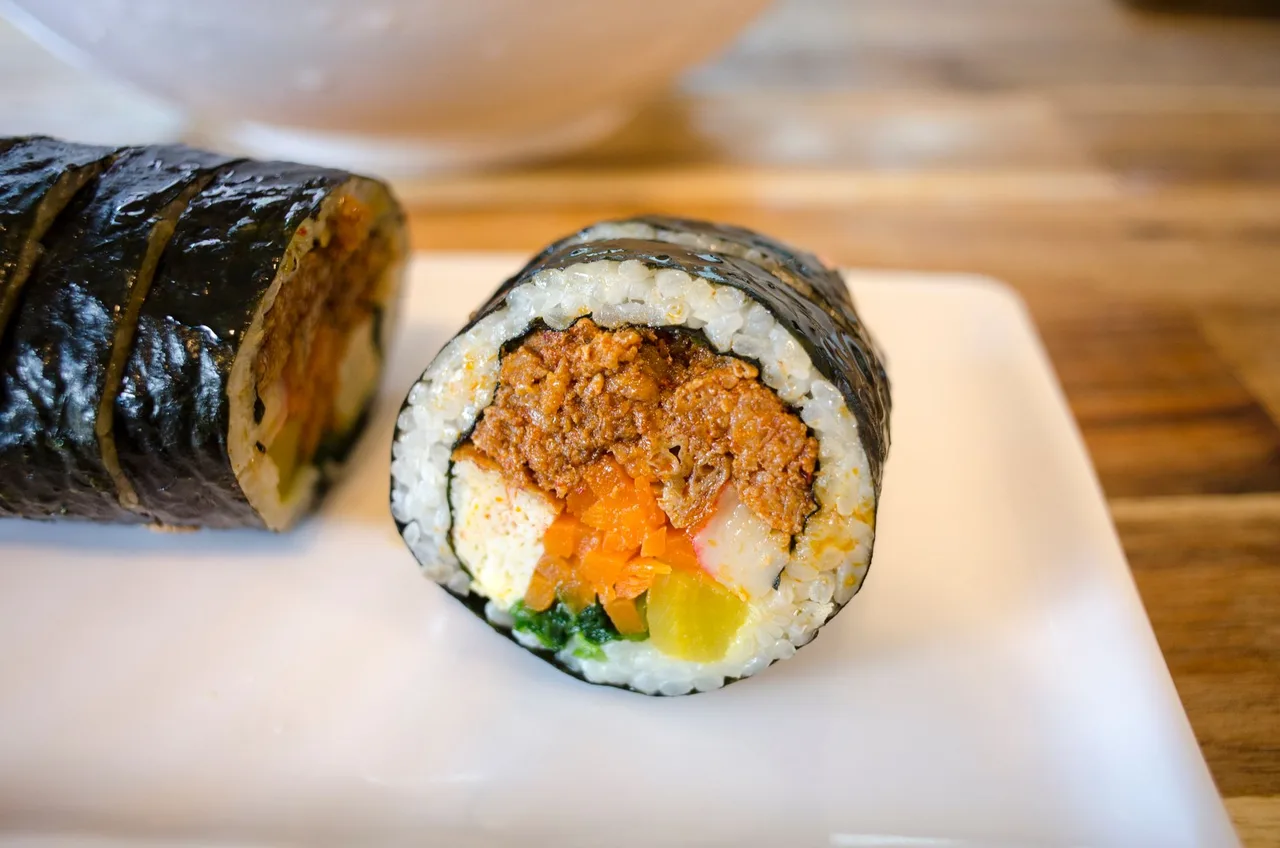
- Vegetable gimbap (야채김밥): seaweed rice rolls at 3,500 to 5,000 won, if you ask for no ham, egg, or imitation crab.
None of this needs a special restaurant. It needs one habit: confirm the broth and the toppings. If you want a fuller starter list, our guide on what to order as a first-timer pairs well with this. Prices drift with vegetable costs, so treat these as ballpark, not gospel.
The kimchi problem, and where the fish hides
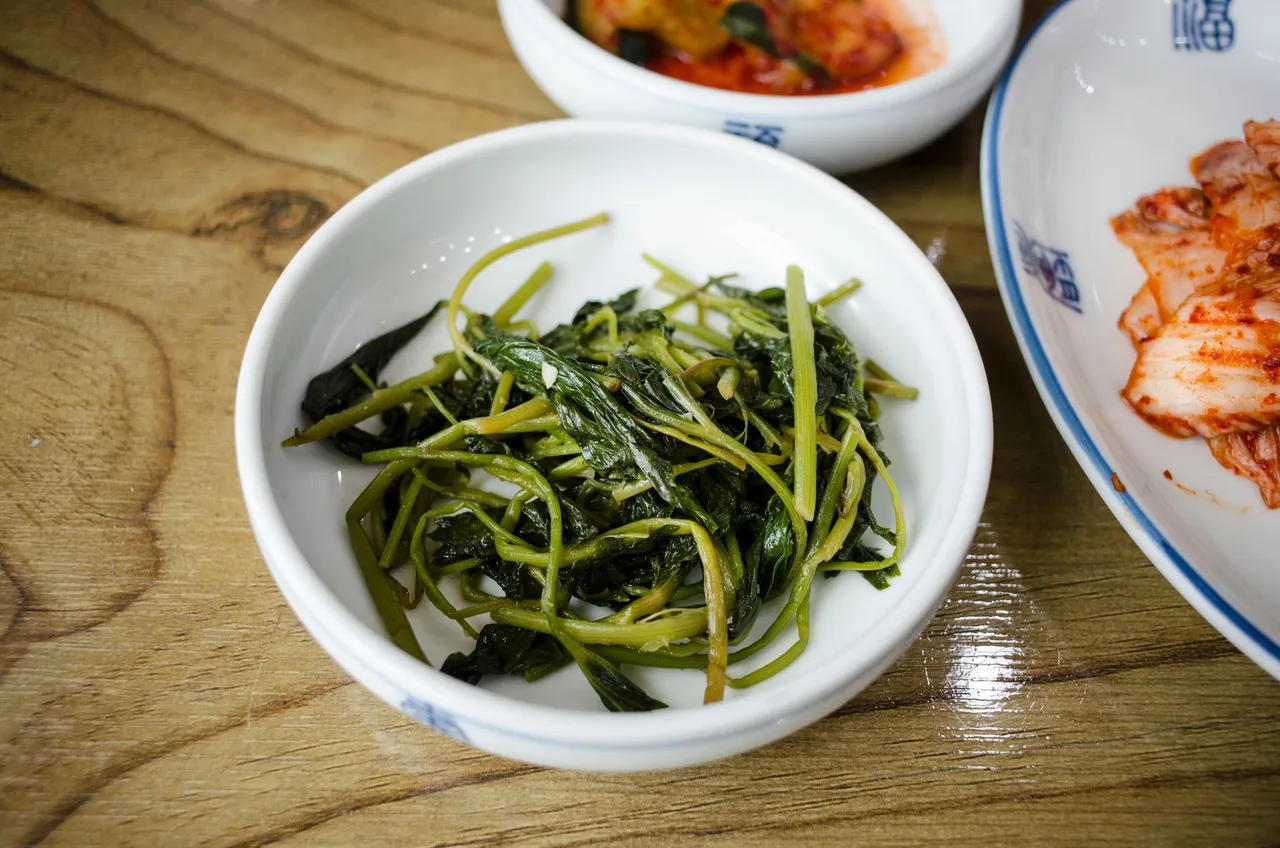
Here is the thing nobody warns you about: most kimchi is not vegetarian. Traditional kimchi is fermented with jeotgal, salted seafood made from anchovy, shrimp, or oyster, plus aekjeot, a fish sauce. It sits in almost every batch, invisible under the chili. Even baek kimchi, the mild white kind that looks innocent, usually carries jeotgal too. Temple kitchens make a genuinely vegan version using soy sauce, soybean paste, and kelp, but you cannot assume the kimchi on your table is that one.
The broth is the bigger trap. A huge share of Korean soups and stews start from myeolchi yuksu, a stock of dried anchovies and kelp. That includes many bowls of doenjang jjigae, the soybean stew that reads vegetarian on paper. Tteokguk, the rice-cake soup, is almost always built on beef or anchovy. Even a modest plate of seasoned spinach can be dressed with fish sauce, and instant seasoning powder called dashida, made from anchovy or beef, lives in more kitchens than you would like. My rule after a few surprises: treat any broth as animal-based until someone tells me otherwise, and always ask about the kimchi.
The phrases that actually work
You do not need fluent Korean. You need about five sentences and the nerve to repeat them. Save them in your phone in Korean, because staff read them faster than they parse an unfamiliar accent, and the word 'vegetarian' alone gets misheard (some people take it to mean 'no red meat').
- 저는 채식해요. 비건이에요. ('I eat vegetarian. I'm vegan.')
- 고기, 생선, 계란 빼고 주세요. ('Without meat, fish, or egg, please.')
- 멸치 육수도 빼 주세요. ('No anchovy broth either, please.' This is the money phrase.)
- 이 음식에 고기나 해산물 들어갔어요? ('Does this have meat or seafood in it?')
- 이거 채식 메뉴예요? ('Is this a vegetarian dish?')
Politeness carries you a long way, and a smile plus a friendly 괜찮아요 (gwaenchanayo, 'it's okay') goes far when a place genuinely cannot help. For pronunciation and more daily lines, keep our survival Korean phrases handy, and when the menu itself is the obstacle, how to read a Korean menu shows you the characters for meat, fish, and egg so you can spot them yourself.
A temple meal you won't forget
If you do one deliberately vegan thing in Korea, make it a temple meal. The formal version is barugongyang, a monastic meal eaten in silence from a set of nested bowls. You take only what you can finish, waste nothing, and at the end you clean each bowl with water and a slice of radish, then drink the water. It is less a meal than a lesson, and it stays with you.
You can book an overnight through the official Templestay program, run by the Jogye Order since 2002 across well over a hundred temples. Fees and schedules change often, so confirm on the official Templestay site before you plan around it. Baegyangsa, Jeong Kwan's temple, runs temple-food programs but fills up far ahead. If you would rather stay in Seoul, Balwoo Gongyang near Jogyesa temple serves refined temple cuisine and holds a Michelin star; its lunch course starts around 30,000 won, it takes no walk-ins for dinner, and it pours no alcohol, so reserve ahead and check current hours. Sanchon in Insadong is the older, more theatrical sibling. Either way, you are tasting the source, not a copy.
Apps, neighborhoods, and convenience-store backup
By far the most useful travel app is HappyCow, which maps vegan and vegetarian spots worldwide and lists more than sixty fully vegan restaurants in Seoul alone. The full app costs a few dollars and pays for itself the first hungry night. For deeper local coverage, download a Korea-specific app like Vegefeed (채식한끼), which is free and carries listings and reviews that never reach English sites. Naver Map works too if you search 비건 or 채식 식당.
Where to point yourself:
- Itaewon and Gyeongnidan have the widest spread, from modern Korean plates to vegan burgers.
- Insadong and Anguk are your temple-food core, right by Jogyesa.
- Hongdae and Yeonnam are thick with vegan cafes and bakeries.
When all else fails, convenience stores and marts now stock vegan ramyeon, plant-based dumplings, oat milk, and tofu you can dress with a free-banchan mindset. Korean brands sell convincing plant meat now, so watch for names like Unlimeat and Zero Meat on shelves. The vegan chain Loving Hut is another dependable fallback in bigger cities. Between the apps and the corner store, you will not go hungry.
Putting it together on the ground
Korea rewards travelers who get specific. The people who struggle here are usually the ones waiting for a big 'VEGAN' sign; the people who eat well are the ones who learned two phrases and asked one clear question. Lead with temple food if you want the soul of it, lean on naturally veg dishes for everyday meals, and let an app catch the gaps.
Do three things before you fly: save the phrases above in Korean on your phone, install one vegan app, and book a single temple meal early, since the good ones go fast. You came to Korea because something on a screen made you curious. A quiet bowl of temple food, or a bibimbap you customized yourself in halting Korean, is where that curiosity turns into a memory. For the wider etiquette of sitting down at a Korean table, our guide on how to eat like a local is the natural next read.
Sources
This guide was researched using the references below. Prices and times change, so confirm anything time-sensitive on the official page before you rely on it.
Related guides
- Korean recipes with ground beefExplore easy and flavorful Korean dishes using ground beef, from bulgogi bowls to kimchi mandu, perfect for quick meals.
- Korean BBQ options near Incheon AirportA guide to enjoying authentic Korean BBQ near Incheon Airport, including top restaurant recommendations and practical tips for travelers.
- Korean BBQ in Incheon: A guide for foreignersDiscover the best Korean BBQ spots in Incheon, understand local dining etiquette, and learn how to enjoy this culinary experience like a local.
- Korean BBQ in Seoul: A guide for first-time visitorsDiscover the essentials of enjoying Korean BBQ in Seoul, from ordering and etiquette to top restaurant recommendations and solo dining options.
- Korean chicken recipes to try at homeExplore a variety of Korean chicken dishes, from spicy stir-fries to comforting soups, with recipes and cultural insights.
- Easy Korean recipes for beginnersDiscover simple Korean dishes like kimchi fried rice and bulgogi that you can make at home with minimal ingredients and time.