Korean BBQ 101: How to order and grill
A first-timer's guide to Korean BBQ: cuts to order, real prices, how to grill and wrap ssam, soju customs, and how to finish the meal like a local.
By Jae Park · Updated Jul 14, 2026
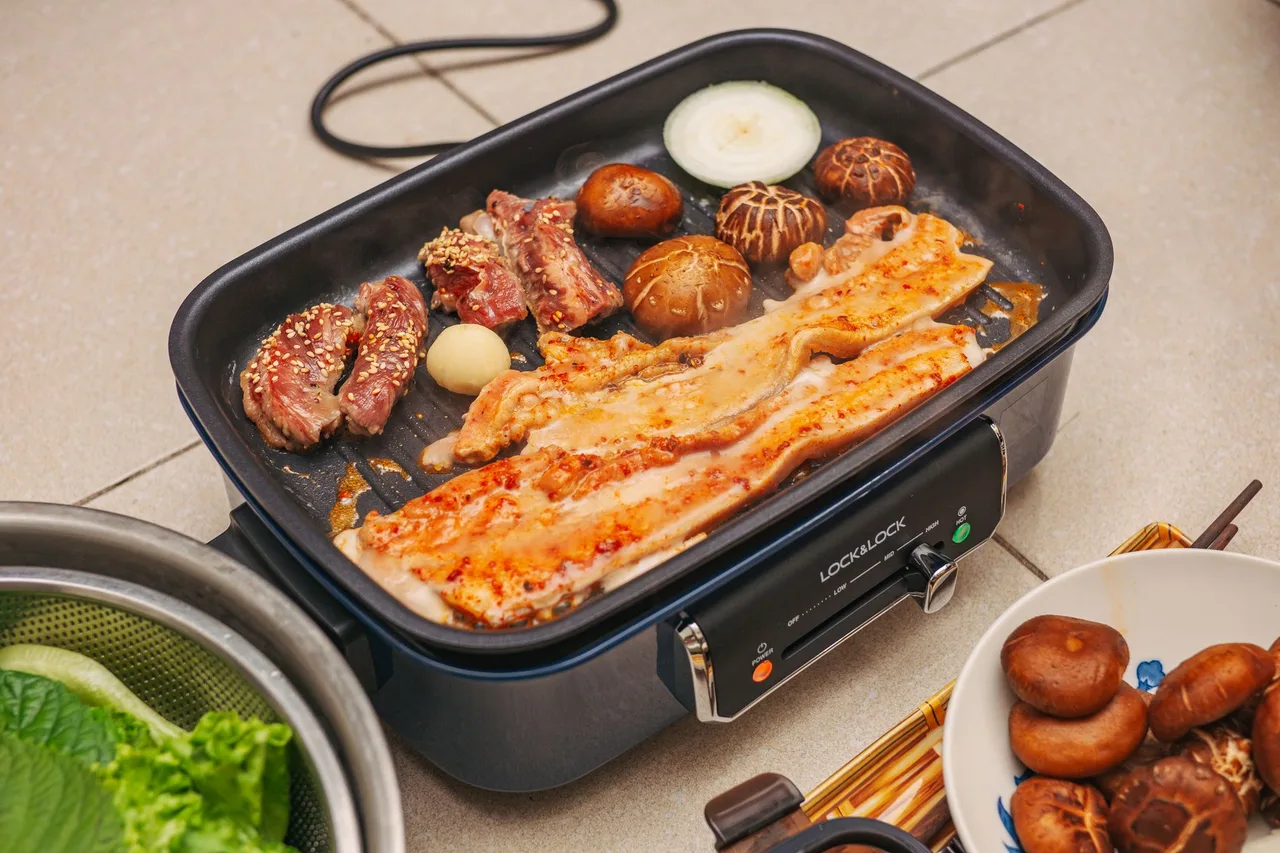
The first time Korean BBQ really landed for me wasn't in a restaurant. It was a drama scene: two coworkers hunched over a smoking tabletop grill, tongs in one hand, a green bottle of soju in the other, flipping pork belly and arguing about their boss. Nobody explained anything. They just cooked, wrapped, drank, and complained. I remember thinking that looked like the most relaxed meal in the world, and also that I had no idea what I'd do if someone put me in front of that grill.
If that's you right now, this is the guide I wish I'd had. Korean BBQ, called gogi-gui (고기구이, literally "meat grilling"), is one of the few restaurant experiences where you cook your own food at the table, and the rules that locals follow are almost never written down. Once you know them, a KBBQ dinner stops being intimidating and becomes exactly what it looks like on screen: slow, loud, and very hard to stop eating.
Where the smoke comes from
Koreans have been grilling meat over fire for a very long time. The oldest ancestor of today's BBQ is maekjeok, skewered and grilled meat from the Goguryeo kingdom (37 BCE–668 CE). By the Joseon dynasty (1392–1897) it had refined into neobiani, thinly sliced beef seasoned lightly and broiled on a gridiron, a dish reserved for royalty and aristocrats who could afford beef.
The bulgogi most of us know today is much younger. It took its modern soy-marinated shape in the early 20th century, around the 1920s, as beef became more widely available. Meat-slicing technology introduced around the Korean War made thin cuts fast and cheap to prepare, which is a big reason grilled meat spread from palace tables to ordinary neighborhoods. Pork belly's rise is more recent still: samgyeopsal only became a nationwide obsession in the 1980s, when Koreans started treating it as anju, food eaten specifically to go with alcohol. Keep that history in mind at the table. You're not eating a trend. You're eating something people have been gathering around for centuries.
What you're actually ordering
Menus are usually organized by cut, and the cut decides how you'll cook and eat it. These are the ones worth knowing.
- Samgyeopsal (삼겹살) — pork belly, and the default for a reason. The name means "three-layer meat" for its ribbons of fat and lean. It's unmarinated, forgiving to grill, and the cheapest way into a proper BBQ meal. If you order one thing, order this.
- Moksal (목살) — pork collar/neck. Leaner than belly, a little chewier, and a good counterpoint if the fat of samgyeopsal gets to be too much.
- Hangjeongsal (항정살) — pork jowl, a small marbled cut that's more expensive and cooks fast. Order it once you've warmed up; it's a bit of a connoisseur's pick.
- Galbi (갈비) — short ribs, pork or beef, usually sold marinated in a sweet soy mixture (this version is yangnyeom galbi). Sweet, tender, and a crowd favorite, especially with kids.
- Chadolbaegi (차돌박이) — paper-thin beef brisket. It cooks in seconds and comes with a sesame-oil-and-salt dip. Blink and it's overdone.
- Hanwoo (한우) — premium native Korean beef, richly marbled and often compared to wagyu. It's the splurge tier, priced accordingly, and usually eaten with just salt so nothing hides the beef.
A word on price, because it's changed fast. In July 2025 a standard 200g serving of samgyeopsal in Seoul crossed 20,000 won for the first time, averaging around 20,600 won. Out in the provinces it's noticeably cheaper — North Chungcheong was closer to 14,600 won for the same 200g. Budget roughly two to three servings of meat per person for a real meal, plus drinks and a noodle or rice course to finish. A casual neighborhood pork place might run 15,000–25,000 won a head; a nicer beef or hanwoo spot can easily hit 40,000–60,000 won and up. If the menu is only in Korean, our guide to reading a Korean menu will get you through the cut names without pointing and hoping.
Reading the table before the meat arrives
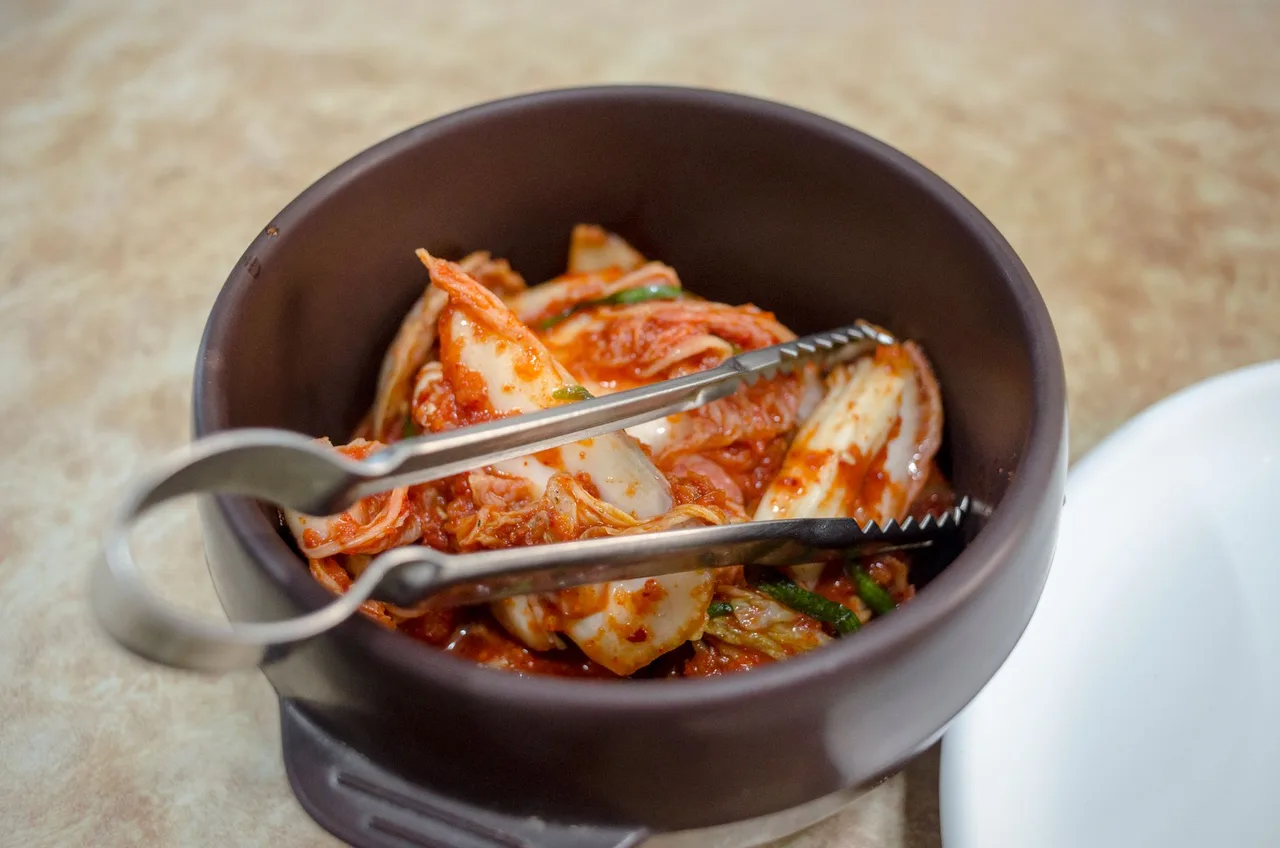
Before your order lands, the table fills up with small dishes. These are banchan (반찬), and they're not appetizers to clear before the "real" food — they're part of the meal and, crucially, refillable for free. You'll usually see kimchi, a scallion salad dressed in chili and vinegar (pa-muchim, which is fantastic on pork), pickled radish, maybe a thin egg soufflé bubbling in a stone dish, and a shallow bowl for garlic and sliced chili to grill alongside the meat. Ask for more of any of them; nobody thinks twice about refilling banchan.
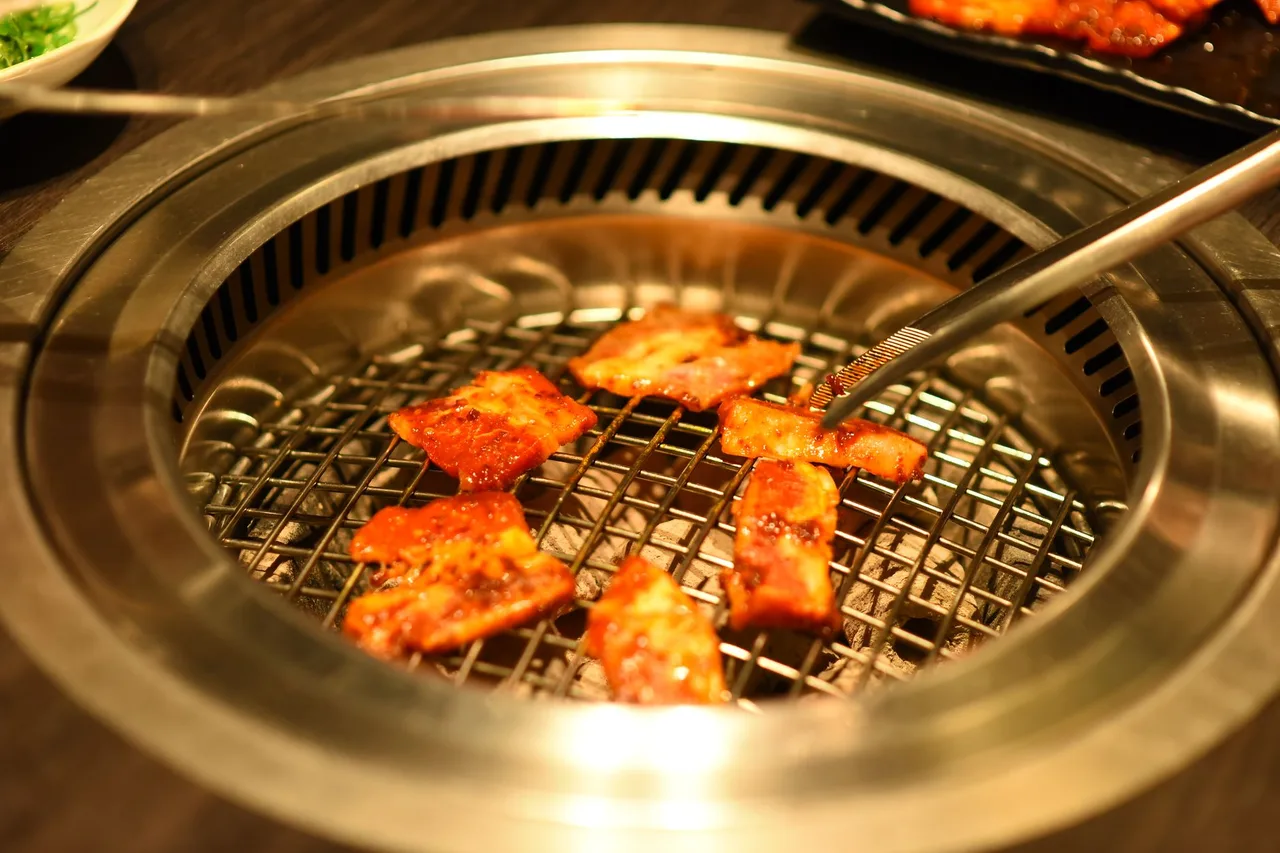
You'll also spot the tools. Kitchen scissors and long tongs are standard equipment, not an afterthought — in Korea you cut meat on the grill with shears rather than sawing at it on your plate, and it is completely normal. The grill itself might be gas, a domed cast-iron plate, or a round grate over real charcoal (sootbul). Charcoal costs more and smells incredible; if a place advertises it, that's usually a sign they're serious.
How to actually grill it
Here's the part people freeze up over, and here's the honest truth: you can't really ruin it. But a few habits make everything better.
- Grill unmarinated cuts first. Start with samgyeopsal or plain beef. Marinated meat like galbi is coated in sugar, and that sugar carbonizes on the grill and leaves a burnt film that ruins whatever you cook after it. Save the sweet stuff for last, or ask staff to swap the grill plate.
- Don't crowd the grate. Leave space between pieces. Pile it on and the meat steams in its own moisture instead of searing, and you lose the crispy edges that are the whole point.
- Flip when juices bead on top. For pork belly, that's roughly 30 seconds to a minute a side. When you see moisture rising to the surface, it's time. Frequent flipping is fine and actually helps it cook evenly.
- Cut it small on the grill. Once a piece is nearly done, snip it into bite-size chunks with the shears so the cut faces finish crisping. This also means everyone shares from the same grill instead of hoarding a slab on a plate.
- Watch the fast cuts. Thin brisket and jowl go from perfect to leathery in seconds. Pull them the moment they change color.
One small courtesy: if you're the youngest or the guest, expect an older Korean at the table to quietly take over the tongs and cook for everyone. That's not them doubting you. It's a hosting instinct, and letting them do it is its own kind of politeness. There's more of this unspoken table logic in our rundown of Korean etiquette dos and don'ts.
Building a ssam, the part first-timers get wrong
If you only eat the meat plain off the grill, you're doing maybe half of Korean BBQ. The other half is ssam (쌈), the wrap, and it's where the meal turns from "grilled pork" into something layered and alive.
The move is simple. Take one leaf — soft lettuce or, better, a fragrant perilla leaf (kkaennip) — lay a piece of grilled meat on it, add a small dab of ssamjang (the thick, savory-spicy soybean-and-chili paste), and maybe one or two extras: a slice of grilled garlic, a bit of raw chili, some of that scallion salad, a smear of kimchi. Then fold it into a bundle and eat the whole thing in one bite.
That last part matters more than it sounds. A ssam is built to be a single mouthful so all the flavors hit at once. Don't set it on your plate and pick at it with chopsticks, and don't take three polite nibbles. If a Korean friend hands you an assembled ssam — which they will, it's a gesture of care — just take it whole, even if it's comically large. The two mistakes I see most often are overloading the ssamjang until everything tastes like salt, and stacking so many fillings the wrap won't close. Go lighter than you think. You can always build the next one bigger.
Drinks, and the samgyeopsal ritual
Korean BBQ and soju are a package deal, and it's worth understanding why. Once samgyeopsal became the country's favorite anju in the 1980s, the pairing calcified into ritual: fatty, smoky pork cut by cold, clean soju. Order a green bottle, pour for others rather than yourself (never fill your own glass first — that's a small but real etiquette rule), and receive a pour with two hands if someone older is pouring for you.
If you want the full local move, ask for beer too and make somaek — a shot of soju dropped into a glass of beer. It's lighter than straight soju and made for a long, talky dinner. There's even a holiday for all this: March 3 is Samgyeopsal Day (삼겹삼 — the two 3s standing in for the three layers of belly), a marketing invention from 2003 by a livestock group that somehow grew into a genuine excuse to grill pork with friends. If you're around in early March, restaurants lean into it.
How to end the meal
A proper KBBQ dinner doesn't just stop when the meat's gone. There's a coda, and skipping it feels wrong to most Koreans.
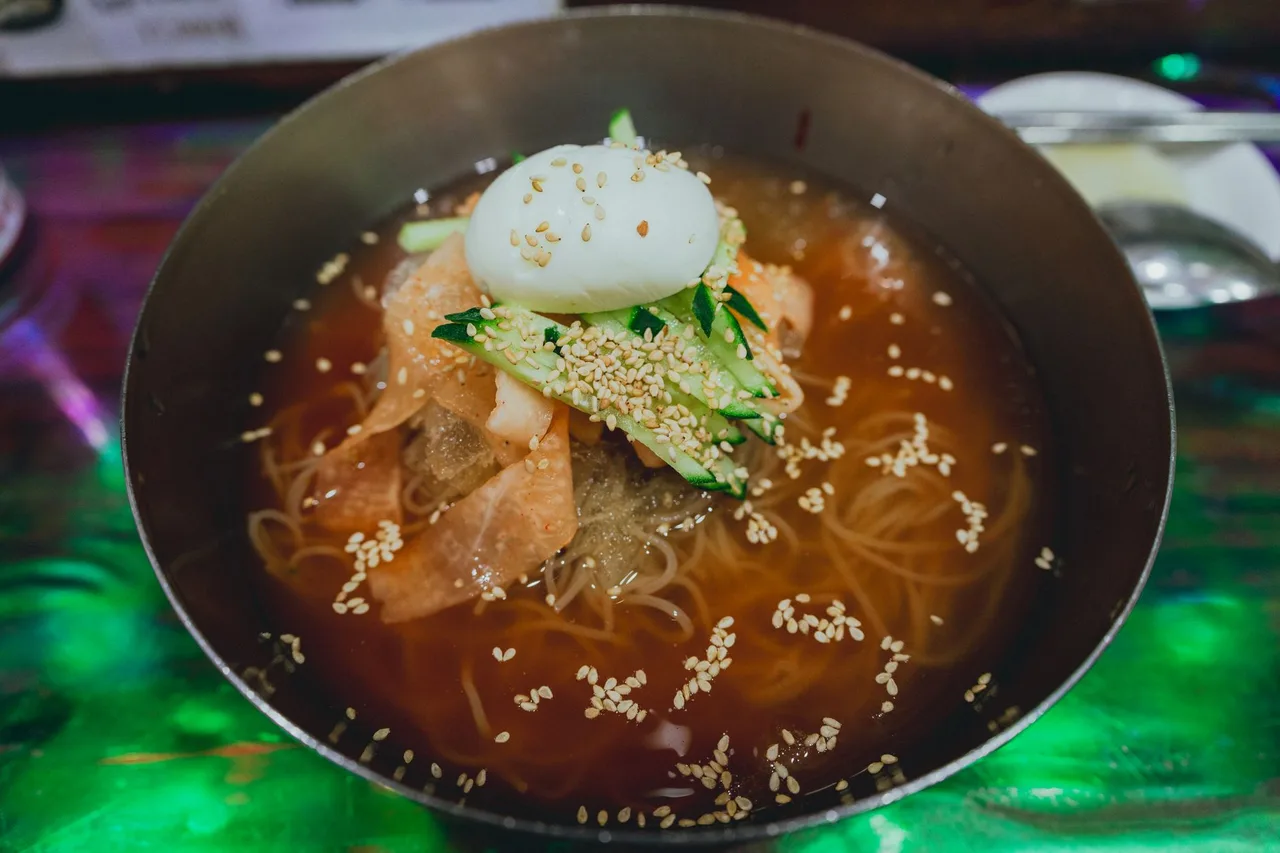
The classic finish is naengmyeon (냉면), cold buckwheat noodles served either in an icy tangy broth (mul-naengmyeon) or tossed in a fiery red sauce (bibim-naengmyeon). After a table of hot, rich, fatty meat, that first slurp of freezing broth genuinely resets your whole system — it cuts the grease and, somehow, makes room for more. The other traditional ending is bokkeumbap, fried rice cooked right on the grill with kimchi, seaweed, and the rendered fat and crispy bits your meat left behind. Staff will often offer to make it for you tableside. Say yes at least once. It's the best use of a dirty grill on earth.
Where to go, and a few last things
For your first time, honestly, don't overthink the venue. Any busy neighborhood pork place with a Korean crowd will do the job better than a famous name with a queue of tourists. But if you want a story, take Subway Line 5 to Majang Station and walk about ten minutes to Majang Meat Market, the largest meat market in Korea. There you buy your own cut of hanwoo from a butcher downstairs — often at 1++ grade for well below Myeongdong restaurant prices — then carry it upstairs, where a linked restaurant grills it over charcoal and lays out banchan for a small per-person seating fee, usually a few thousand won each. It's a bit of an adventure and rewards a little confidence.
A few things I wish someone had told me on day one:
- You seat yourself around the grill, not across a wide table. Sit close. It's a shared, elbow-to-elbow meal by design.
- The exhaust hood lowers over the grill — pull it down or ask staff to. Your clothes will still smell like smoke afterward. Every Korean owns a "BBQ jacket" they don't mind sacrificing.
- Two servings looks like nothing raw and turns into plenty cooked. Order conservatively and add more; refills are quick.
- Learn three words. "Yeogiyo" (여기요, "over here") to call staff, "mul" (물, water), and "hana deo juseyo" (하나 더 주세요, "one more please"). Our survival Korean phrases covers the rest.
That drama scene I started with makes a lot more sense now. The tongs, the scissors, the wraps, the soju poured for everyone but yourself — it's not performance, it's just how the meal works. Do it once and you'll get the appeal immediately: Korean BBQ isn't really about the meat. It's about sitting around a fire with people long enough that dinner becomes the whole evening. If you're planning a broader eating tour, our guide to what to order first as a beginner and the wider food and dining hub are good next stops.
Sources
This guide was researched using the references below. Prices and times change, so confirm anything time-sensitive on the official page before you rely on it.
Related guides
- Korean recipes with ground beefExplore easy and flavorful Korean dishes using ground beef, from bulgogi bowls to kimchi mandu, perfect for quick meals.
- Korean BBQ options near Incheon AirportA guide to enjoying authentic Korean BBQ near Incheon Airport, including top restaurant recommendations and practical tips for travelers.
- Korean BBQ in Incheon: A guide for foreignersDiscover the best Korean BBQ spots in Incheon, understand local dining etiquette, and learn how to enjoy this culinary experience like a local.
- Korean BBQ in Seoul: A guide for first-time visitorsDiscover the essentials of enjoying Korean BBQ in Seoul, from ordering and etiquette to top restaurant recommendations and solo dining options.
- Korean chicken recipes to try at homeExplore a variety of Korean chicken dishes, from spicy stir-fries to comforting soups, with recipes and cultural insights.
- Easy Korean recipes for beginnersDiscover simple Korean dishes like kimchi fried rice and bulgogi that you can make at home with minimal ingredients and time.