Cherry blossom season in Korea: when and where
When and where to see cherry blossoms in Korea, from Yeouido in Seoul to Jinhae, with subway lines, bloom timing, festival tips and the history.
By Jae Park · Updated Jul 14, 2026
Every year in late February, something completely predictable happens to the Korean music charts. A song from 2012 climbs back into the top ranks. "Cherry Blossom Ending" (벚꽃엔딩) by the indie band Busker Busker, written by Jang Beom-jun, has passed eight million downloads and re-enters the charts every single spring, which is why Koreans call it the "spring carol" and, less kindly, the "cherry blossom zombie." It refuses to stay dead. The first time a Korean friend explained this to me, I laughed. Then April came, I stood under a canopy of pink on the Han River with that exact song leaking from someone's phone speaker, and I understood. Cherry blossom season here is a genuine national mood, not a photo trend.
The Korean word is beotkkot (벚꽃), and going out to see them is beotkkot-nori (벚꽃놀이) — literally "blossom play." This guide is about doing that well: when the flowers actually open, where to stand, and how not to spend your whole trip in a crowd. My home base for it is Yeouido, the river island in western Seoul, so I'll start there and work outward.
When the blossoms actually open
Here is the thing nobody tells you until you've been burned once: cherry blossoms in Korea are only fully open for about a week. Maybe ten days if the weather is kind. One hard rain or a windy afternoon and the petals come down like snow. So the difference between a perfect trip and an empty branch is a matter of days, and you cannot book it six months out with confidence.
The blooms move south to north across the peninsula, following the warmth. The far south — Jeju Island and Busan — goes first, then the flowers roll up through the middle of the country, and Seoul is near the tail end. To give you a concrete sense of that wave, here is how the 2026 forecast laid it out:
- Jeju Island and Busan: first bloom around March 25
- Jeonju and Gyeongju: around March 28
- Gangneung on the east coast: around April 1
- Seoul: around April 3, peaking near April 10
- Incheon: around April 7
Peak bloom (mangae, 만개) lands roughly four to seven days after the first flowers open, and that peak week is the only window you actually want. Treat those 2026 dates as a template for a normal year, not a promise — 2026 ran a touch early, and any given spring can shift by a week either direction. Before you commit flights, check the Korea Meteorological Administration forecast and the Korea Tourism Organization's annual cherry blossom map, both of which publish updated bloom predictions from February onward. If your dates are locked, build in a buffer of a few days on each side.
There's a strategy locals and repeat visitors use, and it works: if your trip is long enough, start in the south and chase the bloom north. Land in Busan or Jeju in late March, then ride the KTX up as Seoul catches up in early April. You can effectively see peak bloom twice. If you only have Seoul, aim for the first ten days of April and pray for still weather.
Yeouido, Seoul's cherry blossom headquarters
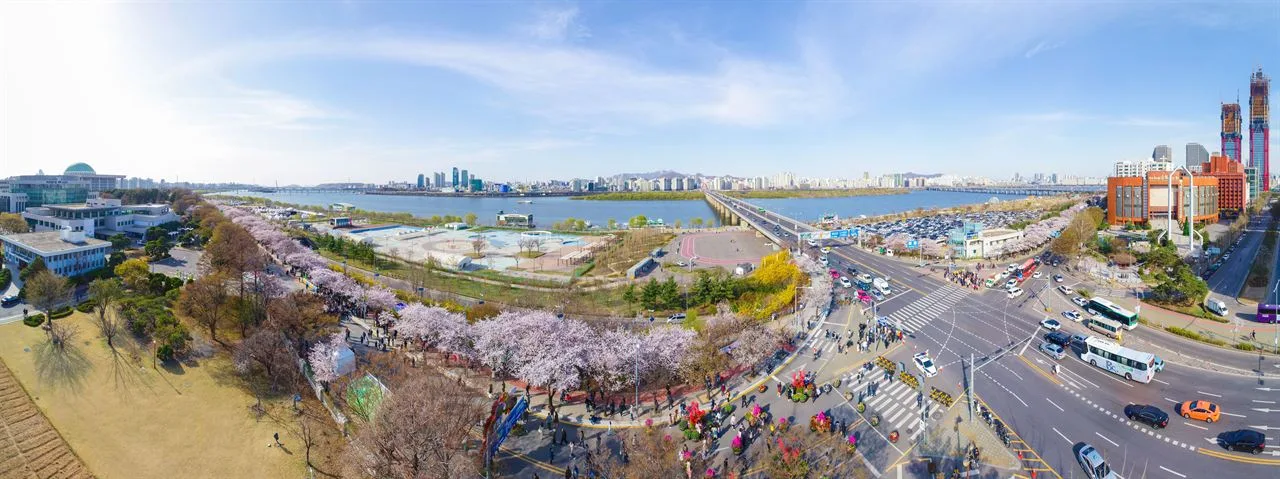
Yeouido is a flat island in the Han River, better known for the National Assembly and a wall of finance towers. For about ten days a year, though, the strip called Yunjungno (also written Yeouiseo-ro) becomes the most famous blossom street in the capital. It's a 1.7-kilometer tunnel of around 1,800 cherry trees curving behind the Assembly building, and during the Yeongdeungpo Yeouido Spring Flower Festival the city closes the whole road to cars so you can walk straight down the middle.
The festival is free, and it usually runs in early to mid-April to line up with Seoul's peak — in 2026 that fell in the second week. Getting there is easy on the subway, which matters because driving anywhere near Yeouido during the festival is a mistake.
- Line 9 to National Assembly Station (Gukhoe-uisadang). Take exit 1 or exit 6, then walk toward Yunjungno. This is the closest approach.
- Line 5 to Yeouinaru Station, which drops you at Hangang Park on the river side, then a short walk to the blossoms.
On peak weekends the crowds are real, and I mean shoulder-to-shoulder. Station staff sometimes redirect people to Yeouido Station or nearby stops to thin out the flow, so don't be surprised if you're funneled a different way than your map suggests. My honest advice, learned the hard way: go on a weekday morning, ideally before 10 a.m. You'll get the same tunnel with a fraction of the people and much better light. Weekend afternoons are a slow shuffle.
The festival lines the park with food stalls, and this is half the fun. Look for hotteok (호떡, a griddled sweet pancake), tteokbokki, grilled skewers, and Korean street toast. Bring some cash — a few vendors take cards now, but not all — and pair the walk with the riverside path, where families spread mats for a picnic under the trees. If you want a primer on ordering at these stalls without freezing up, our guide on how to eat like a local in Korea covers the etiquette and the phrases.
Seokchon Lake, for the tower shot
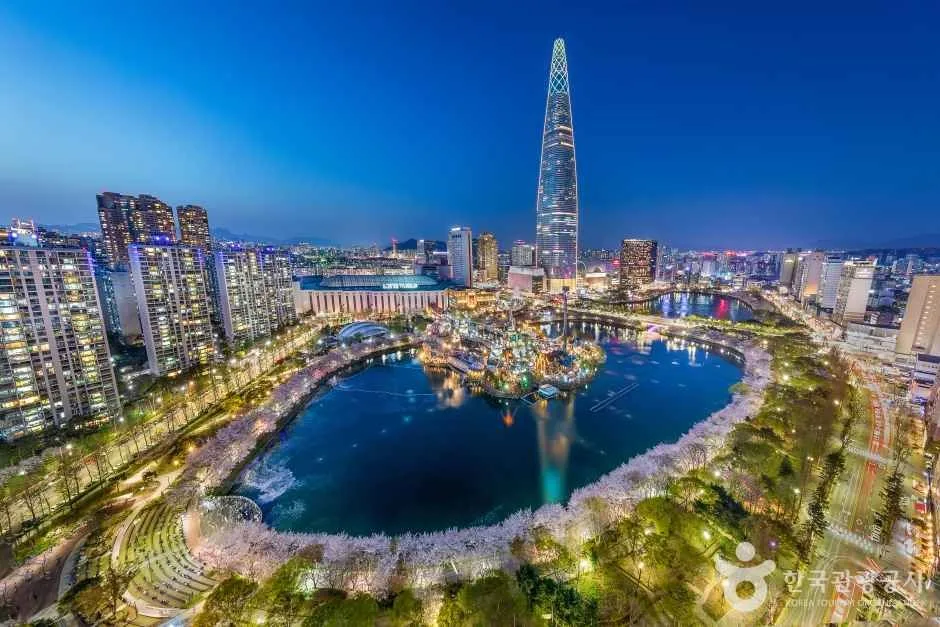
If Yeouido feels too packed, or you want a different frame, go across the river to Seokchon Lake in Jamsil. Over a thousand cherry trees ring a 2.5-kilometer loop around the water, and the 123-floor Lotte World Tower rises straight behind them. That reflection of pink blossoms on still water with the tower in the background is one of the most-photographed spring scenes in Seoul, and it earns it.
Access could not be simpler: take Line 2 or Line 8 to Jamsil Station. Use exits 1 or 2 for the East Lake and exits 3 or 4 for the West Lake. The lake sits right behind Lotte World and the mall, so you can combine it with an indoor rainy-day backup. It's free to walk, and the festival here typically runs late March into early April with evening illuminations, a small blossom market, food trucks, and lakeside concerts. I'd argue Seokchon is the better sunset spot; Yeouido is the better daytime tunnel.
Seoul's palaces are also quietly excellent for blossoms and far less frantic. Changgyeonggung and the grounds around Gyeongbokgung mix cherry trees with old stone and tile, which photographs beautifully if you rent a hanbok. If you're building a palace day into the trip anyway, our five grand palaces of Seoul guide sorts out which one to prioritize.
Jinhae, the country's biggest blossoms
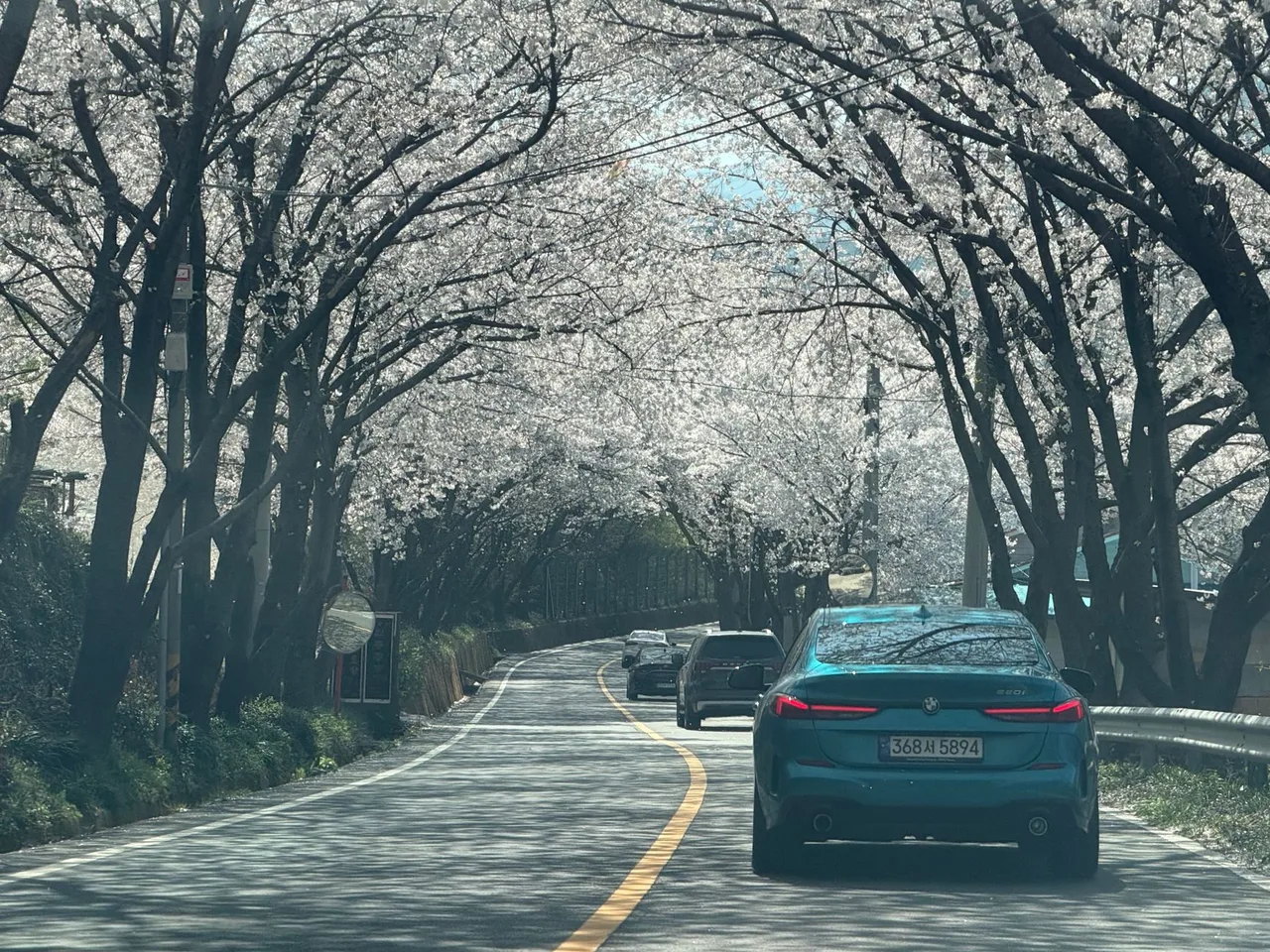
If you're serious about cherry blossoms and have a full day to spend, the Jinhae Gunhangje Festival in Changwon, down south, is the big one — Korea's largest cherry blossom event, running since the 1960s. Because Jinhae is in the south, it peaks earlier than Seoul, usually late March into the first days of April. In 2026 the 64th edition ran roughly March 27 to April 5.
Two spots make Jinhae worth the trek. Yeojwacheon Stream is a shallow creek roofed over by a dense blossom tunnel, lit up at night and famous from countless K-dramas and photo shoots. Gyeonghwa Station is a disused railway platform where the tracks run straight through a corridor of cherry trees — the classic shot of a train framed by pink is taken here.
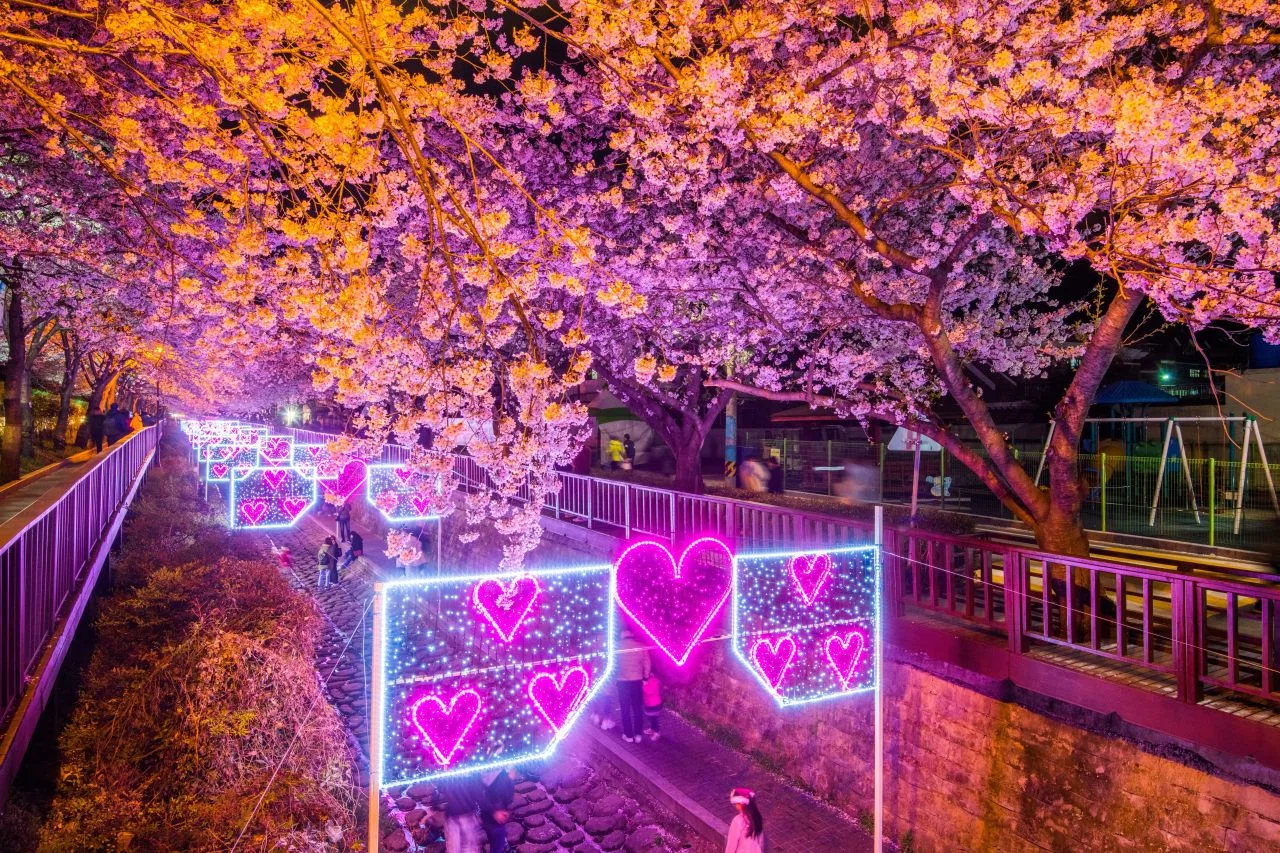
Getting there from Seoul takes commitment: about three hours by KTX to Changwon Jungang Station or Masan Station, then a local bus or festival shuttle into Jinhae. From Busan it's much easier — buses run to Jinhae roughly every 15 to 20 minutes from Sasang, about an hour away. Which is exactly why chasing the bloom from the south makes sense: base in Busan, hit Jinhae at its peak, then move north to Seoul a week later. Sort your arrival logistics first with our Incheon Airport to Seoul guide if you're flying into the capital.
The story most guides skip: Korea's King cherry
Here's the part that surprised me and never shows up in the standard listicle. There's a genuine botanical and historical tangle behind these trees, and it's worth knowing before you stand under them.
Korea has a native cherry called wangbeotnamu (왕벚나무), the King cherry, and its confirmed natural home is Jeju Island, with another wild population near Haenam on the mainland. In 1908, a French priest and botanist, Father Émile Taquet, found an old forest of these trees on the slopes of Hallasan, Jeju's volcano, and sent samples to researchers abroad. That set off more than a century of argument, because the Japanese ornamental cherry that lines streets all over the world — the Yoshino, or Somei-yoshino — is closely related and had been given the scientific name Prunus yedoensis after its origin near old Tokyo.
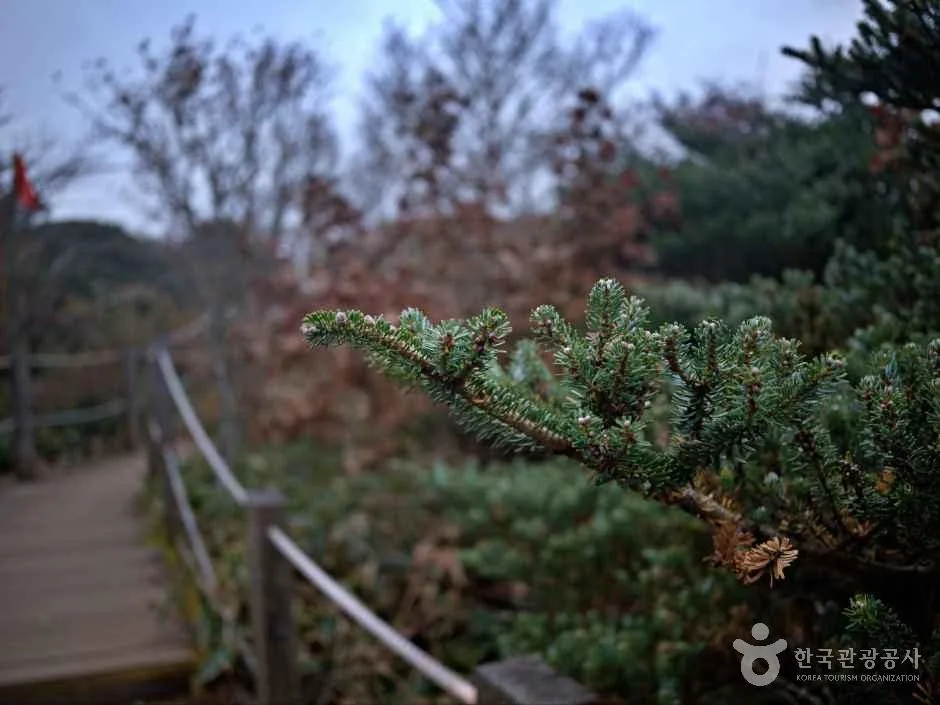
For decades this fed a nationalistic debate about who "owns" the cherry blossom. Genetic studies in the 2000s largely settled the science: the wild Jeju King cherry and the cultivated Japanese Yoshino are now treated as distinct species, even though they look almost identical to the naked eye. The honest, unromantic truth on the ground is that most of the trees you'll photograph at Yeouido and Jinhae are Yoshino-type ornamentals, planted for the show. If you want to see the genuine wild native King cherry, Jeju is the place — and the island's early bloom means you could catch both the festival crowds and a piece of botanical history in the same trip. I like knowing that as I walk; it turns a pretty street into something with a longer memory.
How to actually enjoy it
A few things I wish someone had drilled into me before my first blossom season:
- Go early and go on weekdays. Peak-bloom weekends at Yeouido and Seokchon are genuinely crowded. A weekday morning is a different, calmer experience with better photos.
- Watch the weather, not just the calendar. Rain and wind end the season fast. If a storm is forecast during peak week, go the day before, not after.
- Carry cash for the food stalls, wear real walking shoes, and bring a light layer — early April mornings in Seoul are still cool, often single digits Celsius.
- Don't snap branches or shake trees for a "petal rain" shot. It's frowned upon, and staff will say something. Let the wind do it.
- Cherry blossoms are only the opening act. Come back in autumn and the same instinct for seasonal color pays off in reds and golds — our Korea autumn foliage guide maps that one out.
The reason I keep coming back to Yeouido specifically, over all the prettier and quieter spots, is the crowd itself. There's an energy to thousands of Seoulites walking the same closed road, phones up, Busker Busker playing somewhere, office workers eating hotteok on their lunch break, grandmothers in hanbok posing at the same tree as teenagers. It's messy and loud and completely un-serene, and it's the truest version of what beotkkot-nori actually feels like to Koreans. The flowers are the excuse. The gathering is the point.
Plan for the peak week, check the forecast the way you'd check a flight, and give yourself a spare day. Get those right and you'll catch the ten days the whole country waits all winter for.
Location
Yeouido Hangang Park, Seoul
View on Google MapsSources
This guide was researched using the references below. Prices and times change, so confirm anything time-sensitive on the official page before you rely on it.
Related guides
- Jeju black pork: a guide for foreign visitorsDiscover Jeju's famed black pork: its history, unique flavor, and where to savor it on the island.
- Jeju car rental guide for foreignersA comprehensive guide for foreigners on renting a car in Jeju, covering requirements, costs, insurance, and driving tips.
- Jeju Island weather: what to expect each seasonA practical guide to Jeju Island's weather by season, helping you plan the best time to visit based on climate, activities, and crowd levels.
- Flying with Jeju Air: A guide for international travelersA comprehensive guide for international travelers on flying with Jeju Air, covering booking, baggage policies, check-in procedures, and seasonal travel tip
- Korea festivals in May 2026: A guide for visitorsExplore Korea's lively festivals in May 2026, from the dazzling Lotus Lantern Festival in Seoul to the fragrant Rose Festivals in Samcheok and Gokseong.
- Seoul Lantern Festival: what to know before you goSeoul's biggest winter light show runs free along the Cheonggyecheon stream downtown. Here is when it is held, how to reach it by subway, and what to see.