Incheon Airport to Seoul: every option compared
Real prices and times for every way from Incheon Airport to Seoul in 2026: AREX express and all-stop trains, airport buses, taxis, and which to pick.
By Jae Park · Updated Jul 14, 2026
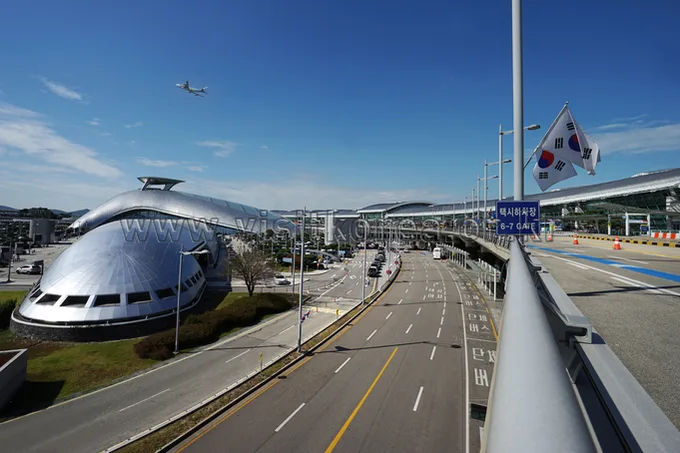
If you have watched any amount of K-content, you already know Incheon International Airport before you land there. It is where the paparazzi wait for idols in oversized hoodies and airport-fashion sunglasses, where an ARMY crowd once turned a departure gate into a photo pit, and where roughly half the meet-cutes in Korean rom-coms seem to happen at the arrivals barrier. I love that the airport has its own celebrity mythology. What nobody films, though, is the next 40 minutes of your trip, when you are jet-lagged, dragging a suitcase, and trying to figure out how to actually get into Seoul without overpaying or boarding the wrong train.
I have made this run more times than I can count, at 6 a.m. and at midnight, alone and hauling three bags. This is the honest version of every option, with real prices and times, and the small mistakes I have watched people make at the ticket machines.
First, figure out which terminal you are in
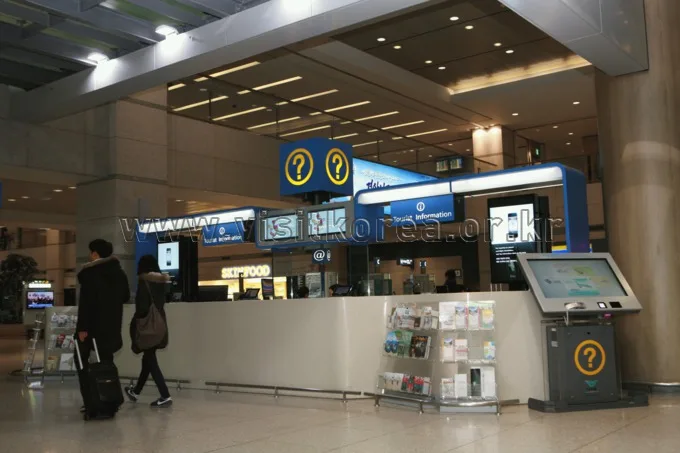
Incheon has two passenger terminals, and they are not close together. Terminal 2 is the newer one, used by Korean Air, Delta, Air France, KLM and their partners. Terminal 1 handles most other carriers, including Asiana and many budget and international airlines. Everything below (train platforms, bus stops, taxi stands) exists at both terminals, but the numbers differ slightly, so check your boarding pass before you follow signs.
If you land at one terminal and your train or a friend is at the other, there is a free shuttle bus that loops between them. It runs every 5 to 8 minutes and takes about 20 minutes. In Terminal 1 you catch it on the 3rd floor near Exit 8, and in Terminal 2 between Exits 4 and 5. Do not pay for a taxi between terminals, and do not use the AREX train to hop terminals either. The shuttle is free and it is what the airport staff will point you to.
One quick myth to kill: there used to be a direct KTX high-speed train from the airport, and old blog posts still mention it. That service was discontinued back in 2018. If you want a KTX to Busan or Gangneung, you take AREX to Seoul Station first and change there.
The quick comparison
Here is the whole decision in one glance, then I will break each one down.
- Fastest and calmest: AREX Express train, about 43 minutes to Seoul Station, around 11,000 won.
- Cheapest: AREX All-Stop train, about 59 minutes, roughly 4,150 to 4,750 won with a transit card.
- Best if you have big luggage and a fixed hotel: airport bus, about 60 to 80 minutes, around 16,000 to 18,000 won.
- Door to door with zero walking: taxi, 60 to 90 minutes, roughly 65,000 to 100,000 won plus tolls.
Prices and first/last departure times shift over time, so treat these as a strong baseline and confirm the current numbers on the official signage or the operator's site when you go. Now the detail.
AREX Express train: the one I usually take
The AREX (Airport Railroad Express) has two completely different trains that share the same line, and mixing them up is the single most common airport-transfer mistake I see. The Express is the direct one. It runs non-stop from the airport to Seoul Station with reserved seats, luggage racks, and no jostling for a place to stand.
From Terminal 1 the ride is about 43 minutes, and from Terminal 2 about 51 minutes, because Terminal 2 sits further down the line. The fare is around 11,000 won one way. You will see it listed anywhere from roughly 9,500 to 13,000 won depending on where you buy and which discount applies, so glance at the board before you assume. Advance tickets bought online through the usual travel platforms often shave it down to about 9,000 won, which is worth it if you already know your arrival time.
Trains leave roughly every 30 to 40 minutes. The first Express of the day departs Terminal 2 around 05:15 (Terminal 1 around 05:23), and the last one leaves Terminal 2 around 22:40 (Terminal 1 around 22:48). If your flight lands after 11 p.m., the Express may already be done for the night, which pushes you toward the all-stop train, a bus, or a taxi.
To find it, follow the "Airport Railroad" signs down to the platform. In Terminal 1 the AREX platform is on level B1, and in Terminal 2 it is deeper, on B3. Buy the Express ticket at the dedicated counter or the machines marked for the direct train, not the regular transit gate. At Seoul Station the AREX arrives at its own basement concourse that connects to the main KTX station, subway lines 1 and 4, and a taxi rank, so you can transfer onward without going outside.
AREX All-Stop train: the budget move that is genuinely fine
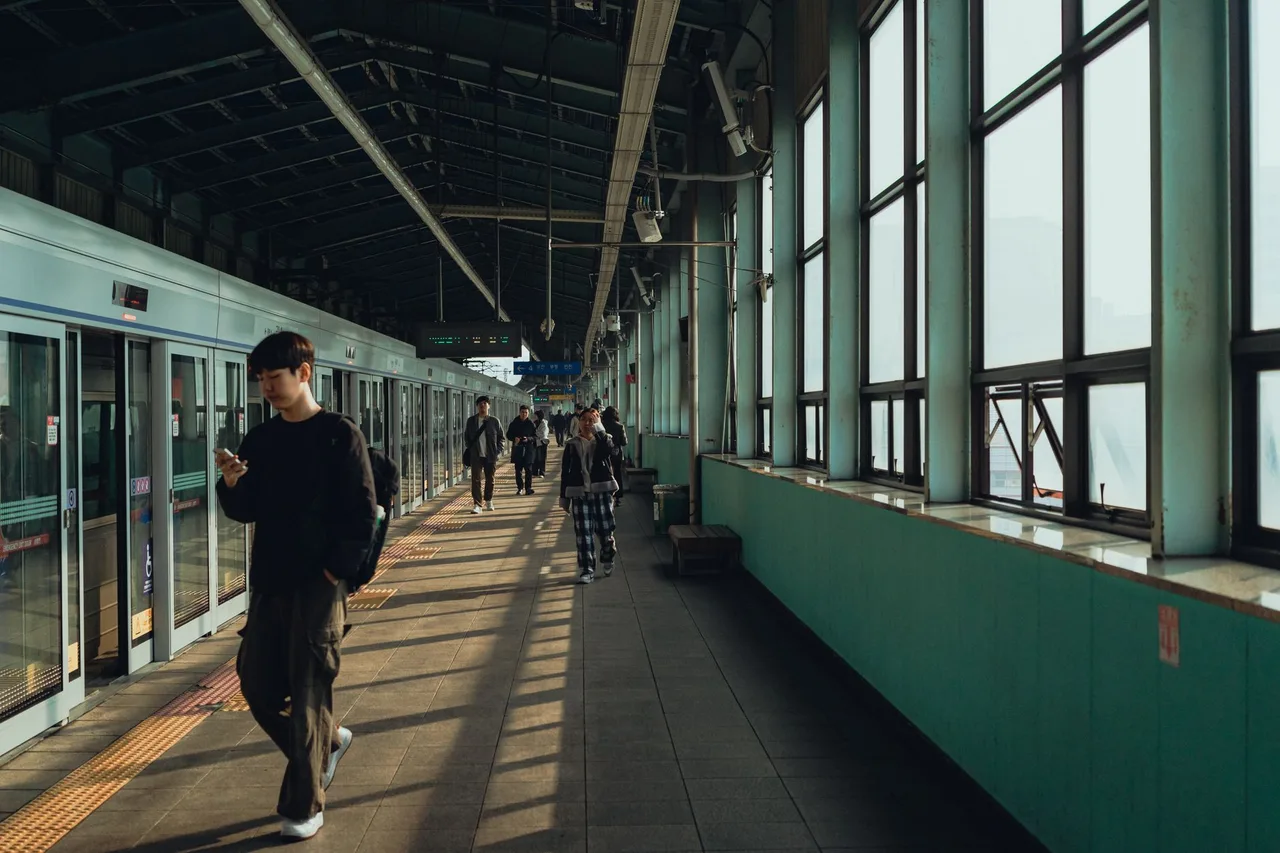
The All-Stop is the blue commuter train on the same line, and it is what I take when I am not in a hurry. It stops at 13 stations on the way to Seoul, including Gimpo International Airport, Digital Media City, Hongik University (that is Hongdae, and it is a huge advantage if your guesthouse is in that neighborhood), and Gongdeok, before terminating at Seoul Station. The whole run is about 59 minutes.
The reason to love it is the price. With a transit card you pay only about 4,150 to 4,750 won depending on where you get off, which is a quarter of the Express fare. Trains come every 5 to 10 minutes, so there is no schedule to memorize. You just tap in and go.
The catch is how you pay. The All-Stop works like any Seoul subway line, which means you tap a T-money, WOWPASS, or NAMANE card at the gate. There is no reserved seat and no paper Express ticket. If you are heading to Hongdae, Sinchon, or anywhere on subway line 2, getting off at Hongik University station and transferring there is often faster and cheaper than riding all the way to Seoul Station and doubling back. Load at least 5,000 won onto your card before you tap so the gate does not reject you with luggage piling up behind you.
Airport bus: my pick when I am carrying too much
There is a real case for the bus, and it is luggage. On the train you manage your own bags through gates, escalators, and a transfer. On an airport limousine bus, the driver loads your suitcase into the hold, you sink into a wide seat, and you do not move again until your stop. After a 13-hour flight that is worth a lot.
The buses are numbered, and each route is basically a list of hotels and neighborhoods. Route 6001 runs toward Dongdaemun, and 6015 drops you right at the edge of the Myeongdong shopping district, to name the two I use most. Others cover Hongdae and Sinchon, Gangnam, Jamsil, and the major hotel clusters. The airport information desks near the exits have route maps posted, and staff will tell you which number passes closest to your address, which is genuinely the best way to pick.
Fares run about 16,000 to 18,000 won one way, with the popular Myeongdong, Gangnam and Hongdae routes usually around 17,000. The ride is about 60 to 80 minutes depending on traffic, which can balloon during rush hour or on a Friday night. Route 6001 runs roughly 05:30 to 23:10 and 6015 about 05:40 to 23:00, so late arrivals still have a shot. Buy your ticket at the bus-company booth on the arrivals level or at the machine by the stop, then wait at the numbered platform outside. One small perk worth knowing: on the Seoul-to-airport direction, some routes give families of three or more a free ticket, though that helps you on the way home, not the way in.
Taxi and international taxi: comfort at a price
A taxi is the door-to-door option, and sometimes it is simply the right call: a family with kids at midnight, or a hotel down a lane no bus reaches. Just go in with clear expectations about cost, because this is where surprises happen.
A standard metered taxi (orange or white) to central Seoul like Myeongdong runs roughly 65,000 to 75,000 won and takes 60 to 90 minutes. Deluxe taxis, the black ones with a "Deluxe" sign, are larger and nicer but cost about 40 to 50 percent more, in the 90,000 to 130,000 won range. On top of the meter you pay the expressway tolls (around 7,900 won), and between midnight and 4 a.m. there is a 20 percent late-night surcharge. So a late arrival by standard cab can quietly climb past 90,000 won.
If the language barrier worries you, look for the International Taxi desk in the arrivals hall. Those drivers speak English, Japanese or Chinese, and many routes use fixed zone prices (often around 75,000 won to central areas) so there is no meter anxiety and no "scenic route." For groups, jumbo vans seat up to eight and cost about the same as a deluxe taxi, which can actually beat four separate train tickets once you split it. If you would rather lock in the fare before you land, you can pre-book an Incheon airport transfer on Klook.
This guide contains affiliate links. If you book through them we may earn a small commission, at no extra cost to you.
Only use the official taxi stands outside the terminal. Ignore anyone who approaches you inside the hall offering a ride, because that is the one Incheon transport situation that goes wrong.
Get your transit card and connectivity sorted at the airport
Two small errands at the airport make everything downstream smoother.
First, a transit card. T-money is the classic rechargeable card that works on every subway, bus, and even most taxis nationwide, and you can buy and top it up at the convenience stores inside the terminal. WOWPASS is the traveler-friendly upgrade: it exchanges your foreign cash into Korean won and doubles as a T-money card, and there are machines right at the airport. Either one turns the All-Stop train, city buses, and your daily subway hops into a single tap. If you plan to move around Seoul at all, grab one before you leave the airport rather than fumbling at a downtown station later.
Second, get online. Grabbing a SIM or eSIM at the airport means you can pull up maps, translate a taxi address, and check the last-train time the moment you land. I walk through the trade-offs in our guide on a SIM versus an eSIM in Korea, because the right choice depends on your phone and how long you are staying. Pair that with a handful of survival Korean phrases and even the taxi route feels manageable.
A few things I wish someone had told me
- Match the train to the ticket. Tapping a T-money card at the gate puts you on the All-Stop, not the reserved-seat Express. If you paid for the Express, use the Express counter and its platform.
- Terminal 2 is farther out. Every train and bus time from Terminal 2 runs several minutes longer than the Terminal 1 figure. Build that in.
- Check the last departure before you fly. Late-night arrivals miss the Express and sometimes the last direct bus, which leaves the all-stop train (until roughly midnight) or a taxi. Knowing this before you land saves a stressful decision at 11:45 p.m.
- Traffic is real. On weekday evenings and Friday nights the bus and taxi can take far longer than the train, which sails past the jams on its own tracks. When in doubt during rush hour, take AREX.
- The airport is genuinely comfortable to wait in. If you land before the first train, Incheon has 24-hour lounges, showers, and food, so an early arrival is not the emergency it feels like.
So which should you actually pick?
Here is how I decide, quickly. Solo or a couple with normal luggage heading to central Seoul, in daylight: AREX Express, every time, for the speed and the guaranteed seat. Backpacker on a budget, or staying near Hongdae: the All-Stop train, no contest on price. Two or more people with heavy suitcases and a specific hotel: the airport bus, for the door-near drop and the no-lifting comfort. Late-night arrival, a group, or small kids melting down: a taxi or an international taxi, and accept the cost as the price of going straight to bed.
Whatever you choose, the ride into the city is the real opening scene of your trip. Somewhere between the airport and Seoul Station the flat coastal reclaimed land gives way to bridges over the Han River and then the skyline, and it lands very differently in person than on a screen. Once you are in town, our guides on K-drama filming locations worth visiting and Seoul's five grand palaces are a good place to point that momentum. Welcome to Korea. The hard part, the part the airport-fashion cameras never show, is already behind you.
Location
Incheon International Airport
View on Google MapsSources
This guide was researched using the references below. Prices and times change, so confirm anything time-sensitive on the official page before you rely on it.
Related guides
- Things to do in Seoul this weekendExplore Seoul this weekend with the Hangang River Festival, Official HIGE DANdism concert, and more. Enjoy cultural events, concerts, and outdoor activitie
- Top things to do in Seoul, KoreaExplore Seoul's rich history, lively neighborhoods, and unique experiences with our curated guide to the city's top attractions and activities.
- 10-day South Korea itinerary for first-time visitorsA comprehensive 10-day itinerary covering Seoul, Gyeongju, Busan, and Jeju Island, blending cultural landmarks, natural beauty, and culinary experiences.
- Top places to visit in SeoulExplore Seoul's blend of ancient palaces, lively markets, and modern attractions with this guide to the city's must-visit spots.
- Seoul travel passes: a comprehensive guide for visitorsExplore Seoul efficiently with travel passes like the Discover Seoul Pass and Climate Card, offering free entry to attractions and unlimited transit rides.
- Seoul travel guide for foreignersA comprehensive guide for foreigners visiting Seoul, covering transportation, budgeting, accommodations, dining, attractions, and cultural etiquette.