Autumn foliage in Korea: when and where
When and where to catch Korea's autumn foliage, from Seoraksan's early peak to Seoul's ginkgo paths, with real dates, trails, buses and food tips.
By Jae Park · Updated Jul 14, 2026
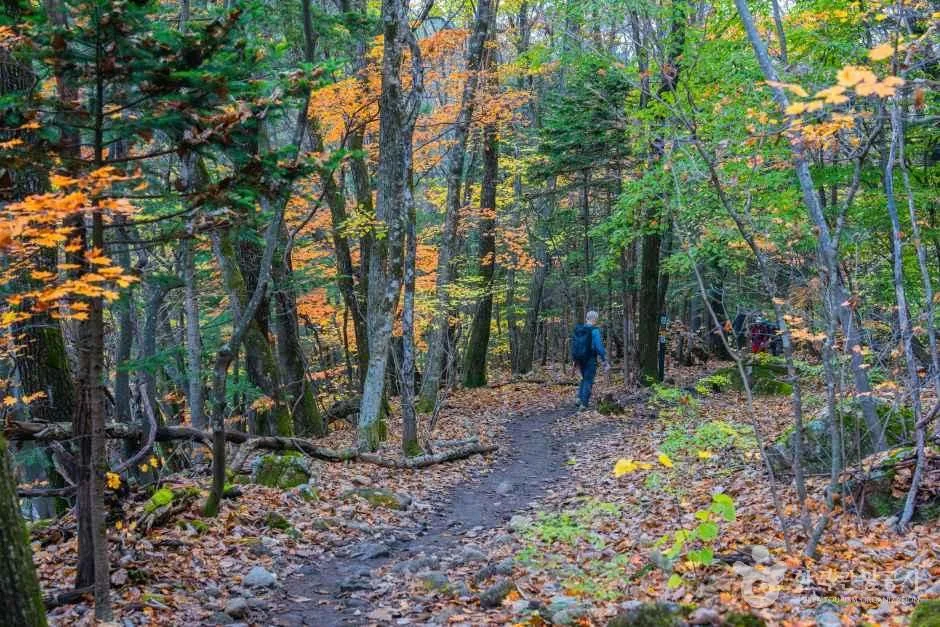
The first time I understood what Korean autumn looked like, I hadn't set foot in the country. I was watching *Winter Sonata* on a laptop, half-asleep, and there was that tree-lined lane on Nami Island with leaves coming down like slow confetti. Years later I stood on that exact path in late October, and I get why it wrecked a generation of viewers. Korea does autumn with a seriousness that surprises people who came for the K-pop and the fried chicken.
The Korean word for it is *danpung* (단풍), and it's less a backdrop than a national event. Weather forecasters track it. Families plan drives around it. And if you want to catch it at its best, you can't just show up in "October" and hope. The color moves, it has a schedule, and the single most reliable place to intercept it early is Seoraksan National Park up in Gangwon Province. Here's how I'd plan it.
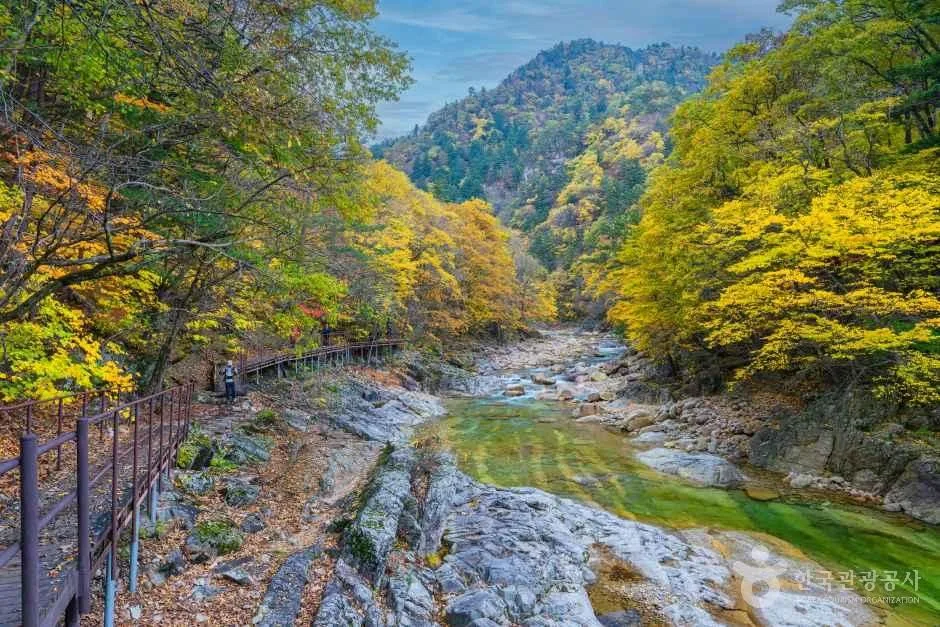
What "danpung" actually means, and why it travels
Danpung is the whole phenomenon of leaves turning, but Koreans talk about it in two stages that matter for timing. The *start* of foliage is when the first color appears near a mountain's summit. The *peak*, called *jeoldae* (절정), is when roughly 80% of the mountain has turned. Forecasters issue both, mountain by mountain, the same way other countries track cherry blossoms.
Two things move at once. The color rolls south, from the northern peaks down toward Jeju, over about six weeks from late September into late November. It also rolls downhill on any single mountain, starting at the cold, exposed top and creeping toward the base over two to three weeks. That's why you can stand at a trailhead in early October, see bare green around you, and find the ridgeline above already on fire. Aim too low or too early and you miss it; aim too late and the summit has already dropped its leaves while the base peaks.
Why the leaves turn, in plain terms
I used to think cold "made" the leaves change, full stop. It's more interesting than that. All summer the leaves are green because chlorophyll masks everything else. As the nights get longer in autumn, trees stop making chlorophyll and the green breaks down, unmasking the yellows and oranges of carotenoids that were there the whole time. The deep reds are different: those come from anthocyanins, pigments the tree actually manufactures in fall.
That red is the part weather makes or breaks. You want a run of bright, sunny days and cold nights that stay just above freezing. Sun keeps sugars building in the leaf; cold nights trap them; the tree converts them to red pigment. A warm, gray autumn gives you a muddy yellow and an early drop. Too much rain or a hard early frost dulls it fast.
This is also why the calendar keeps sliding. Korea's late summers have been running hotter, and warmer nights push the whole show later than it was a decade ago. It's one more reason to treat any date you read, including mine, as a starting estimate and confirm closer to the day.
When to go: a rough national timeline
Use this as scaffolding, not gospel, and check the Korea Tourism Organization's annual forecast before you commit flights or a hotel. Based on a recent official forecast, the pattern looks like this:
- Seoraksan (Gangwon): color starts around the end of September; peak around October 22 to 23. It's first every year.
- Jirisan (south-central): starts mid-October; peaks around October 23.
- Bukhansan (Seoul's mountain): starts around October 17; peaks in early November.
- Seoul palaces, parks and ginkgo streets: best in late October into early November.
- Hallasan (Jeju): peaks around late October into the first days of November.
- Naejangsan (Jeollabuk): the famous maple tunnel peaks latest of the headliners, around November 11.
So if your trip is fixed for, say, the third week of October, go north to Seoraksan and Gangwon. If you're locked into early November, you're better off in Seoul, Jeju, or heading down to Naejangsan. Trying to force Seoraksan in mid-November means bare branches.
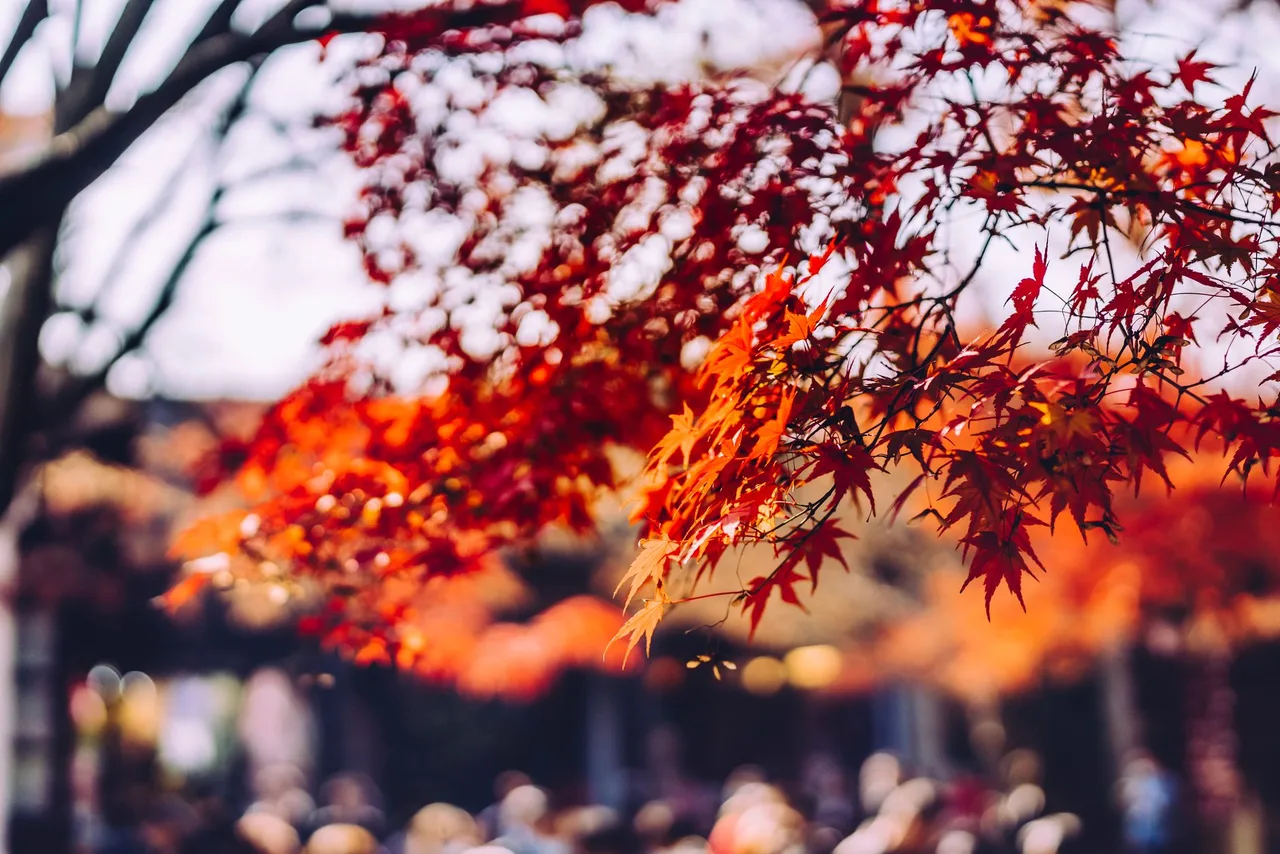
Seoraksan: the one that turns first
Seoraksan earns its reputation. It's the northernmost of Korea's big-name parks and full of exposed granite peaks, so the cold reaches it first and the color starts weeks ahead of Seoul. The park is free to enter, and since a 2024 nationwide agreement, the Buddhist temples inside no longer charge admission either, so the old Sinheungsa temple fee is gone. You'll still pay for parking, the cable car, and the shuttle within the resort area.
Most first-timers base themselves at Sogongwon, the main entrance near Sokcho, and pick a trail to their fitness.
Biseondae, the gentle one
If you want color without a cardio test, walk to Biseondae. It's a little over 2 km each way from Sogongwon and stays nearly flat, following a stream past Sinheungsa temple and the enormous seated bronze Buddha that guards the entrance. You pass Heundeulbawi, the "rocking rock," a boulder so precisely balanced that a group can rock it and it won't fall. Biseondae itself is a broad, smooth rock slab under the cliffs that turns into a waterfall after rain. This is the walk to do with kids, with grandparents, or with a hangover.
Ulsanbawi, the one that earns the view
If your legs are willing, Ulsanbawi is the payoff hike. It's about 3.8 km one way and takes most people three and a half to four hours round trip, passing Heundeulbawi before the mountain gets serious. The last stretch is almost entirely metal stairs bolted to the granite, climbing steeply to the ridge. From the top you get a 360-degree sweep of Seoraksan's peaks with the East Sea glittering behind you, and in the third week of October the whole basin below looks like it's been set alight. Go early; those stairs turn into a single-file traffic jam by late morning on a peak weekend.
The cable car to Gwongeumseong
Not a hiker? The cable car from Sogongwon lifts you to a landing near Gwongeumseong, a ruined fortress site at around 700 meters, then a short scramble gets you a panoramic viewpoint. As of 2026 it runs roughly 16,000 won round trip for adults and about 12,000 for children, though prices creep up, so confirm on the day. In autumn it operates about 9:00 to 18:00 with the last ride near 5:30 p.m. Two catches worth knowing: there's no online booking and no one-way ticket, so you queue in person, and it shuts without warning in fog, rain, or high wind. On a clear peak day the wait can run well over an hour, so this is another argue-for-arriving-early situation.
Getting to Seoraksan from Seoul
The mountain sits above Sokcho, a coastal city about two and a half hours east of Seoul. The simplest route is an express bus from Dong Seoul Bus Terminal (Gangbyeon Station, Seoul subway line 2) to Sokcho. Buses run roughly hourly, take a little over two hours, and cost around 18,800 won. You can buy at the counter or book ahead through the Kobus app, which I'd do on an October weekend when seats sell out.
From Sokcho's bus terminal, local buses 7 and 7-1 run to the Seoraksan (Sogongwon) entrance in about half an hour. Grab a T-money card so you're not fumbling for cash. If reading the destination signs makes you nervous, a few practical survival Korean phrases go a long way at a rural bus stop, and sorting a SIM or eSIM before you land means you can pull up live bus times and the cable car's daily notice.
Beating the crowds, honestly
I won't pretend Seoraksan in peak week is a serene forest to yourself. It is the single most popular natural site in the country during exactly the ten days you want to be there. On an October weekend between roughly the 15th and 25th, the parking lots can fill by 8 a.m., and the approach road backs up into half-hour crawls. Weekends see something like triple the foot traffic of weekdays.
My rules, learned the tiring way:
- Go on a weekday if you possibly can. It's a different mountain.
- If it has to be a weekend, be at the gate before 7 a.m. You'll get parking, a clearer ridgeline, and the cable car before the line forms.
- Do the hard hike first, the cable car or the flat walk after. Crowds thicken as the morning goes.
- Stay overnight in Sokcho rather than day-tripping from Seoul, so you're not racing the last bus back at dusk.
Eat like you're in Sokcho
One underrated reason to sleep in Sokcho: the food is worth the trip on its own. The city's signature is dakgangjeong, bite-sized fried chicken tossed in a sweet-and-spicy glaze and dusted with crushed peanuts. The famous stalls cluster in the Sokcho Tourist and Fishery Market (long known as Jungang Market), where places like Mansuk have been frying since the 1980s. Expect a line; buy a boxful and eat it warm on a bench by the harbor.
The other local specialty is mulhoe, a cold, tangy raw-fish soup built for a coastal town, loaded with white fish, squid, and whatever came off the boats. After a cold morning on the ridge, it's oddly perfect. If Korean seafood markets are new to you, it helps to know how locals actually order and eat before you dive in.
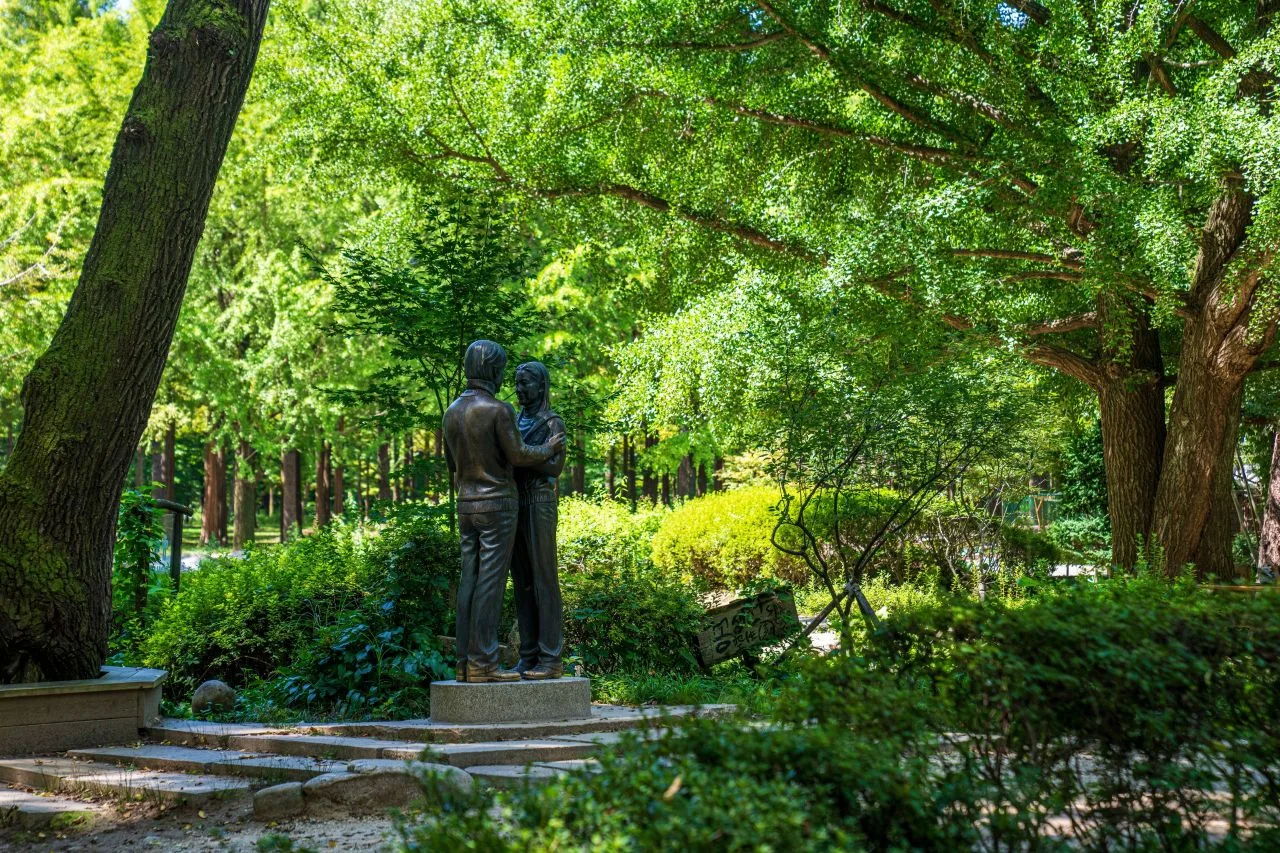
If you can't get to Gangwon
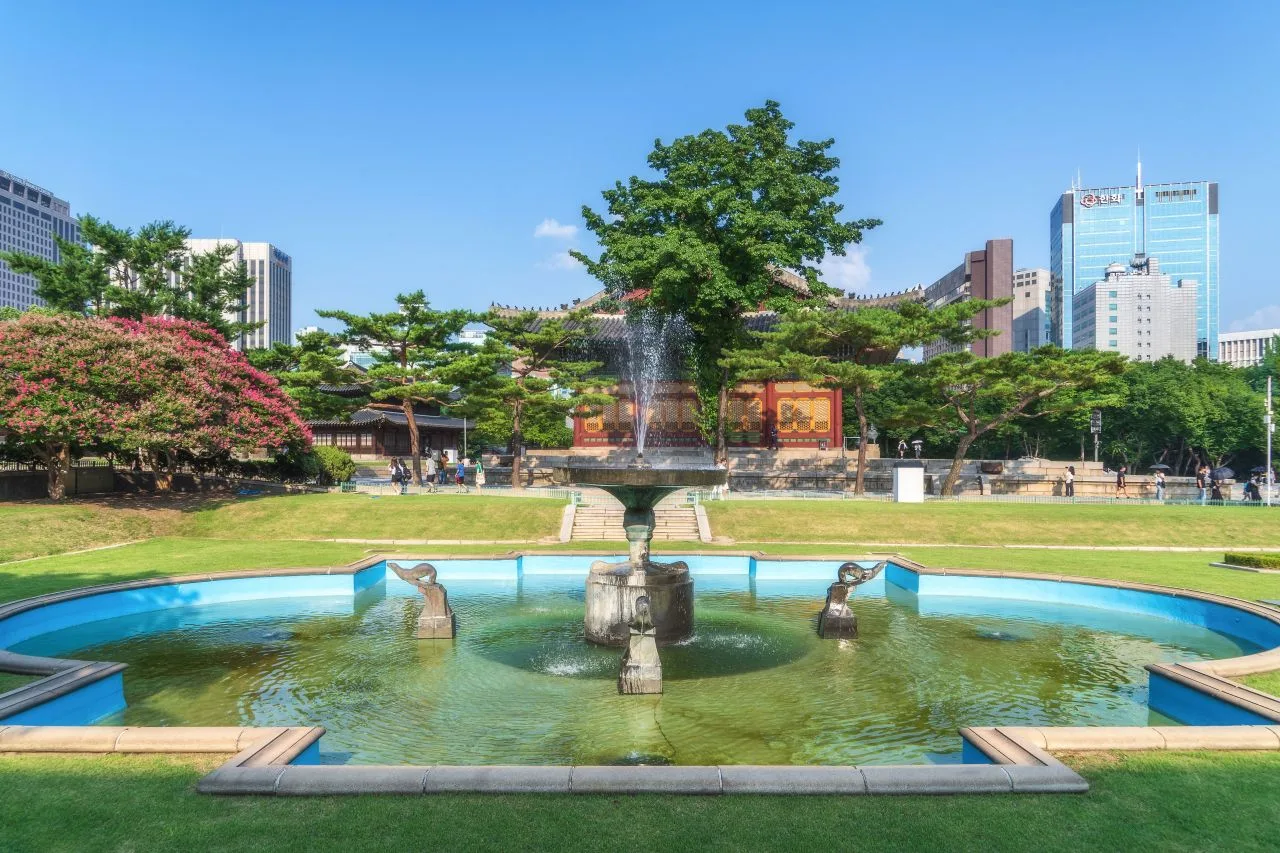
Plenty of visitors only have a few Seoul days, and Seoul does autumn beautifully, just a couple of weeks after Seoraksan. My favorite is the Deoksugung Stone Wall Road, where a double row of ginkgo trees turns a shocking gold in early November; it's a short walk from City Hall Station on lines 1 and 2. Gyeongbokgung and the other old palaces frame their courtyards in color, Seoul Forest near Seongsu goes crimson, and the ginkgos along Sungkyunkwan University are a quiet local secret. If you're palace-hopping anyway, the five grand palaces guide pairs well with a foliage day.
The soft option: Nami Island
And then there's Nami, the one that started my obsession. Nami Island in Gapyeong is a flat, half-moon river island famous for that *Winter Sonata* lane, with an avenue of metasequoia and another of ginkgo that both go gold in late October and early November. It's far gentler than a mountain hike, which makes it ideal for families or a slow day.
From Seoul, take the Gyeongchun Line (the teal one) from Sangbong Station out to Gapyeong, roughly an hour and a quarter, then local bus 33-5 to the wharf. The ferry across is quick, and a combined ticket that includes the round-trip boat runs around 10,000 won. Drama pilgrims can stitch it into a bigger day out using our K-drama filming locations guide.
A few practical notes before you go
Mid-October on the ridgelines is genuinely cold, often 10 to 15 degrees Celsius by day and colder up top with wind, so pack a real jacket and layers even if Seoul feels mild. Wear proper shoes for the metal stairs. Carry water and cash for the market stalls. And build in slack; the color, the traffic, and the cable car all answer to weather, not to your itinerary.
If you also want the other end of the year, spring is Korea's mirror-image spectacle, and our cherry blossom guide plans it the same way, by chasing a front that moves across the country on its own schedule. Autumn just runs the other direction, cold to warm, north to south, and Seoraksan is where you catch it before anyone else.
Location
Seoraksan National Park
View on Google MapsSources
This guide was researched using the references below. Prices and times change, so confirm anything time-sensitive on the official page before you rely on it.
Related guides
- Jeju black pork: a guide for foreign visitorsDiscover Jeju's famed black pork: its history, unique flavor, and where to savor it on the island.
- Jeju car rental guide for foreignersA comprehensive guide for foreigners on renting a car in Jeju, covering requirements, costs, insurance, and driving tips.
- Jeju Island weather: what to expect each seasonA practical guide to Jeju Island's weather by season, helping you plan the best time to visit based on climate, activities, and crowd levels.
- Flying with Jeju Air: A guide for international travelersA comprehensive guide for international travelers on flying with Jeju Air, covering booking, baggage policies, check-in procedures, and seasonal travel tip
- Korea festivals in May 2026: A guide for visitorsExplore Korea's lively festivals in May 2026, from the dazzling Lotus Lantern Festival in Seoul to the fragrant Rose Festivals in Samcheok and Gokseong.
- Seoul Lantern Festival: what to know before you goSeoul's biggest winter light show runs free along the Cheonggyecheon stream downtown. Here is when it is held, how to reach it by subway, and what to see.