How Korean food names work, from jjigae to bokkeum
Korean dish names follow a pattern of ingredient plus cooking method. Learn the soup, rice, and grill words so you can read a menu with confidence.
By Jae Park · Updated Jul 17, 2026
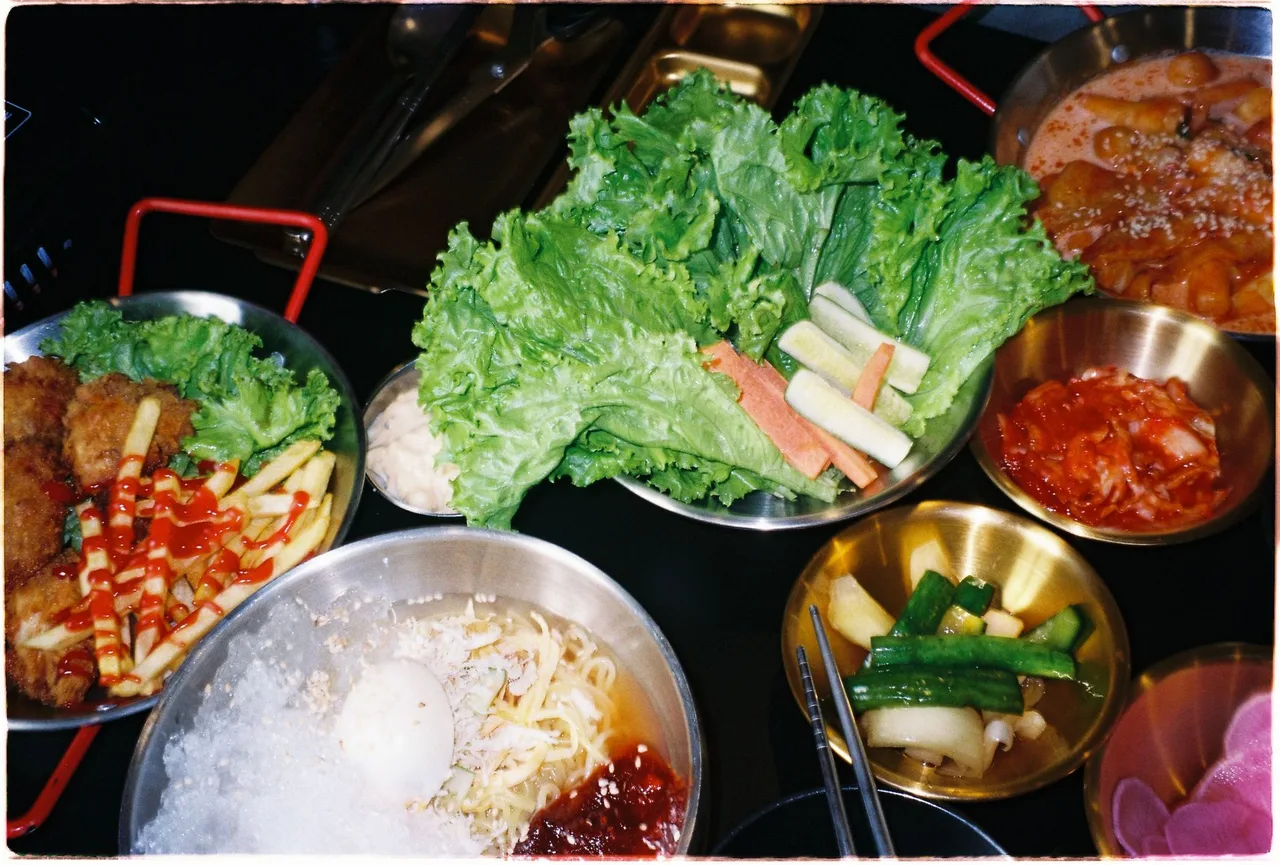
See 김치찌개 printed on a menu and you can order with confidence once you know two words. 김치 is kimchi, and 찌개 (jjigae) means a thick stew, so together they read as kimchi stew with no translation needed. Most Korean dish names work like this. They are short compound words that name the main ingredient and how it was cooked, stacked in that order. Learn roughly fifteen of these building blocks and a wall of Korean menu text turns into something you can actually parse. You will not always land on the exact dish, but you will almost always know whether you are ordering a soup, a grilled plate, a rice bowl, or a pile of noodles, which is usually enough to choose well. The words below are the ones that come up most, grouped by soups, rice and noodles, grilling and braising terms, side dishes, set-meal formats, and the small clues that flag how spicy a dish will be.
The pattern: ingredient first, method last
Korean dish names usually follow one rule. The main ingredient goes first, and the cooking method follows. 고등어구이 (godeungeo-gui) is mackerel that has been grilled, because 고등어 is mackerel and 구이 (gui) means grilled. Change only the ending and 고등어조림 (godeungeo-jorim) is the same fish braised in sauce. The ingredient stayed put; the last word decided the dish. Some names describe an action instead of a method. 불고기 (bulgogi) breaks down as 불 (bul, fire) plus 고기 (gogi, meat), literally fire meat, for beef cooked over heat. 비빔밥 (bibimbap) is 비빔 (bibim, mixing) plus 밥 (bap, rice), which gives you mixed rice. Once you learn to spot the seam in the middle of a compound, you can make a fair guess at dishes you have never seen before. A handful of ingredient words repeat constantly and are worth memorising early: 닭 (dak) chicken, 돼지 (dwaeji) pig, 소 (so) cow, 생선 (saengseon) fish, 해물 (haemul) seafood, 두부 (dubu) tofu, and 계란 (gyeran) egg. Combine any of these with a method word and the name usually explains itself.
The soup family: guk, tang, jjigae, jeongol
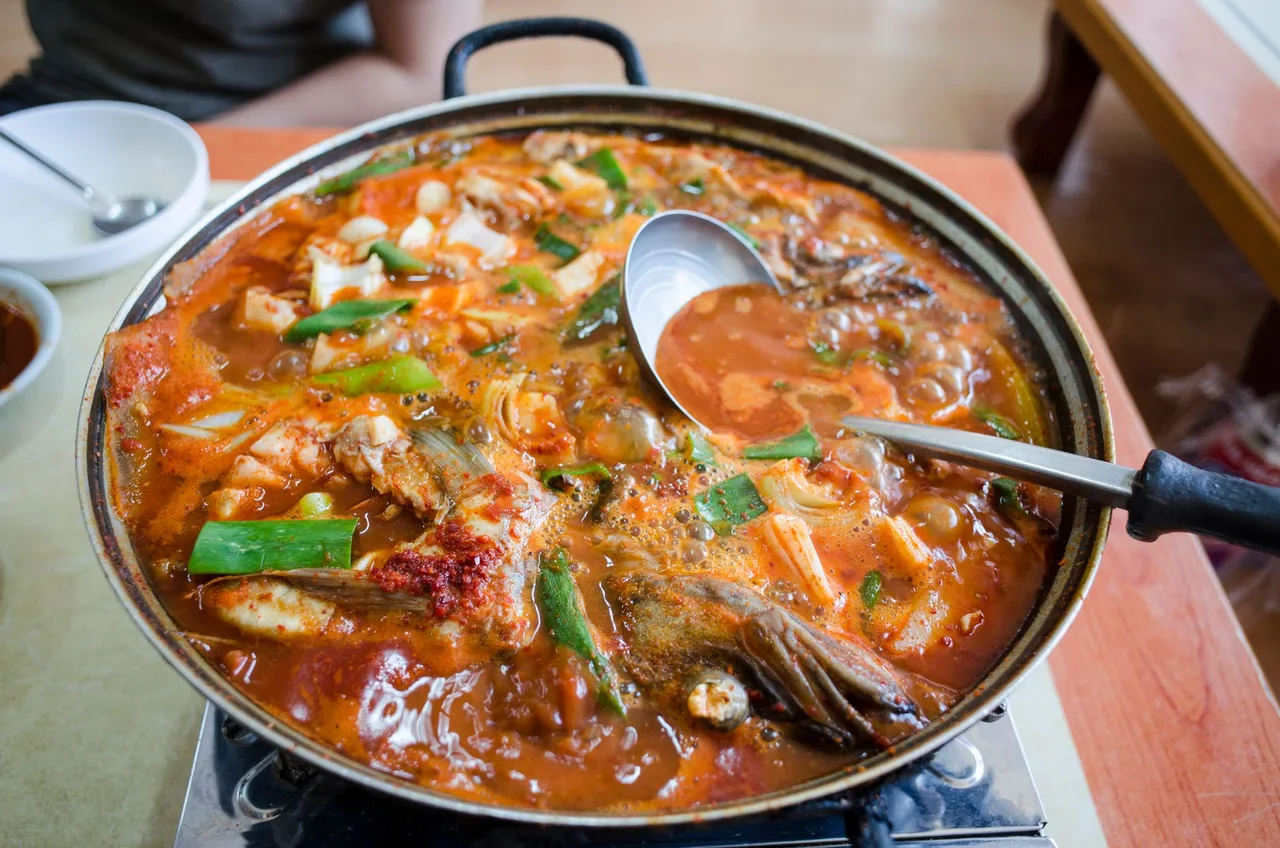
Korean has four common words for something served in liquid, and they are not interchangeable. 국 (guk) is the everyday soup that comes in your own bowl beside the rice. It is thin, more broth than solids, and you usually do not season it further at the table. 탕 (tang) is the heartier, longer-simmered relative, often written with a Chinese-derived character and used for restaurant dishes such as 설렁탕 (seolleongtang, ox bone soup) and 삼계탕 (samgyetang, ginseng chicken soup). 찌개 (jjigae) is thicker and saltier, loaded with solid ingredients, and it arrives in one bubbling pot the whole table shares. 전골 (jeongol) is the hot pot version, where raw ingredients are laid out in a wide, shallow pan and cooked in broth in front of you. One more is worth knowing: 국밥 (gukbap) is simply guk with the rice already dropped in, a quick one-bowl meal. According to the MICHELIN Guide, the rough liquid-to-solid ratio runs about 7:3 for guk and flips to around 4:6 for jjigae, which is exactly why jjigae eats like a main course and guk plays a supporting role.
Rice and noodle words: bap, bokkeum, myeon
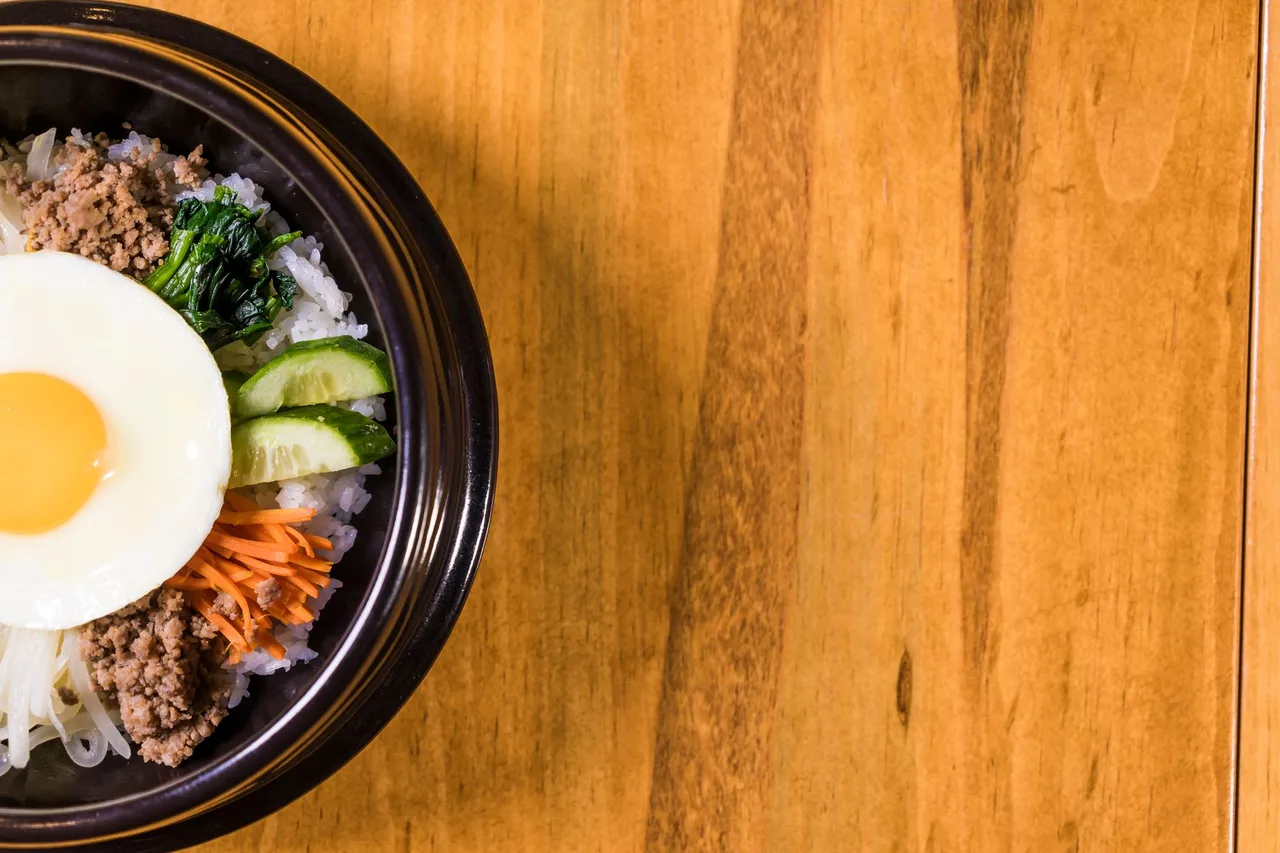
Two syllables cover a large share of Korean carbohydrates. 밥 (bap) means cooked rice, and by extension a meal. It anchors dozens of names: 볶음밥 (bokkeumbap) is fried rice, 김밥 (gimbap) is 김 (gim, seaweed) plus bap rolled together, and 비빔밥 (bibimbap) is the mixed rice bowl. When 밥 sits at the end of a word, expect rice to be the base. 덮밥 (deopbap) uses the same syllable, where 덮 (deop) means to cover, so it is rice with a topping ladled over it, as in 제육덮밥 (jeyuk deopbap, spicy pork over rice). Noodles use two different words. 면 (myeon) is the Chinese-derived term and shows up in 냉면 (naengmyeon, cold noodles), 라면 (ramyeon), and 짜장면 (jajangmyeon, noodles in black bean sauce). 국수 (guksu) is the native Korean word for noodles and appears in dishes like 칼국수 (kalguksu), where 칼 (kal) means knife, for noodles cut by hand with a blade. 볶음 (bokkeum) on its own means stir-fried, so it attaches to rice, noodles, or meat freely: 제육볶음 (jeyuk bokkeum) is stir-fried pork and 낙지볶음 (nakji bokkeum) is stir-fried octopus. Reading these three words alone will carry you through most of the rice and noodle section of any menu.
Cooking-method endings: gui, jjim, jorim, jeon
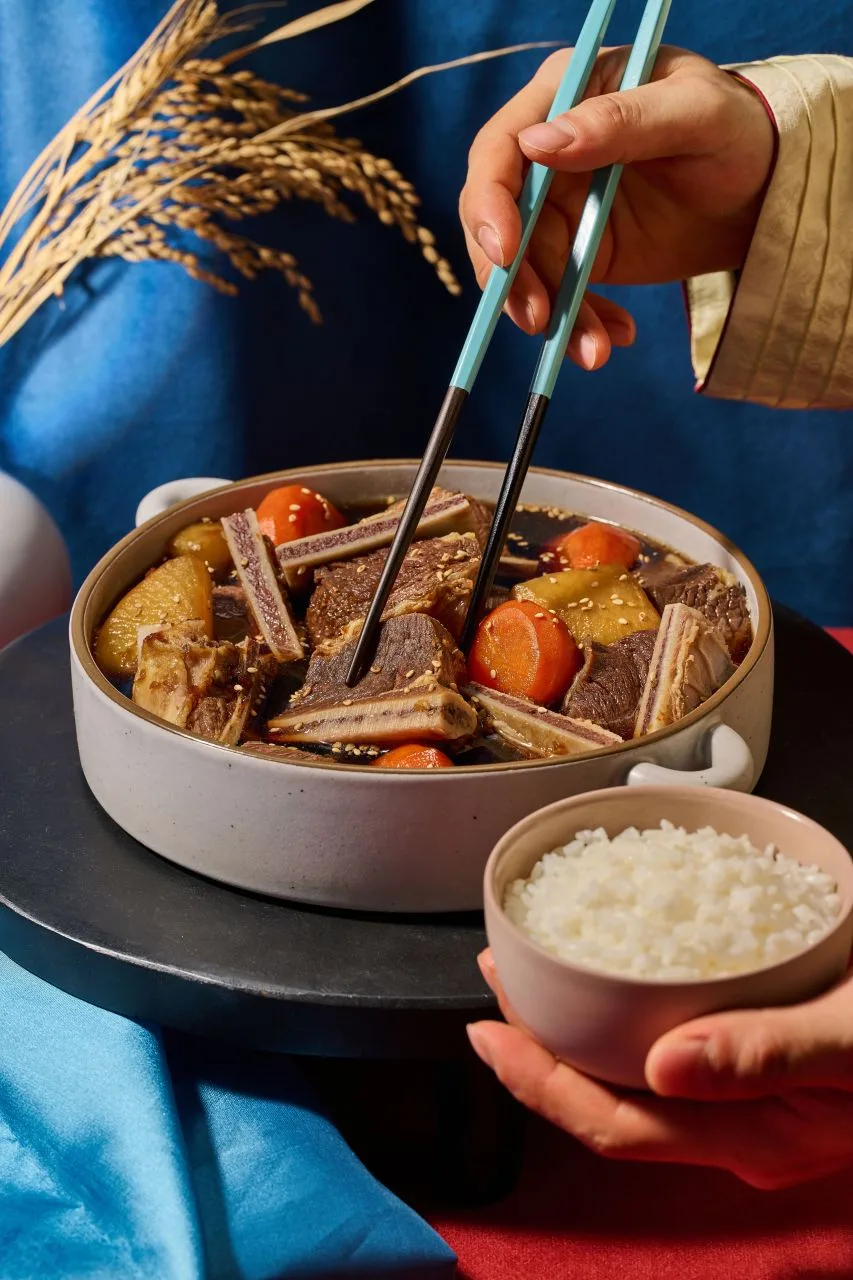
Four more endings tell you exactly how a dish met heat. 구이 (gui) means grilled or roasted, once done over open flame and now often on a pan, as in 생선구이 (saengseon-gui, grilled fish). 찜 (jjim) covers both steaming and slow braising; 갈비찜 (galbijjim) is short ribs braised until they fall off the bone, and 찜닭 (jjimdak) is braised chicken. 조림 (jorim) is simmering in a seasoned, usually soy-based sauce until the liquid cooks down and glazes the food, which gives you 두부조림 (dubu-jorim, braised tofu) and 감자조림 (gamja-jorim, braised potatoes). 전 (jeon) is the pan-fried, battered family: ingredients get coated in flour and egg or folded into a thin batter and fried flat, which is where 파전 (pajeon, green onion pancake) and 김치전 (kimchijeon) come from. The gap between grilled, braised, and fried mackerel is a single word at the end of the name. That makes this the group that pays off fastest once you are sitting in front of a real menu.
Banchan: the small shared dishes
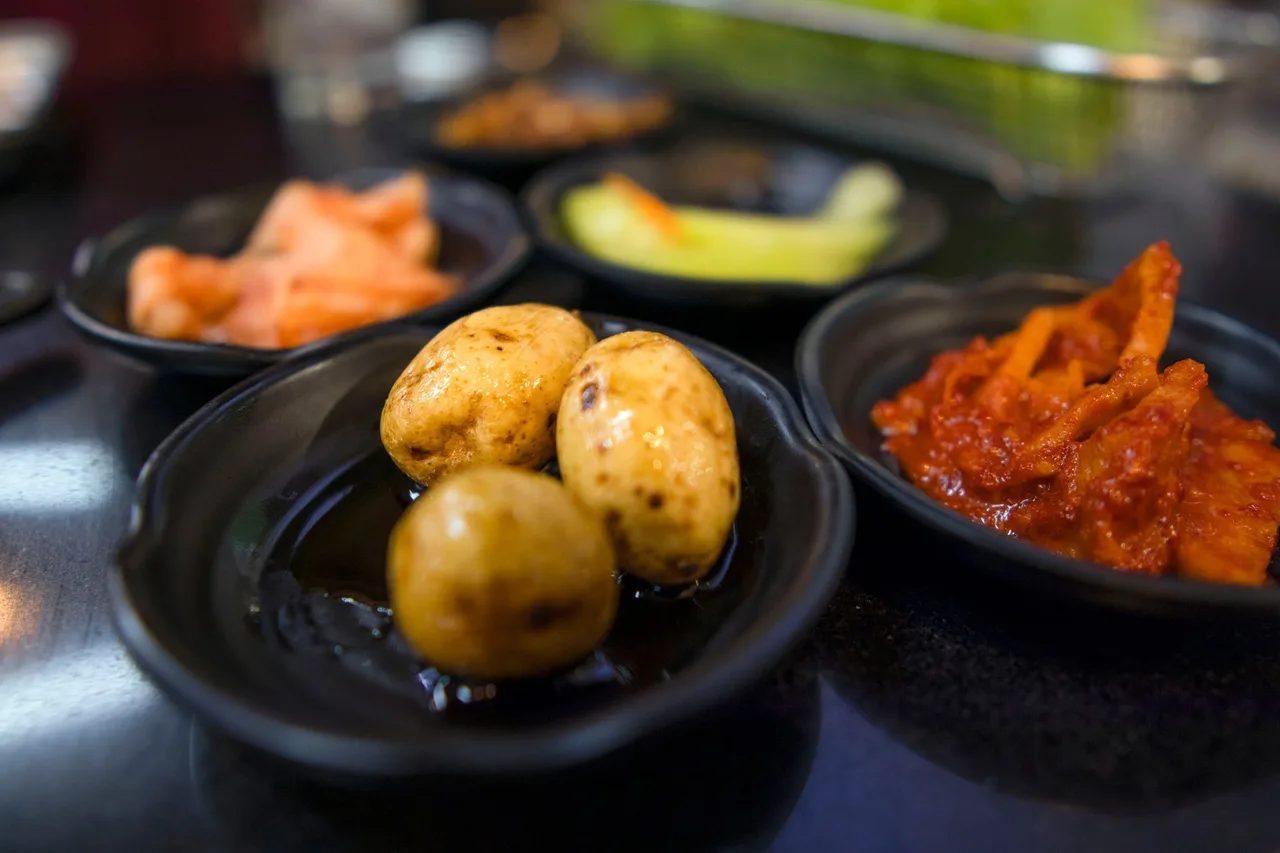
The little plates that cover a Korean table before the main course arrives are 반찬 (banchan). The word joins 반 (ban, rice) and 찬 (chan, side dish), which sums up the whole idea: these exist to go with rice. Most homes serve three to five per meal, and restaurants refill them at no charge. Banchan follow their own naming logic based on preparation. 나물 (namul) are vegetables blanched or seasoned with sesame oil, garlic, and salt, as in 시금치나물 (spinach namul). 무침 (muchim) means dressed or tossed with seasoning, usually raw or lightly cooked, which is what you get in 오이무침 (seasoned cucumber). 김치 (kimchi) is the fermented category itself, and it is not only the familiar cabbage version: 깍두기 (kkakdugi) is cubed radish kimchi and 백김치 (baek-kimchi) is the white, non-spicy kind. Spotting these endings tells you how a side dish was made and roughly how it will taste before your chopsticks reach it. If you eat plant-based, the same words help you screen a table, and our note on going vegetarian in Korea covers which banchan usually work.
Reading heat from the name
A menu will often tell you how spicy a dish is, provided you know the signal words. 매운 (maeun) simply means spicy, so 매운탕 (maeuntang) is a spicy fish stew and anything tagged 매운 is going to bring heat. 불 (bul) means fire and tends to mark the fiercest dishes, as in 불닭 (buldak, fire chicken). 고추 (gochu) is the chili pepper itself and turns up in seasonings like 고추장 (gochujang) and 고춧가루 (chili flakes). On the calmer side, 물 (mul, water) at the front of a name usually points to a mild broth version: 물냉면 (mul-naengmyeon) is cold noodles served in cool broth, while 비빔냉면 (bibim-naengmyeon) is the same noodles tossed in red chili sauce. 백 (baek, white) is another all-clear signal for no chili, as with baek-kimchi. 양념 (yangnyeom) means seasoned or sauced, which on fried chicken means the sweet-spicy glazed version rather than the plain one. These few words let you steer toward heat or away from it on purpose.
Regional names and other clues
Some dishes carry a place name that tells you where the style comes from. 전주비빔밥 (Jeonju bibimbap) points to the city of Jeonju, long associated with its version of the dish. 춘천닭갈비 (Chuncheon dakgalbi) ties spicy stir-fried chicken to Chuncheon, and 안동찜닭 (Andong jjimdak) links braised chicken to Andong. 평양냉면 (Pyongyang naengmyeon) and 함흥냉면 (Hamhung naengmyeon) name two northern cold-noodle traditions that differ in broth and texture. A place name at the front is usually a claim to a regional recipe rather than a promise the food was cooked in that town. Other prefixes describe shape or size: 왕 (wang, king) means jumbo, 알 (al) points to roe or egg, and 손 (son, hand) as in 손칼국수 suggests it was made by hand. None of these are hard rules, but they layer onto the ingredient-and-method pattern and fill in useful detail. Street stalls lean on the same vocabulary, so our Korean street food guide will feel familiar once these words click.
Set meals and shared formats
Menus also name the shape of a meal, not just a single dish, and those words decide how much food arrives. 정식 (jeongsik) means a set meal: a main dish plus rice, soup, and a spread of banchan for one fixed price, roughly the Korean table d'hote. 백반 (baekban) is the humbler home-style cousin, a bowl of rice surrounded by whatever side dishes the kitchen made that morning, and it is often the cheapest honest lunch in a neighbourhood. 한정식 (hanjeongsik) sits at the formal end, a multi-course traditional spread where plates arrive in waves until the table runs out of room. When you spot 세트 (set), the English loanword, it usually marks a combo built for two or more people, common at fried chicken and barbecue spots. Two more words describe how food is served rather than how it was cooked. 모듬 (modeum) means assorted, so 모듬전 (modeum-jeon) is a platter of mixed pancakes and 모듬회 (modeum-hoe) is assorted raw fish. 쌈 (ssam) means wrap, the lettuce or perilla leaf you load with grilled meat, rice, and 쌈장 (ssamjang, the wrapping sauce). Reading these labels tells you portion and format at a glance: whether a line is a single dish, a full tray, or a build-it-yourself course. On a barbecue menu especially, the set and ssam words decide how the meal is meant to run, which our Korean BBQ basics guide breaks down cut by cut.
Putting it together on a real menu
Try a line you might actually meet: 순두부찌개. Break it at the seam. 순두부 (sundubu) is soft, uncurdled tofu and 찌개 is a thick shared stew, so this is soft tofu stew, and the jjigae ending warns you it will be filling and probably spicy. 해물파전 splits into 해물 (haemul, seafood) and 파전 (green onion pancake), giving a seafood and scallion jeon. 돼지불고기 is 돼지 (dwaeji, pig) plus 불고기, so pork bulgogi. Work left to right, find the ingredient, then read the ending for the method, and most menu lines hand themselves over. If you want to practise before you eat out, our guide to reading a Korean menu walks through a full page line by line, and what to order as a first-timer suggests safe places to start.
You will not memorise every dish, and you do not need to. Hold on to the handful of endings for soups, rice, and cooking methods, keep the heat words in the back of your mind, and a Korean menu stops being a guessing game. Even when a name has a syllable you do not recognise, the ending usually still tells you how the food was cooked, which narrows things down fast. The next time 김치볶음밥 lands on the page, you already know it is kimchi fried rice before anyone explains it.
Frequently asked questions
What is the difference between guk, tang, and jjigae?
All three are served in liquid. Guk is a thin everyday soup in your own bowl, tang is a heartier, longer-simmered dish often written with a Chinese-derived character, and jjigae is a thicker, saltier shared stew with more solid ingredients.
What do the endings gui, bokkeum, jorim, and jjim mean?
They name cooking methods placed at the end of a dish name. Gui is grilled or roasted, bokkeum is stir-fried, jorim is simmered in seasoned sauce until reduced, and jjim is steamed or slow-braised.
What does bap mean in Korean food names?
Bap means cooked rice, and by extension a meal. It marks rice-based dishes such as bibimbap (mixed rice), bokkeumbap (fried rice), and gimbap (seaweed rice roll).
How can I tell if a Korean dish is spicy from its name?
Look for signal words. Maeun means spicy, bul (fire) marks the hottest dishes, and gochu refers to chili. Mul (water) and baek (white) usually indicate a milder, chili-free version.
What is banchan?
Banchan are the small shared side dishes served with rice. The word joins ban (rice) and chan (side dish). Most meals include three to five, and restaurants typically refill them for free.
Sources
This guide was researched using the references below. Prices and times change, so confirm anything time-sensitive on the official page before you rely on it.
Related guides
- Korean recipes with ground beefExplore easy and flavorful Korean dishes using ground beef, from bulgogi bowls to kimchi mandu, perfect for quick meals.
- Korean BBQ options near Incheon AirportA guide to enjoying authentic Korean BBQ near Incheon Airport, including top restaurant recommendations and practical tips for travelers.
- Korean BBQ in Incheon: A guide for foreignersDiscover the best Korean BBQ spots in Incheon, understand local dining etiquette, and learn how to enjoy this culinary experience like a local.
- Korean BBQ in Seoul: A guide for first-time visitorsDiscover the essentials of enjoying Korean BBQ in Seoul, from ordering and etiquette to top restaurant recommendations and solo dining options.
- Korean chicken recipes to try at homeExplore a variety of Korean chicken dishes, from spicy stir-fries to comforting soups, with recipes and cultural insights.
- Easy Korean recipes for beginnersDiscover simple Korean dishes like kimchi fried rice and bulgogi that you can make at home with minimal ingredients and time.